


You may be wondering what Cardano is and how it fits into today’s crypto trading landscape. Cardano is a blockchain project focused on long-term growth, security, and efficiency. Instead of quickly releasing new features, the Cardano network takes a research-first approach to fix issues that earlier blockchains struggled with. For traders, this means a platform designed to scale, adapt, and remain reliable over time.
In this guide, we break down how Cardano works, what powers it, and where it’s headed. Read on to better understand its role in your trading or investment strategy.
What is Cardano (ADA)?
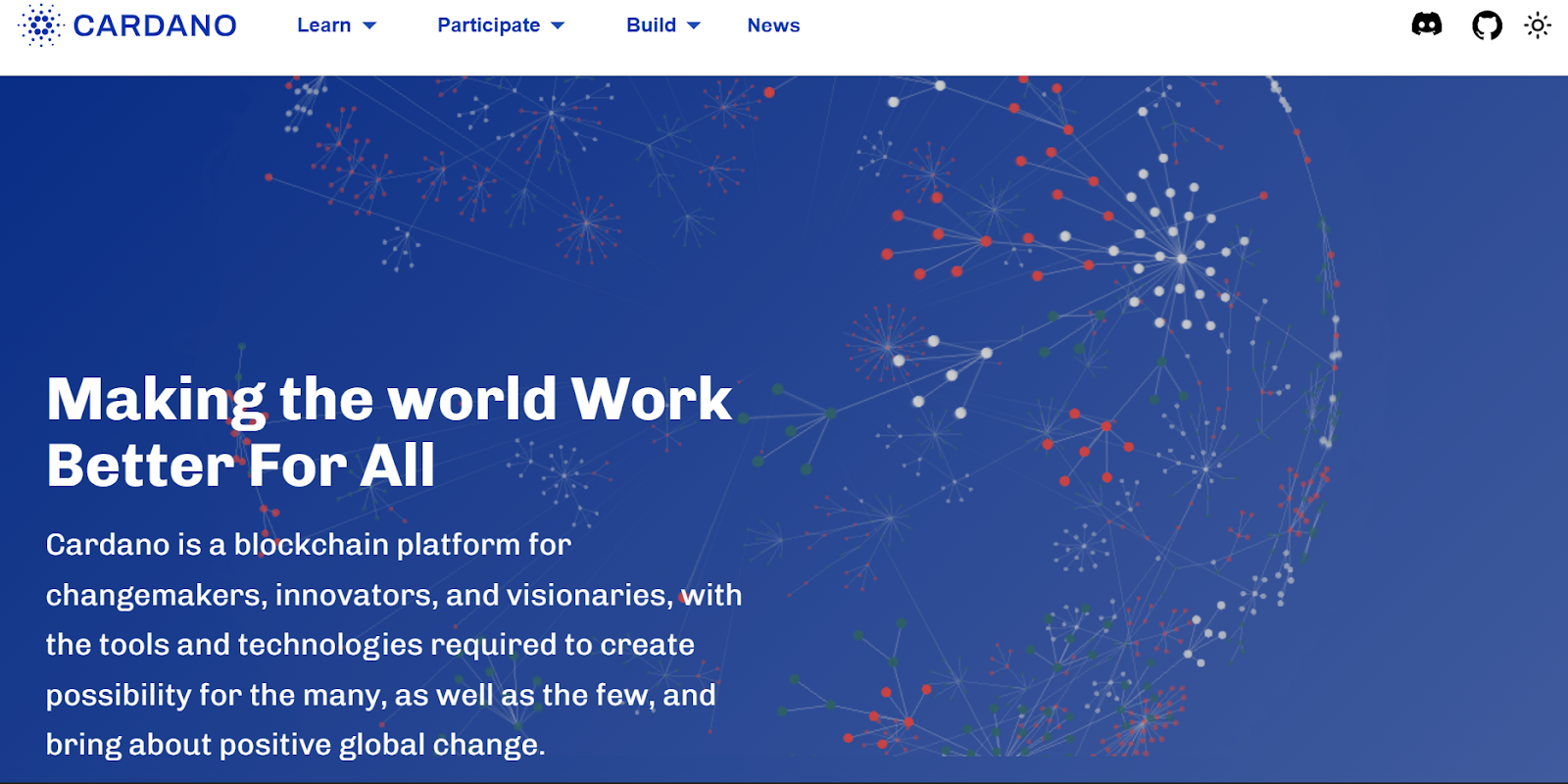
Cardano is a Proof-of-Stake blockchain platform built to support secure, transparent, and efficient digital transactions. It was created as an alternative to earlier blockchains that struggled with high fees, slow speeds, and limited flexibility.
ADA is the native currency of the Cardano network. Investors use ADA to send value, pay transaction fees, and take part in network activities. Many also hold ADA as an investment or stake to earn rewards.
History of Cardano
Cardano’s development began in 2015. The goal was to create a blockchain that could support long-term growth without sacrificing security or reliability. After two years of research and development, the Cardano blockchain officially launched in September 2017.
Since its launch, Cardano has continued to grow through planned upgrades. Each stage focuses on improving a specific area, such as security, performance, or usability. This long-term approach reflects Cardano’s focus on building a system that lasts rather than chasing short-term trends.
Who are the founders of Cardano?
Charles Hoskinson is the founder of Cardano and a co-founder of Ethereum. After leaving Ethereum, he set out to build a blockchain focused on careful planning, academic research, and long-term sustainability.
Three organizations actively develop and support the Cardano project.
- Input Output Global (IOG), founded by Hoskinson, leads research and builds the core technology.
- The Cardano Foundation drives adoption and supports the global community.
- EMURGO works on real-world business use cases and partnerships.
This shared structure ensures that Cardano development, governance, and adoption grow together rather than relying on a single centralized organization.
How Does Cardano Work?
The Cardano blockchain works with Proof-of-Stake, smart contracts, and a layered network design. Proof-of-Stake on Cardano lets ADA holders help run the network. Instead of mining, users stake their ADA to validate transactions and maintain the network. This method is energy-efficient and reliable.
Cardano’s smart contracts run on Plutus, a platform built for security and predictability. It helps reduce unexpected contract behavior and exploits. This makes Cardano a safe place for apps like DeFi projects and NFTs.
Cardano also separates its settlement layer from Cardano computing layer. This means the network can add new features or upgrades without disrupting the entire system. This flexibility supports long-term scalability.
The ADA Token Explained
ADA coin plays a key role across the Cardano network. It functions as both a utility token for daily operations and a governance asset for decision-making.
What is ADA used for?
ADA is used for:
- Paying transaction fees: Every transfer, smart contract, or interaction on the Cardano blockchain uses ADA for fees.
- Staking: Users can stake ADA to help secure the network and earn rewards.
- Governance decisions: ADA holders can vote on proposals and influence protocol upgrades.
- Powering smart contracts and dApps: ADA fuels decentralized apps built on Cardano.
Every activity on Cardano relies on ADA, making it essential for network functionality.
ADA Tokenomics and Supply
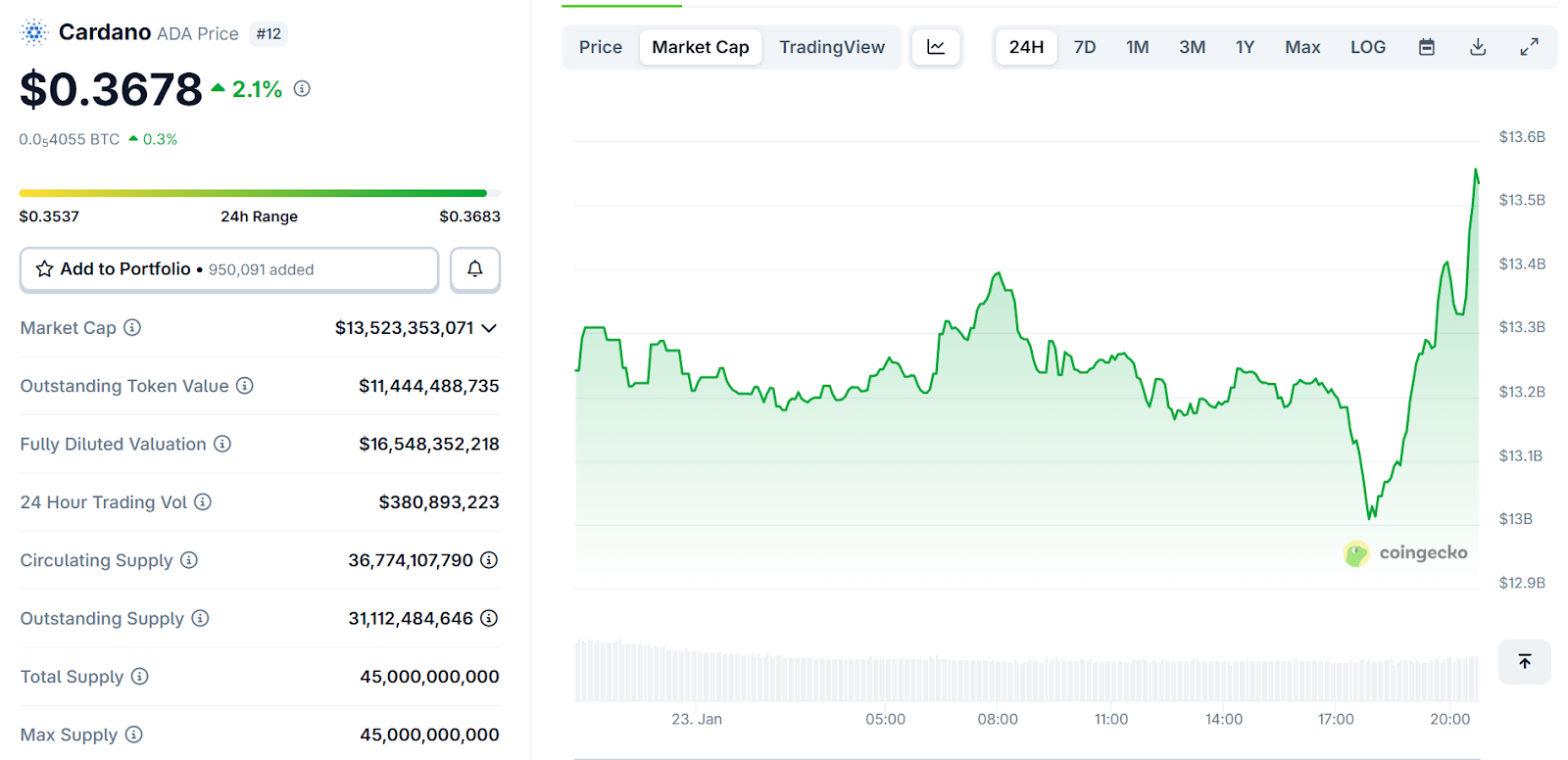
Cardano has a capped supply of 45 billion ADA. Currently, there are over 36 billion ADA in circulation. The remaining tokens are released gradually from a reserve to reward people who stake ADA or operate stake pools. This fixed supply helps maintain scarcity and supports the token’s long-term value.
Additionally, the rate at which new ADA enters circulation slows over time. This makes rewards predictable while encouraging long-term participation rather than short-term speculation. By keeping its supply fixed and predictable, Cardano avoids creating too many new tokens over time. This helps protect value, much like Bitcoin.
ADA Staking and Governance
Cardano makes staking easy and accessible for everyone. You don’t need to lock up your ADA or give up control of your tokens. Instead, you can delegate your coins to a staking pool and start earning rewards while maintaining full ownership. Such an approach allows both small and large holders to participate in securing the network and earning passive income.
Cardano’s governance is designed to let the community have a voice. ADA holders can vote on network upgrades, funding proposals, and new projects through on-chain voting. This means the people who use and support Cardano directly influence its future.
The Cardano Ecosystem and Use Cases
Beyond technology, Cardano has grown into an ecosystem of apps, tools, and communities building real products on the network. These projects focus less on hype and more on long-term usefulness, especially in areas like finance, digital ownership, and real-world services.
Cardano in DeFi and NFTs
Cardano’s growing role in the decentralized finance (DeFi) ecosystem gives users more control over their money. DeFi platforms on Cardano let people lend, borrow, trade tokens, and earn rewards without relying on traditional banks or intermediaries. Popular Cardano DeFi projects include Minswap, Indigo Protocol, and Liqwid Finance. They offer services like yield farming, liquidity provision, and token swaps.
NFTs are also an important part of the Cardano ecosystem. Artists and creators use the network to mint digital art, music, and collectibles. Platforms like JPG Store have made Cardano NFTs more accessible, often with lower fees than Ethereum-based alternatives.
Real-World Use Cases
Cardano is used in several sectors to solve practical problems:
- Education: The Atala PRISM solution helps Ethiopia’s education system securely track and verify student credentials.
- Voting systems: Cardano supports tamper-resistant digital voting in municipal and organizational elections.
- Supply chain: In supply chains, pilot projects in Ethiopia have used Cardano to improve transparency and fair payments for coffee farmers.
- Healthcare: Healthcare initiatives in various regions are testing Cardano for secure patient data management and privacy.
Because Cardano prioritizes reliability and careful development, it appeals to governments, institutions, and organizations that need systems they can trust.
Cardano vs Other Blockchains
Understanding the differences with networks like Bitcoin and Ethereum can give you a clearer picture of Cardano’s unique approach to blockchain technology.
Cardano vs. Bitcoin
Bitcoin prioritizes security and scarcity, while Cardano focuses on flexibility, governance, and programmability.
| Feature | Cardano | Bitcoin |
| Consensus | Proof-of-Stake | Proof-of-Work |
| Energy use | Low | High |
| Smart contracts | Yes | Limited |
| Governance | On-chain | Off-chain |
| Supply cap | 45 billion ADA | 21 million BTC |
Cardano vs. Ethereum
Ethereum is more widely used, but Cardano attracts developers who want a dependable environment to build on.
| Feature | Cardano | Ethereum |
| Consensus | Proof-of-Stake | Proof-of-Stake |
| Smart contracts | Plutus | Solidity |
| Transaction fees | Lower on average | Often high |
| Development approach | Peer-reviewed | Rapid iteration |
| Upgrade model | Planned phases | Frequent updates |
How to Buy and Store ADA
Before you buy ADA, it’s essential to understand how to do it safely and store it securely. Follow these steps to buy ADA:
- Choose an exchange: Coinbase, Crypto.com, or Binance are among the top exchanges to buy ADA.
- Verify your identity (KYC): Upload your ID and any required documents to complete verification.
- Deposit funds: Add money using a bank transfer for lower fees or a credit/debit card for convenience.
- Purchase ADA: Find the ADA trading pair, such as ADA/USD, enter your preferred amount, and place an order.
Once you buy ADA, you have three main ways to store it safely:
- Hardware crypto wallets: Devices like Trezor or Ledger keep your private keys offline, protecting your ADA from online threats and hackers.
- Software wallets: Cardano wallets such as Yoroi (lightweight) or Daedalus (full-node) let you manage your tokens directly on your phone or computer.
- Exchange wallets: You can also hold ADA on the exchange for convenience and easy trading. However, this comes with a higher risk since the platform controls the keys.
Regardless of which option you choose, always enable two-factor authentication (2FA) and store your recovery seed phrase securely offline to protect your ADA from loss or theft.
Future of Cardano
Cardano’s future focuses on growth, innovation, and practical adoption. The network continues to launch upgrades that improve transaction speed, efficiency, and governance. These improvements also strengthen governance and make the platform more reliable for both users and developers.
Developers are also working on projects like Midnight, which aims to support private and regulated transactions. This will open opportunities for Cardano in areas such as Bitcoin DeFi and secure finance applications.
Institutional adoption is another key focus. With regulatory clarity and a growing community treasury, Cardano could attract more large investors, boosting its long-term stability. Native stablecoins, potential ETFs, and partnerships could also drive growth.
At the same time, Cardano faces competition from Ethereum, Solana, and other smart contract platforms. Its success will depend on combining careful, decentralized development with faster, user-friendly applications that people and businesses actually use.
Conclusion: Why Cardano Matters in the Blockchain World
Cardano matters because it shows how blockchain can be both innovative and practical. Its energy-efficient design, smart contract capabilities, and growing ecosystem give it real-world relevance beyond mere speculation.
With ADA at its core, Cardano empowers transactions, governance, and DeFi apps while supporting projects that impact finance, education, and identity. Its continued evolution suggests it will remain a key player in shaping the future of decentralized technology.
FAQs
Cardano is a third-chain blockchain because it addresses scalability, interoperability, and sustainability, issues that earlier blockchain platforms struggled to solve. Its layered design and Proof-of-Stake consensus improve efficiency and governance.
Cardano and Bitcoin serve different purposes. Bitcoin focuses on value storage and censorship resistance. Cardano emphasizes smart contracts, governance, and scalability.
Cardano offers lower fees and a research-driven development model. Ethereum leads in adoption and ecosystem size. Each appeals to different priorities.
Cardano supports smart contracts through the Plutus platform. Plutus emphasizes formal verification and predictable execution. This reduces smart contract vulnerabilities.
ADA is a good investment for the future if you favor structured growth over short-term speculation. The token’s long-term potential depends on adoption, development progress, and market conditions.