


12
For decades, the promise of virtual reality (VR) has been a visual one. We could see digital worlds, and eventually, we could hear them with precision. But the moment we reached out to touch a virtual object, the illusion broke. Our hands passed through ghosts.
To fix this, we were told we needed to wear “armor” — heavy haptic gloves tethered by wires, filled with vibrating motors that felt more like a buzzing phone than a physical texture.
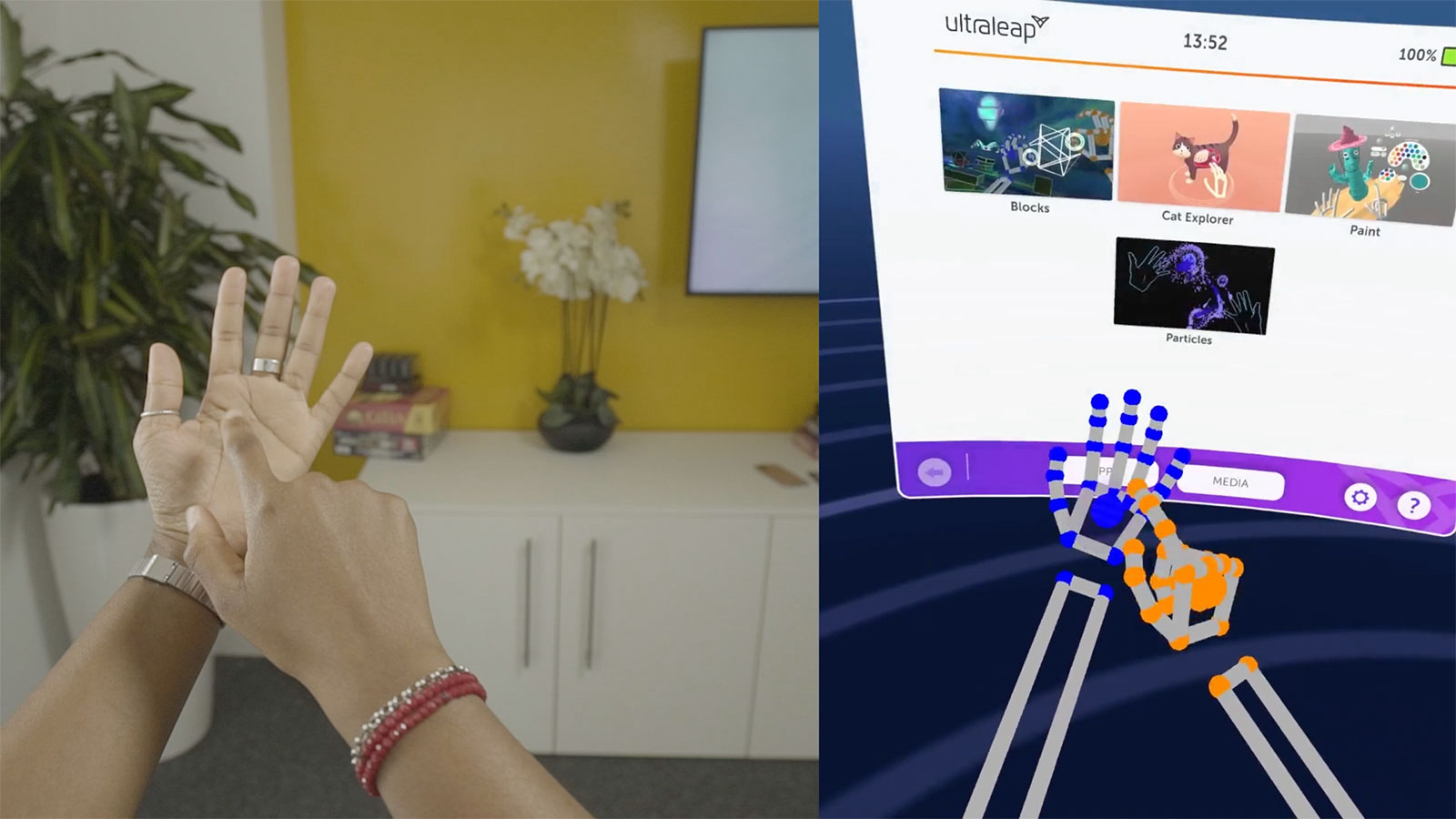
But as of early 2026, a new wave of innovation is removing the gear. Startups like Ultraleap and a handful of emerging micro-fluidic pioneers are proving that to feel the virtual, we don’t need to wear it. We just need to manipulate the air around us.
The invisible sculptor: ultrasonic haptics
The breakthrough that companies like Ultraleap have mastered involves a technology that sounds like science fiction: acoustic radiation force.
By using an array of ultrasonic transducers — essentially tiny speakers that emit sound at frequencies humans cannot hear — they can project “focal points” of high-pressure air into mid-air.
When these waves converge on a specific point in space, they create a localized pressure that the mechanoreceptors in your skin perceive as a solid touch.
By modulating these waves at different frequencies, Ultraleap’s technology can simulate:
- volumetric shapes: the feeling of a sphere or a cube in empty space;
- functional interfaces: the “click” of a virtual button or the resistance of a dial;
- environmental sensations: the light pitter-patter of rain or the breeze of a passing digital object.
The beauty of this approach is its lack of friction. There are no gloves to sweat in and no sensors to calibrate. You simply hold your hand out, and the air itself becomes the interface.
In 2026, we are seeing this move beyond specialized kiosks and into high-end automotive dashboards and professional VR training, where “feeling” a switch without looking at it is a matter of safety, not just immersion.
The texture of air: micro-fluidics and smart fabrics
While ultrasound excels at mid-air interaction, another frontier is tackling the “fine detail” problem: how do you simulate the specific roughness of denim, the cold smoothness of polished stone, or the grain of wood?
This is where micro-fluidics enters the story. Instead of bulky vibration motors (LRAs), companies are experimenting with integrated “smart skins.” These are thin, flexible layers containing microscopic channels — essentially a vascular system for data.
By moving tiny amounts of air or liquid through these channels at high speeds, these systems can create “tactile pixels” or taxels:
- simulated pressure: small bladders can expand or contract to mimic the weight of a virtual object;
- texture mapping: by rapidly pulsing air through the fabric, they can simulate the friction of different materials as your finger “slides” across a virtual surface;
- thermal feedback: some emerging systems even use micro-fluidic channels to circulate temperature-controlled liquids, allowing you to feel the heat of a virtual cup of coffee or the chill of a digital ice cube.
Why this breakthrough matters
The move toward “wearable-less” or “low-profile” haptics is about more than just comfort. As we transition from bulky headsets to more elegant XR glasses, we cannot expect users to carry around a pair of haptic gloves in their pockets.
Innovation is interesting not because it adds more technology to our bodies, but because it removes the barriers between our natural movements and our digital intentions.
We are entering an era where the boundary between “here” and “there” is no longer defined by a screen. Instead, it is defined by the sensation of a texture that doesn’t exist, delivered by a sound we cannot hear — allowing us to reach into the void and, for the first time, feel it push back.

