


To receive Morning Links in your inbox every weekday, sign up for our Breakfast with ARTnews newsletter.
The Kicker
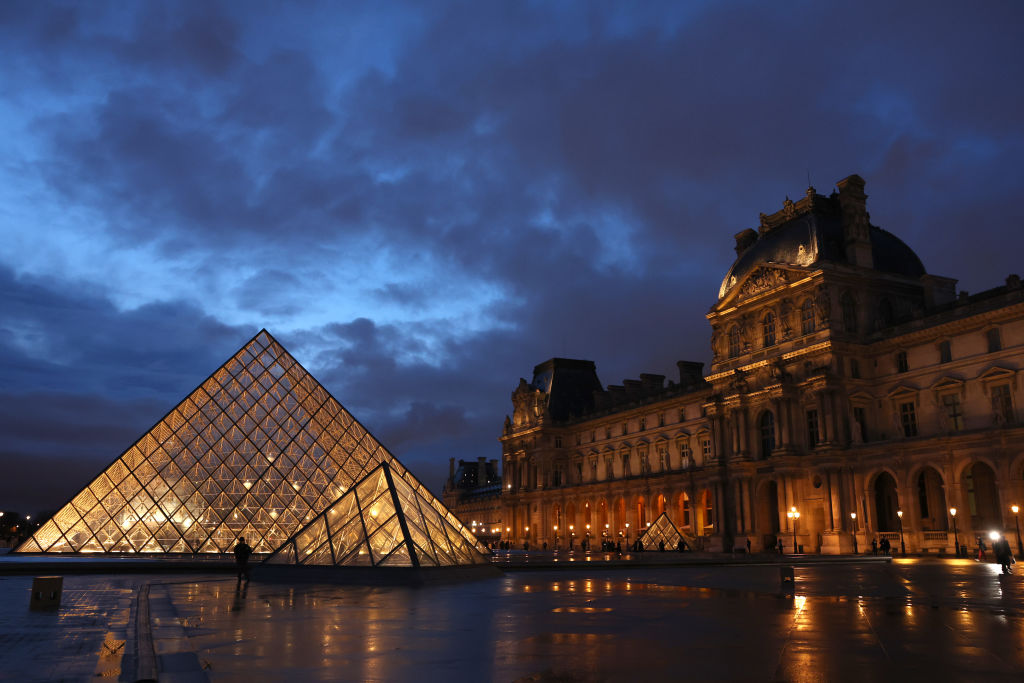
J’ACCUSE. A French parliamentary commission investigating museum security has joined a chorus of recent audits in criticizing the Louvre for mismanagement, effectively accusing it of leading to the October 2025 theft of France’s crown jewels, reports Le Monde and AFP. “The Louvre theft is not an accident; it reveals systemic failures within the museum [and a] denial of risks,” stated Alexandre Portier, president of the committee, in a summary of the group’s ongoing investigation into Louvre security. The Louvre has become a “state within a state,” and behaves as if “it didn’t need to account for the management of public money,” Portier added. Louvre president Laurence des Cars and culture minister Rachida Dati will be questioned further by the investigative group next week.
ARC DE TRUMP. On Thursday, veterans and a heritage preservationist filed a lawsuit in the US District Court for the District of Columbia against the Trump administration, in a bid to halt the building of a 250-foot monument, dubbed the “Arc de Trump,” reports the Washington Post. In their complaint, the Vietnam War veterans who later worked as US diplomats claim the arch, which Trump said he wants to be known as “the biggest one of all,” would disrupt the experience and views from the nearby Arlington National Cemetery, as well as surrounding monuments. “They believe that the planned arch … would dishonor their military and Foreign Service and the legacy of their comrades and other veterans buried at Arlington National Cemetery…” reads the filing. In other news of Trump’s remaking of D.C. in his image, the US Commission of Fine Arts approved a proposal to build a giant ballroom in the White House, where the East Wing was torn down, reports the Associated Press.
The Digest
Ahead of this summer’s blockbuster Frida Kahlo exhibition at Tate Modern, the artist’s great-niece Cristina says the commercialization of Kahlo has gone too far, pushed by a Venezuelan businessman, Carlos Dorado, who owns 51 percent of the Frida Kahlo Corporation (FKC). [The Times]
The National Constitution Center (NCC) in Philadelphia, a museum dedicated to the US Constitution, is in turmoil after the sudden departure of its president, Jeffrey Rosen, amid allegations he was forced out to curry favor with President Trump. [The Guardian]
Brazilian authorities are searching for assets, including art, linked to financier Daniel Vorcaro, CEO of the failed bank Banco Master SA. Following the bank’s collapse, Vocaro’s finances have come under scrutiny, while subpoenas filed in federal bankruptcy court suggest he patronized galleries such as Gagosian and Pace. [ARTnews]
Epstein files released by the DoJ suggest a connection between art collector Leon Black and the disgraced late British dealer Douglas Latchford, charged with smuggling Khmer antiquities. [Artnet News]
Frieze is partnering once again with the British Council at this year’s Venice Biennale to support the British Pavilion presented by Lubaina Himid. The exhibit titled “Predicting History: Testing Translation” will feature Himid’s new series of large, multi-panel paintings of surreal settings in vibrant colors, accompanied by a soundscape in collaboration with artist Magda Stawarska. [press release]
The Kicker
RECOMMENDED READING. How does a 2000-year-old Egyptian Book of the Dead—a scroll of incantations to guide a deceased person through the underworld—compare to one obit writer’s reports on deaths today? That’s what the New York Times’ Sam Roberts asks in his whimsical recap of a visit to the Brooklyn Museum’s exhibition titled “Unrolling Eternity: The Brooklyn Books of the Dead.” For one, “the scroll measures 21 feet. That’s considerably longer than any article that I have ever written. (And my Times obits were never gilded.)” Roberts quips. In all seriousness, these parchments full of spells didn’t say much about the people buried alongside them and were designed instead to help their ghostly owners avoid the many monstrous perils awaiting them in the afterlife, as they attempted to reunite with the gods. “I’m willing to bet,” said the museum’s curator Yekaterina Barbash, “they didn’t expect anyone else to read it.”