


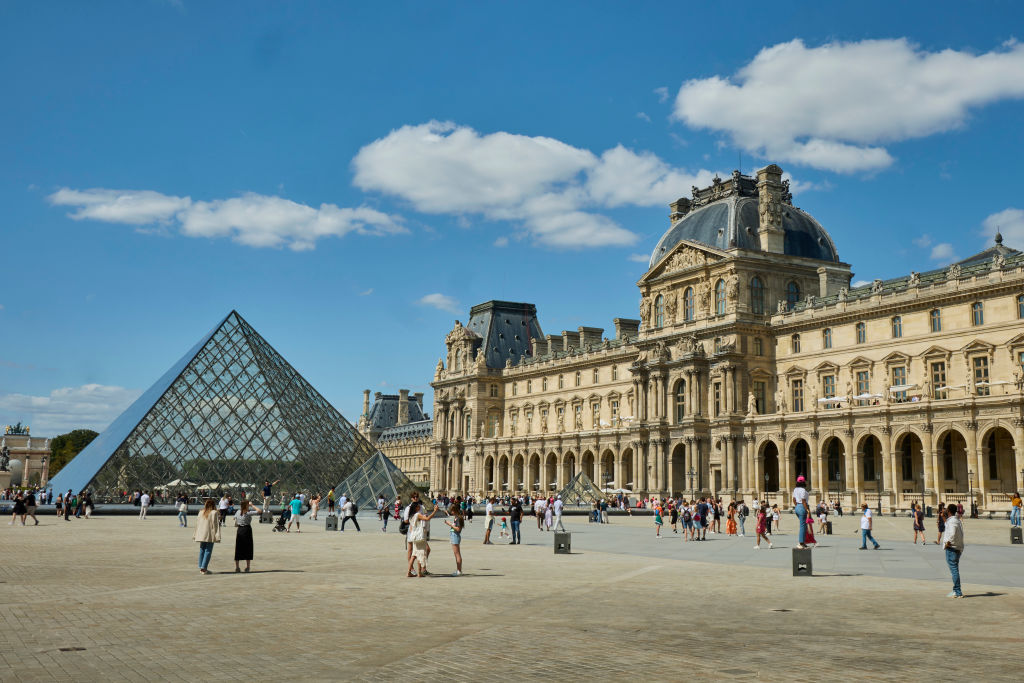
With roughly 9 million visitors last year, the Louvre in Paris remains the world’s most visited museum—and, according to one official, an “inevitable” target of fraud—following the revelation of a decade-long, €10 million ($11.8 million) suspected ticket scam.
Kim Pham, the Louvre’s general administrator, told the Associated Press that the museum’s vast scale made such a crime “statistically” inevitable. Pressed to name comparable institutions that had experienced similar schemes, however, Pham declined.
“Which museum in the world, with this level of attendance, would not at certain moments have some issues of fraud?” Pham said. He oversees the daily operations of the museum’s 925,000 square feet of gallery space, home to roughly 35,000 works of art.
Last week, French authorities arrested nine people, including two museum employees, suspected of involvement in the sweeping ticket-fraud scheme. The Palace of Versailles was also implicated in the probe, the Paris prosecutor’s office confirmed Thursday, noting that authorities have seized more than €957,000 in cash, €67,000 in foreign currency, and an additional €486,000 held in separate bank accounts.
Authorities allege that two Chinese tour guides repeatedly reused tickets to admit separate groups to the Louvre, scheming together with museum employees. Surveillance and wiretaps confirmed that the offenders were reusing tickets and that the fraudulent tour guides were bribing employees to help pocket the proceeds from ticket sales.
Pham declined to confirm the Louvre’s financial losses but pushed back against suggestions that the scheme reflected systemic mismanagement, as the fraud network was uncovered less than a year after the historic theft of French crown jewels.
“Quite simply, the Louvre is the biggest museum in the world,” he said, adding that “it is normal that in this complexity we have difficulties,” while noting that the museum’s security needed improvement.
“I won’t tell you that we do everything very well and that we did everything well,” he said. “What I’m telling you is that the fight against fraud is an action of every moment.”
The Louvre told Le Parisien earlier this week that it is “facing a resurgence and diversification of ticket fraud”, prompting the museum to “put in place a structured plan to combat fraud”, notably through “preventive and curative actions” and the “monitoring of their results.”
The institution stressed that the ongoing police operation “was carried out following a report from the Louvre Museum as part of its anti-fraud policy and the ongoing interactions between the museum’s teams and the police regarding fraudulent practices.”
The Paris prosecutor’s office formally opened a judicial investigation in June on suspicions of “organized fraud, organized money laundering, active and passive public corruption, aiding and abetting illegal entry and residence in an organized group, and use of forged administrative documents.”