



United States lawmakers postponed a planned markup of the Digital Asset Market Clarity Act (CLARITY), delaying progress on a bill intended to define how cryptocurrencies and decentralized finance (DeFi) platforms are regulated and prompting renewed pushback from DeFi leaders who say the bill still fails to adequately protect developers.
Industry groups and crypto venture firms warned that proposed amendments could impose requirements that are not suitable for decentralized systems. Representatives from Paradigm and Variant said the current draft leaves unresolved ambiguity over whether DeFi developers and infrastructure providers could be forced to implement Know Your Customer (KYC), register with financial regulators or comply with rules designed for centralized platforms.
The delay follows mounting criticism from across the crypto sector, including public opposition from Coinbase CEO Brian Armstrong, which led Senate Banking Committee Chair Tim Scott to announce a “brief pause.”
Vitalik Buterin calls for a new DAO design for onchain disputes and governance
Ethereum co-founder Vitalik Buterin called for a rethink of how decentralized autonomous organizations (DAOs) are designed, arguing that most DAOs have become little more than token-voting treasuries.
Buterin said that this model is inefficient, vulnerable and fails to improve on traditional governance systems. He added that DAOs should be purpose-built to support core infrastructure like oracles, onchain dispute resolution, insurance decisions and long-term project stewardship.
He also outlined how different governance issues require different structures, distinguishing between cases that benefit from decisive leadership and broad compromise.
Buterin warned that low participation, whale dominance and decision fatigue remain major challenges, and said that privacy tools, limited AI assistance and better governance design are crucial to DAOs.
DeFi protocol Pendle revamps governance token, citing low adoption
DeFi protocol Pendle is revamping its governance model by phasing out its vePENDLE token and introducing a new liquid staking and governance token, sPENDLE.
The team said vePENDLE’s long lock-up periods, lack of transferability and complex voting mechanics limited participation, even as the protocol grew to nearly $3.5 billion in total value locked (TVL).
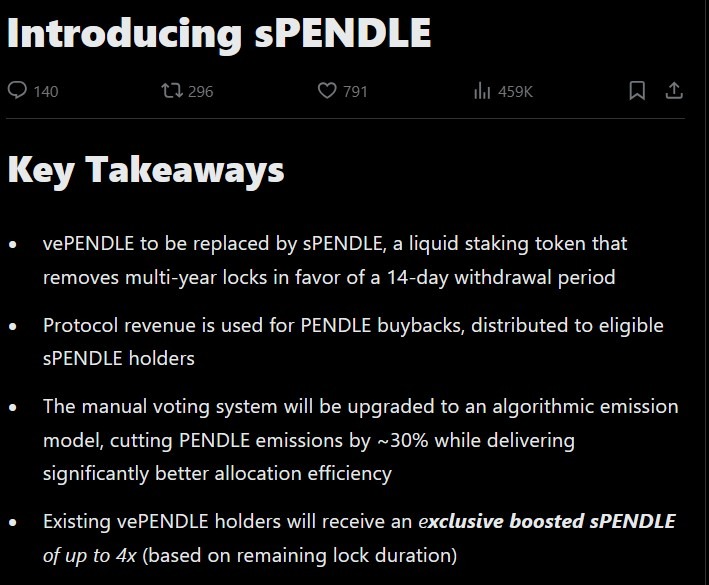
The new token aims to lower the barriers by allowing withdrawals after a 14-day unwinding period, enabling integrations across other DeFi platforms and simplifying governance participation.
Pendle is also streamlining requirements for voting and plans to use up to 80% of protocol revenue for governance rewards and token buybacks.
New SEC submissions press on self-custody and DeFi regulation
Two new submissions to the US Securities and Exchange Commission’s crypto task force are adding pressure on regulators to clarify how self-custody rights and DeFi activity should be treated under upcoming market structure rules.
A filing referencing Louisiana law that protects retail users’ right to self-custody warned that overly broad exemptions in federal proposals can weaken investor protections and increase risks of fraud.
Another submission from the Blockchain Association argued that companies trading tokenized equities or DeFi assets from their own accounts should not automatically be classified as regulated dealers.
The filings come as negotiations continue in Congress, with policymakers and industry figures pushing for a compromise.
Aave refocuses on DeFi, hands Lens stewardship to Mask Network
Lending protocol Aave handed stewardship of Lens Protocol to Mask Network, narrowing its role to technical advisory support as it refocuses on DeFi.
Under the transition, Mask Network will lead consumer-facing development and product execution for Lens-based social applications, while the protocol’s core infrastructure remains permissionless and open-source.
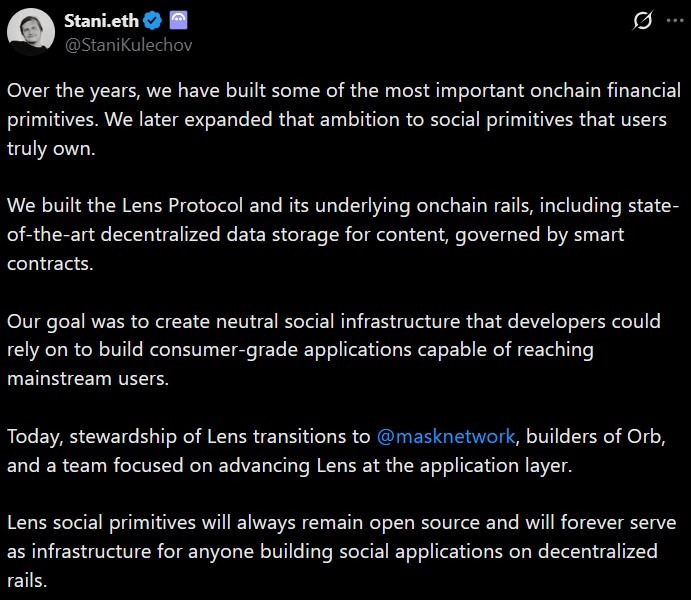
Ethereum co-founder Vitalik Buterin welcomed the move and commented that decentralized social networks built on shared data layers are essential for fostering competition and improving online discourse.
DeFi market overview
According to data from Cointelegraph Markets Pro and TradingView, most of the 100 largest cryptocurrencies by market capitalization ended the week in the red.
The White Whale (WHITEWHALE) token fell by over 57% throughout the week, marking the biggest drop in the last seven days. This was followed by a token called Merlin Chain (MERL), which dropped 48% last week.
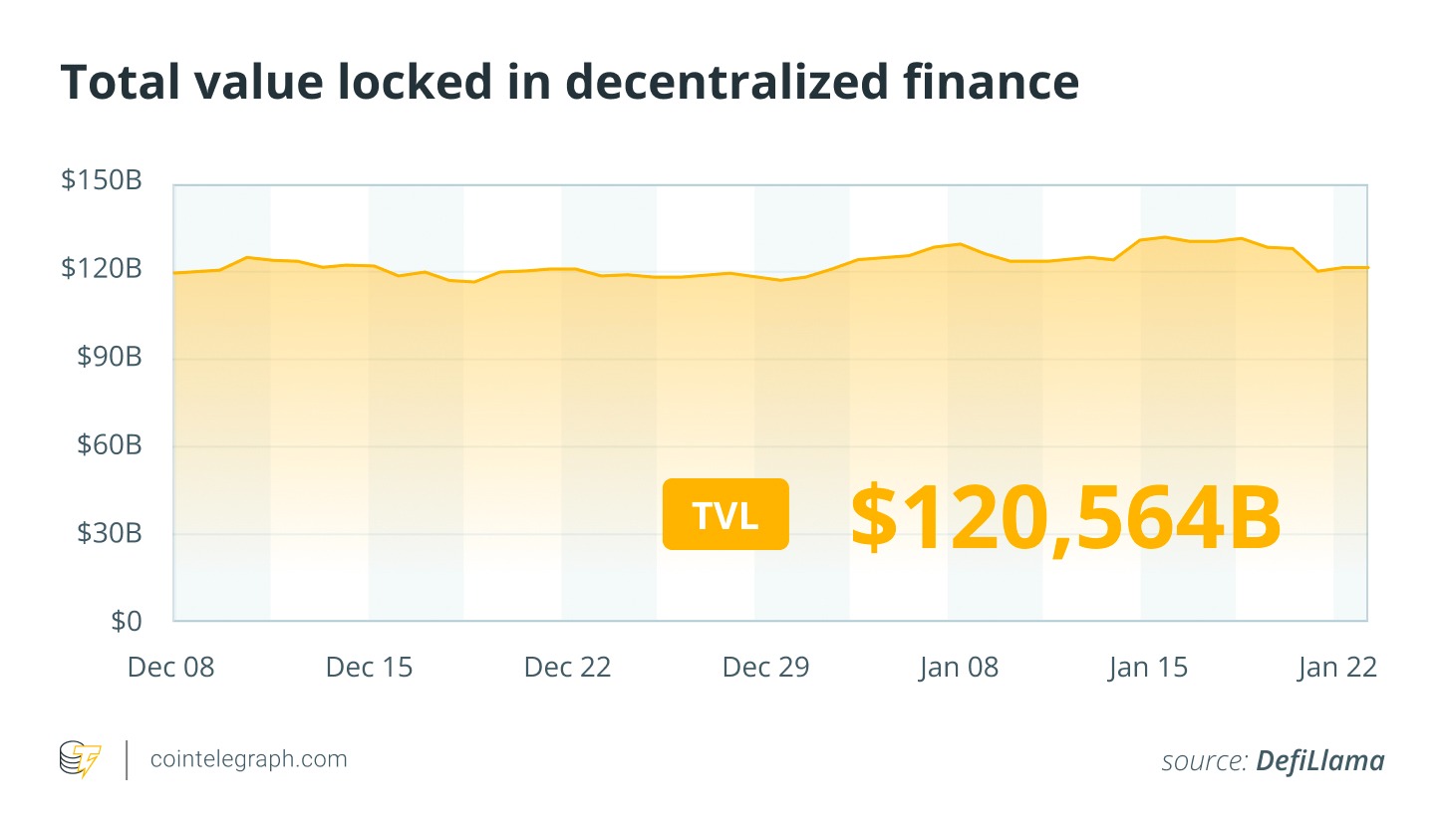
Thanks for reading our summary of this week’s most impactful DeFi developments. Join us next Friday for more stories, insights and education regarding this dynamically advancing space.