


To receive Morning Links in your inbox every weekday, sign up for our Breakfast with ARTnews newsletter.
The Headlines
COLLATERAL DAMAGE CONTROL. The Financial Times reported that half of non-bank lenders offering loans against artworks experienced defaults in 2024, up sharply from 17 percent two years earlier, according to the Art and Finance Report 2025, published by Deloitte Private and ArtTactic. While this marks an improvement on 2020, when two-thirds of lenders reported defaults during the Covid-19shutdown, it underscores growing stress in the sector. Harry Smith of Gurr Johns said lending is now viable only for top-tier works, as the firm winds down its own small lending operation. The art market has been shrinking since 2022, falling 12 percent to $57.5 billion in 2024, dragging down collateral values and triggering margin calls and defaults. By contrast, private banks reported no defaults, aided by recourse lending. The report estimates the art-backed loan market at up to $40 billion in 2025, rising further by 2027, though non-bank lenders often charge significantly higher interest rates.
SCREEN CULTURE. While Australia’s social media ban for minors under the age of 16 is indented to protect their mental health, among other things, the Art Newspaper has asked how it might impact the country’s art institutions. “Increasingly, teenage audiences are a focus for museums and galleries in Australia,” said Katie Russell, the national director and chief executive of the Australian Museums and Galleries Association (AMAGA). She added: “Some social media platforms are used strategically to engage these audiences—platforms like TikTok, for example, have offered museums and galleries opportunities to communicate their content and collections in new ways, often playfully, engaging younger audiences with cultural collections.” Some Australian art institutions expect the ban to have little impact. A spokesperson for the Art Gallery of New South Wales notes that under-16s make up only 0.2 percent of its Instagram followers, meaning the legislation is unlikely to affect its content strategy or engagement, beyond ensuring compliance while maintaining accessible digital experiences. Others may feel the effects more keenly. The Museum of Contemporary Art Australia, where 50 percent of visitors are under 35, places strong emphasis on youth engagement through digital platforms. Whether the ban leads to a noticeable drop in museums’ overall social media followings remains to be seen.
The Digest
Who is Vanessa Horabuena, the Christian artist who “speed painted” an image of Jesus Christ live on stage during Donald Trump’s Mar-A-Lago New Year’s Eve party? The work was auctioned off for $2.75 million. [Artnet News]
ARTnews asked three Egyptologists about the best things to see in the newly opened Grand Egyptian Museum. [ARTnews]
NFT Paris and RWA Paris 2026 have been canceled. Digital art and creativity were central to both events. “The [NFT] market collapse hit us hard,” founder Alexandre Tsydenko said. [BitPinas]
The Bo’Ness Motor Museum in Scotland has an impressive collection of James Bond and Harry Potter movie props, including a white Lotus Esprit used in the 1977 film The Spy Who Loved Me that could be worth “millions,” its founder said. [The Standard]
Artadia executive director Patton Hindle, who has been in the role since 2023, will step down later this month. Bora Kim, the nonprofit’s program director, will serve as interim executive director while a national search is conducted. [Instagram]
The Kicker
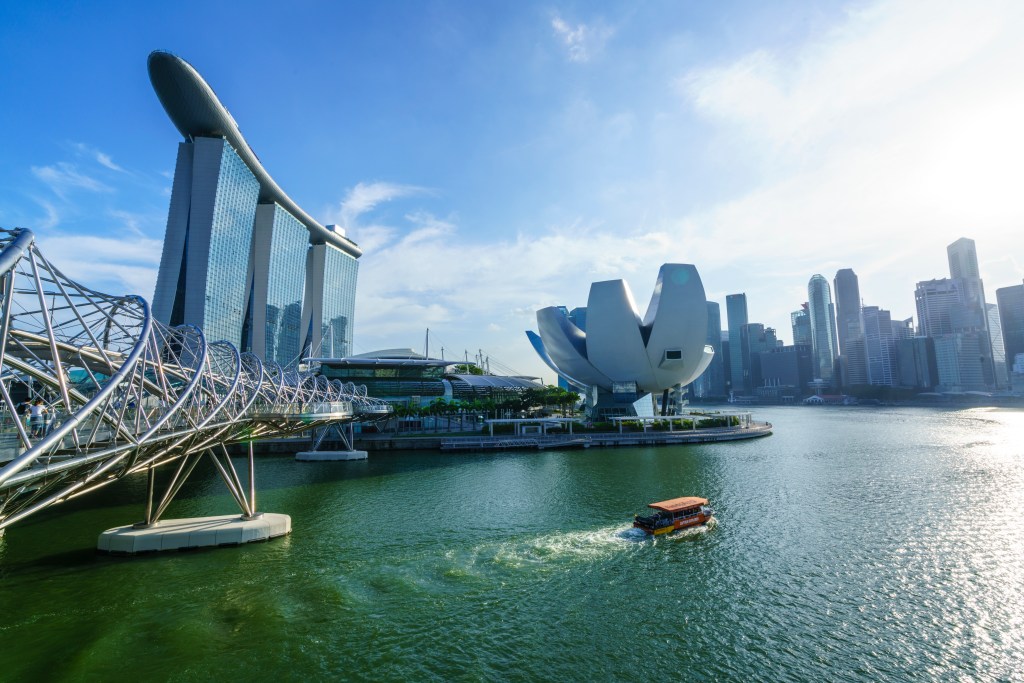
SINGAPORE BIENNIAL IN CROSSHAIRS. Is it time to scrap the Singapore Biennial? Apparently, according to Ong Sor Fern, the arts editor of Singapore’s Straight Times. “Can someone please just kill the Singapore Biennale and put it, and art-lovers like me, out of our collective misery?” she writes. “Now into its eighth edition, Singapore’s ‘blockbuster’ contemporary arts event, commissioned by the National Arts Council (NAC) and organised by the Singapore Art Museum (SAM), barely registers on anyone’s radar. Ongoing till March 29, 2026, the event feels haphazard, disconnected from the community, and inaccessible to even determined artsgoers like myself.” Ouch.