

In 2025, global cryptocurrency investment funds garnered inflows totaling $47 billion, marking the second-highest annual total for the crypto asset class—just shy of the $53 billion record set in 2024. While the headline figure may appear as a regression when compared to the previous year, a closer analysis reveals an important shift underway beneath the surface. The dynamics of capital flows have evolved, signaling renewed investor interest in altcoins and broader diversification strategies that extend far beyond the gravitational pull of Bitcoin.
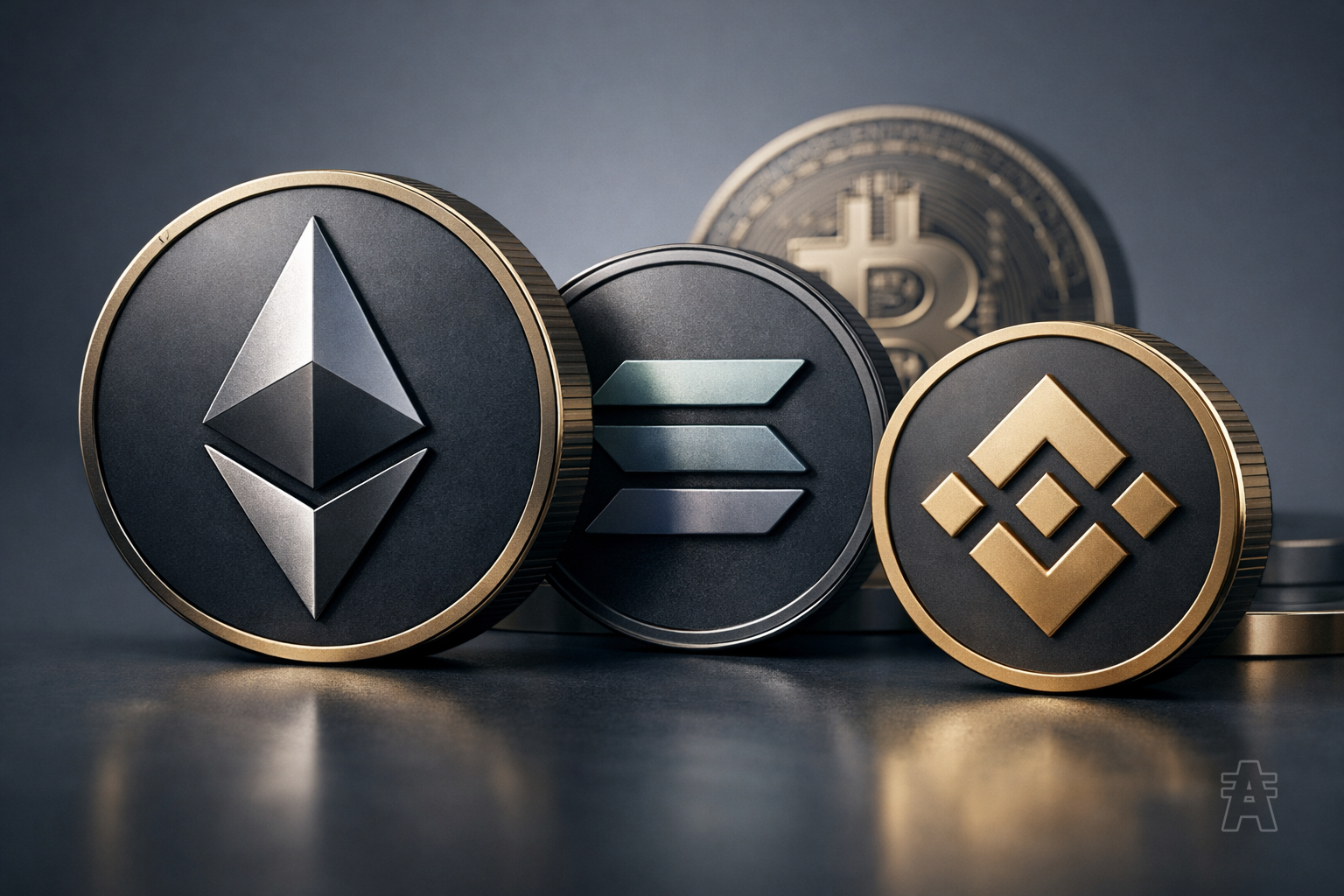
Unlike 2024, which was largely defined by the explosive growth of Spot Bitcoin ETFs—following regulatory greenlights in the U.S. and subsequent mainstream adoption—2025 represented a crucial inflection point. Investment sentiment turned toward emerging blockchain platforms with tangible utility and long-term ecosystem potential. Altcoins such as Ethereum (ETH), Solana (SOL), Ripple (XRP), and lesser-known DeFi and Layer 2 tokens surged in popularity across Exchange-Traded Products (ETPs), accounting for over 60% of all non-Bitcoin inflows. This denotes a major evolution in institutional and retail investor behavior, suggesting growing confidence that blockchain innovation will arise across multiple high-performing assets, not solely Bitcoin.
Several interrelated drivers catalyzed this transition.
First, on the protocol level, Ethereum’s implementation and adoption of Layer 2 scaling solutions such as Arbitrum, Optimism, and zkSync opened the door for cheaper and faster on-chain transactions. This directly improved decentralized application (dApp) performance and contributed to a wave of renewed developer and user activity. Ethereum’s transition to Proof-of-Stake (PoS) in prior years also positioned it as a more energy-efficient and environmentally conscious alternative to Bitcoin’s energy-intensive mining model—a branding pivot that resonated strongly with ESG-focused institutional investors.
Meanwhile, Solana’s development ecosystem expanded rapidly, supporting a new breed of high-throughput dApps optimized for speed and volume. This was particularly apparent in the rise of consumer-focused blockchain applications, such as gaming, social finance (SocialFi), and on-chain metadata platforms, which benefit from Solana’s fast settlement finality. Key infrastructural upgrades and improved network stability reduced previous concerns related to downtime, attracting both venture capital investments and traditional hedge fund allocations into Solana-based financial products.
Ripple (XRP), long under regulatory scrutiny, experienced a resurgence in institutional attention thanks to notable legal victories and a renewed emphasis on its core use case—cross-border payments. As global financial institutions revisited partnerships with RippleNet and its on-demand liquidity products, XRP-based funds witnessed a boost in AUM. Moreover, Ripple’s strategic expansions in Asia-Pacific, specifically targeting banking corridors in Southeast Asia and Latin America, contributed to its momentum in the altcoin ETP landscape.
From a macroeconomic perspective, 2025 was characterized by a more accommodative global monetary policy environment. After battling inflationary spikes in previous years, central banks across the U.S., EU, and Asia shifted toward dovish policy stances, maintaining lower interest rates to support economic recovery amid lingering geopolitical tensions. These moves reignited investor appetite for risk-on assets—particularly digital assets and Web3-related investments—driving both retail and institutional capital back into crypto markets.
This favorable macro backdrop was further amplified by evolving regulatory clarity. Several key jurisdictions—most notably the European Union, Hong Kong, and Brazil—implemented crypto asset frameworks designed to foster innovation while ensuring transparency and investor protection. The Markets in Crypto-Assets Regulation (MiCA) in Europe took full effect, allowing compliant crypto firms to operate passport-style across the bloc. Meanwhile, Hong Kong finalized its digital asset exchange licensing regime, encouraging capital flows from mainland China’s increasingly affluent tech-savvy investor class.
Institutional players continued to diversify their product offerings as well. Asset managers such as BlackRock, Fidelity, and ARK Invest expanded their altcoin exposure via thematic ETFs, Layer 1-specific funds, and decentralized finance index products. Family offices and endowments, once focused solely on Bitcoin exposure, began to view altcoins as strategic allocations rather than speculative punts. This broad-based shift in investment behavior validated the thesis that the crypto asset class is becoming multifaceted—driven not just by store-of-value narratives, but by platform utility, developer ecosystems, and scalable infrastructure.
Looking back, though inflows declined slightly compared to the all-time high of 2024, the apparent “shortfall” is a bit of a red herring. The massive wave of capital that poured into Bitcoin during the 2024 ETF boom created an unrealistic benchmark. Any comparison to such an anomalous amount is inherently distorted. Importantly, 2025’s inflow of $47 billion isn’t a retreat; it’s a recalibration—one that reflects growing sophistication among market participants and a maturation of crypto capital markets. Rather than being dominated by hype cycles, capital allocation is becoming more discerning and increasingly based on technological fundamentals.
Bear in mind that historically, the cryptocurrency market has operated in cyclical patterns—marked by periods of exuberant expansion followed by consolidation or retracement phases. These cycles are not signs of systemic failure but natural processes of capital reallocation and ecosystem maturation. In this context, 2025’s data shows that crypto is transitioning into a new era: one defined less by speculative fervor and more by infrastructure-driven growth. The rising interest in blockchain platforms with scalable, interoperable, and truly decentralized models indicates broad recognition of new opportunities well beyond Bitcoin.
What’s the investment takeaway? It’s simple: altcoins have emerged as more than supplemental assets—they are becoming central components of well-balanced crypto portfolios. The growth of Ethereum’s Layer 2 ecosystem, the resurrection of trust in Ripple, and the strong fundamentals underpinning Solana underscore a broader pivot. Savvy investors who look beyond the mainstream Bitcoin narrative and position themselves ahead of institutional flows are better poised to capture asymmetric upside.
A growing segment of the market is behaving like a Contrarian Investor—someone who studies adoption curves, cross-chain integrations, and innovation pipelines, rather than chasing social media hype or price action alone. These forward-thinking participants are identifying alpha-generating opportunities in corners of the crypto sector still overlooked by the average investor.
As we look ahead to 2026, investors should expect even more specialized altcoin-focused financial products to hit the market. We’ll likely see enhanced DeFi interoperability with traditional finance, led by tokenized assets and regulated on-chain settlements. Coupled with stronger institutional frameworks and centralized exchanges offering on-ramps to DeFi products, the thesis for altcoin adoption seems robust. Additionally, upcoming network upgrades, such as Ethereum’s Proto-Danksharding or Solana’s Firedancer validator client, offer fertile ground for new investment theses to emerge.
In conclusion, 2025 was not a step back—it was a strategic repositioning. The surge in altcoin inflows reflects a maturing market that is broadening its horizons. Investors clinging solely to legacy Bitcoin narratives risk being left behind. The emerging alpha lies within diversified exposure, an understanding of protocol innovation, and an appreciation for where capital is heading next. And in 2025, smart money was clearly moving in one direction: toward the evolving altcoin frontier.