



Bitcoin (BTC) price could be in for another prolonged period of consolidation if key support levels are not reclaimed, a new analysis reveals.
Key takeaways:
-
Bitcoin is stuck between key cost-basis levels, predicting 2022-type consolidation unless key support levels are reclaimed.
-
Spot Bitcoin ETFs recorded a net outflow of $708.7 million, their fifth-largest since launch, signaling institutional caution.
Bitcoin’s “supply overhang” persists
In the Jan. 21 edition of its regular newsletter, The Week Onchain, onchain data provider Glassnode confirmed key areas of resistance “constraining upside follow-through and keeping rallies vulnerable to distribution.”
The BTC/USD pair has been oscillating within a wide range defined by the True Market Mean at $81,100 and the short-term holder (STH) cost-basis at $98,400.
Related: Bitcoin eyes $90K as Trump sees crypto bill signing ‘very soon’
According to Glassnode, the recent rejection near the STH cost basis at $98,400 “mirrors the market structure observed in Q1 2022, where repeated failures to reclaim recent buyers’ cost basis prolonged consolidation.”
“This similarity reinforces the fragility of the current recovery attempt.”
The chart above shows that Bitcoin price spent the period between February 2022 and July 2022 trapped between the STH cost basis and the True Market mean before entering an extended bear market, bottoming around $15,000 in November 2022.
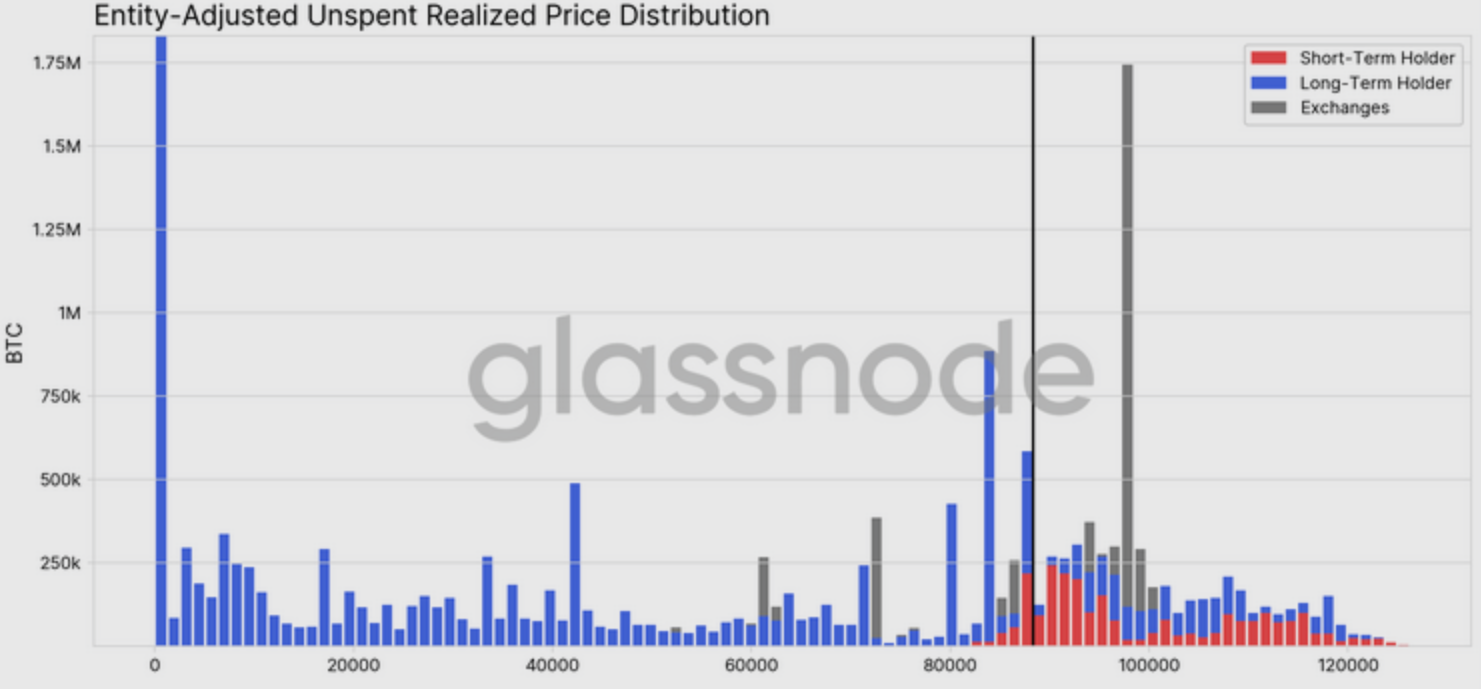
Glassnode’s Entity-Adjusted UTXO Realized Price Distribution (URPD), a metric that shows at which prices the current set of Bitcoin UTXOs were created, also revealed a wide and dense supply zone above $100,000 that has been gradually maturing into the long-term holder cohort.
“This unresolved supply overhang remains a persistent source of sell pressure, likely to cap attempts above the $98.4K STH cost basis and the $100K level,” Glassnode wrote, adding
“A clean breakout would therefore require a meaningful and sustained acceleration in demand momentum.”
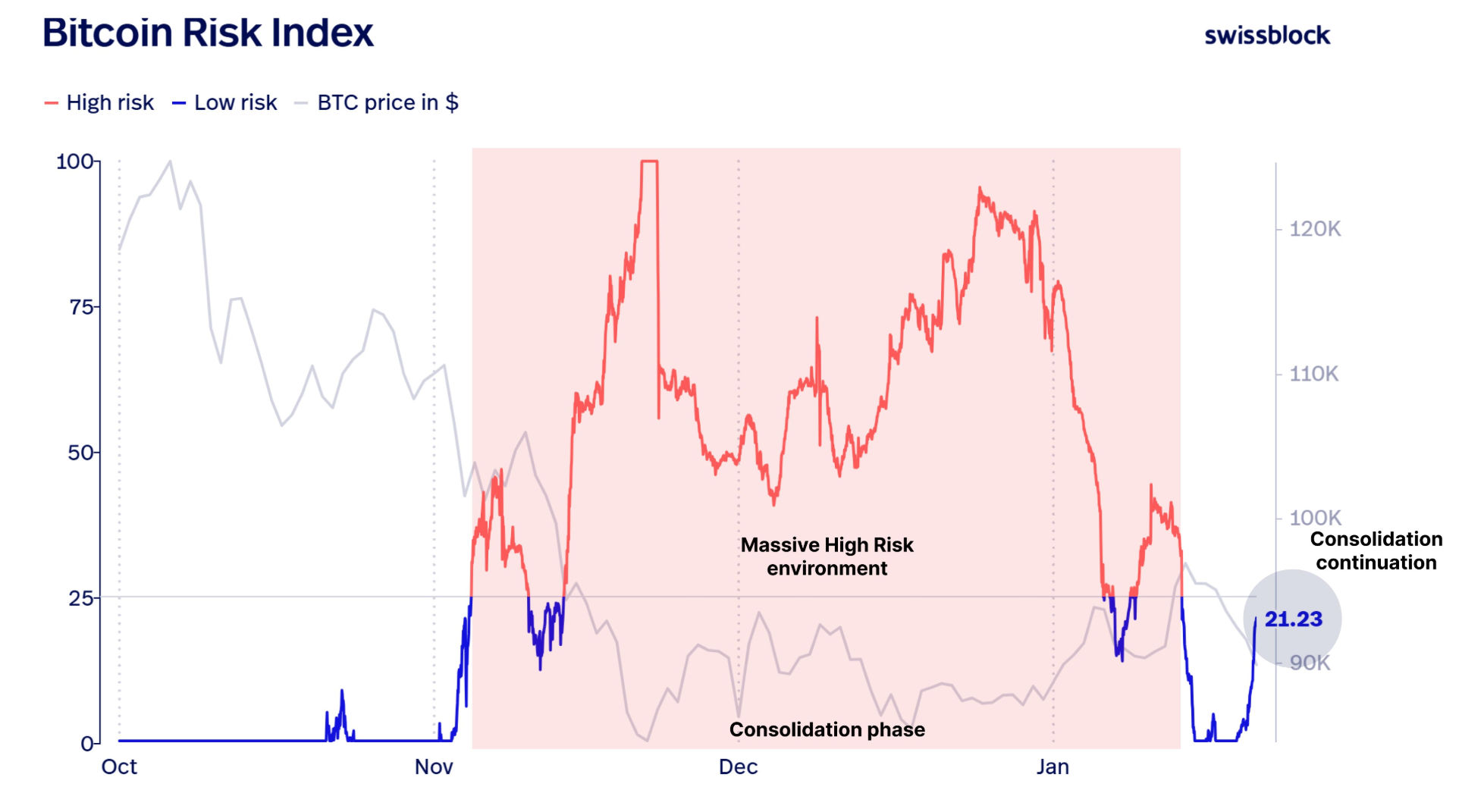
The Bitcoin “Risk Index has climbed to 21, hovering just below the High Risk zone (25),” said private wealth manager Swissblock in a recent X post, adding:
“This uptick suggests a likely continuation of the consolidation phase triggered by the ‘Massive High Risk’ environment we faced over the past few months.”
As Cointelegraph reported, Bitcoin must take out resistance at $98,000-$100,000 to revive the bull market cycle.
Bitcoin ETFs record their fifth-largest outflows
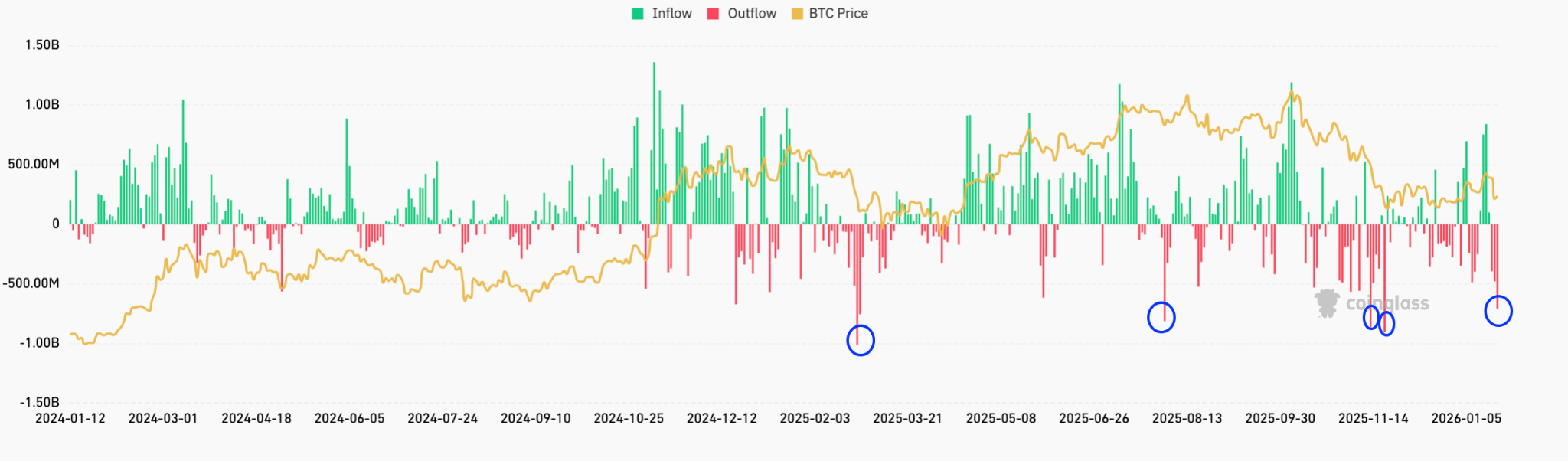
On Wednesday, US-based spot Bitcoin ETFs recorded outflows for a third consecutive day, totaling $708.7 million, according to data from CoinGlass.
This marked their largest single-day exit in two months and the fifth-largest withdrawal from these investment products since their launch in January 2024, as shown in the chart below.
BlackRock’s Bitcoin ETF, IBIT, posted the biggest outflows of $356.6 million. Fidelity’s FBTC followed with $287.7 million, alongside four other funds that saw outflows.
Meanwhile, spot Ethereum ETFs recorded a combined net outflow of $286.9 million on Wednesday across five funds.
The last three days saw a “historic $1.58B exit from Bitcoin ETFs. BlackRock and Fidelity are leading the charge in heavy institutional de-risking,” said analyst NekoZ in a reaction to the outflows.
The selling pressure from spot BTC ETFs coincided with the rejection at $90,000 on Wednesday amid growing macroeconomic uncertainty, which increased the probability of rangebound price action or further downside if the support at $84,000 breaks.
This article does not contain investment advice or recommendations. Every investment and trading move involves risk, and readers should conduct their own research when making a decision. While we strive to provide accurate and timely information, Cointelegraph does not guarantee the accuracy, completeness, or reliability of any information in this article. This article may contain forward-looking statements that are subject to risks and uncertainties. Cointelegraph will not be liable for any loss or damage arising from your reliance on this information.

