



Key points:
-
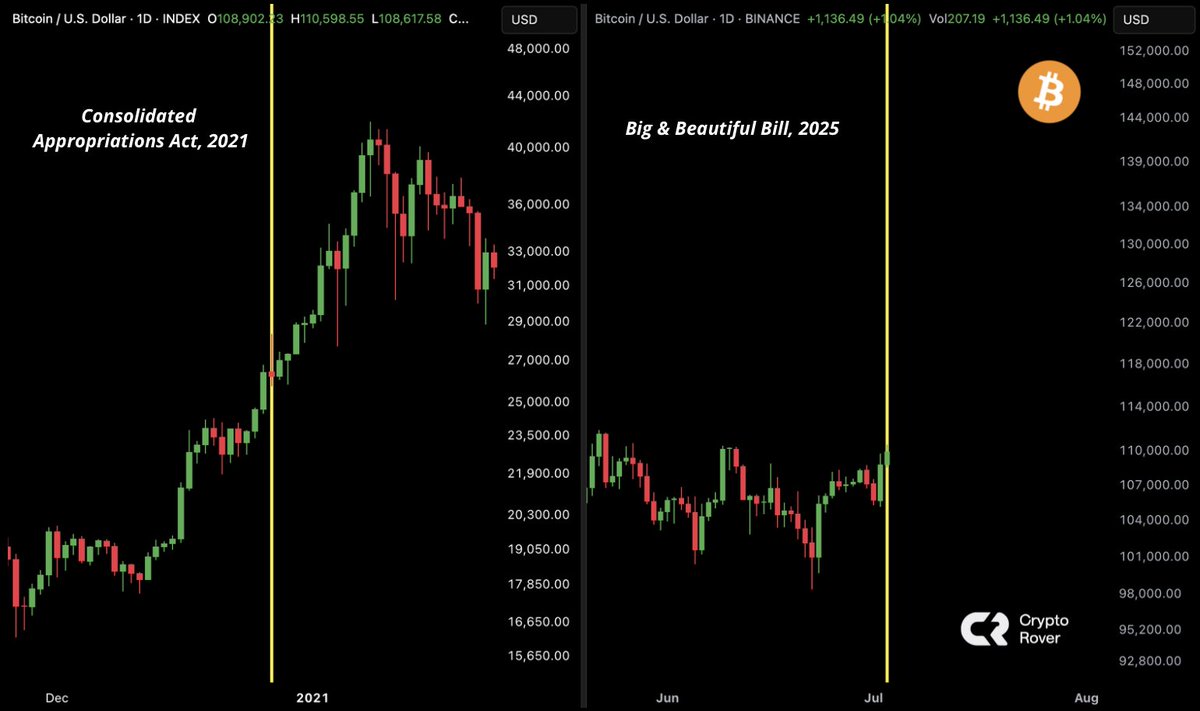
Bitcoin gained 38% when US President Trump signed a major spending bill in late 2020.
-
Doing so again would put BTC/USD at $150,000 as Trump prepares to sign his “Big Beautiful Bill” into law.
-
Global liquidity trends continue to favor BTC price upside, but Bitcoin may peak first.
Bitcoin (BTC) could gain nearly 40% after US President Donald Trump signs his “Big Beautiful Bill” on Independence Day.
Crypto market participants are eyeing swift BTC price gains as Trump’s “massive” spending bill becomes reality.
”Big Beautiful Bill” sparks COVID-19 bull market comparisons
Bitcoin has historically reacted extremely positively to signals that US borrowing will increase. Donald Trump’s “Big Beautiful Bill” could be no exception, as estimates see US national debt exploding to $40 trillion in 2025.
“To put this into perspective, at the start of 2020, total US debt stood at $23.2 trillion. This would mark a near $17 TRILLION increase in 6 years,” trading resource The Kobeissi Letter wrote in part of a recent analysis on the topic.
“Never in history has the US borrowed even remotely near the levels we are borrowing now. This is a crisis.”
LIVE: With the Big Beautiful Bill passing, national debt is forecasted to reach $40 TRILLION this year
No end in sight pic.twitter.com/9ZAWDIPGJt
— Kalshi (@Kalshi) July 3, 2025
Kobeissi referenced odds from prediction service Kalshi, which provided the $40 trillion figure.
In the past, however, Bitcoin has enjoyed the added risk that increasing the US debt mountain implies.
As noted by crypto X commentators, including YouTube account Crypto Rover, when Trump signed a COVID-19 spending bill in late 2020, BTC/USD subsequently gained 38% in a matter of weeks.
If the same price action were to follow the Big Beautiful Bill, Bitcoin would end up passing $150,000.
Bitcoin follows the money
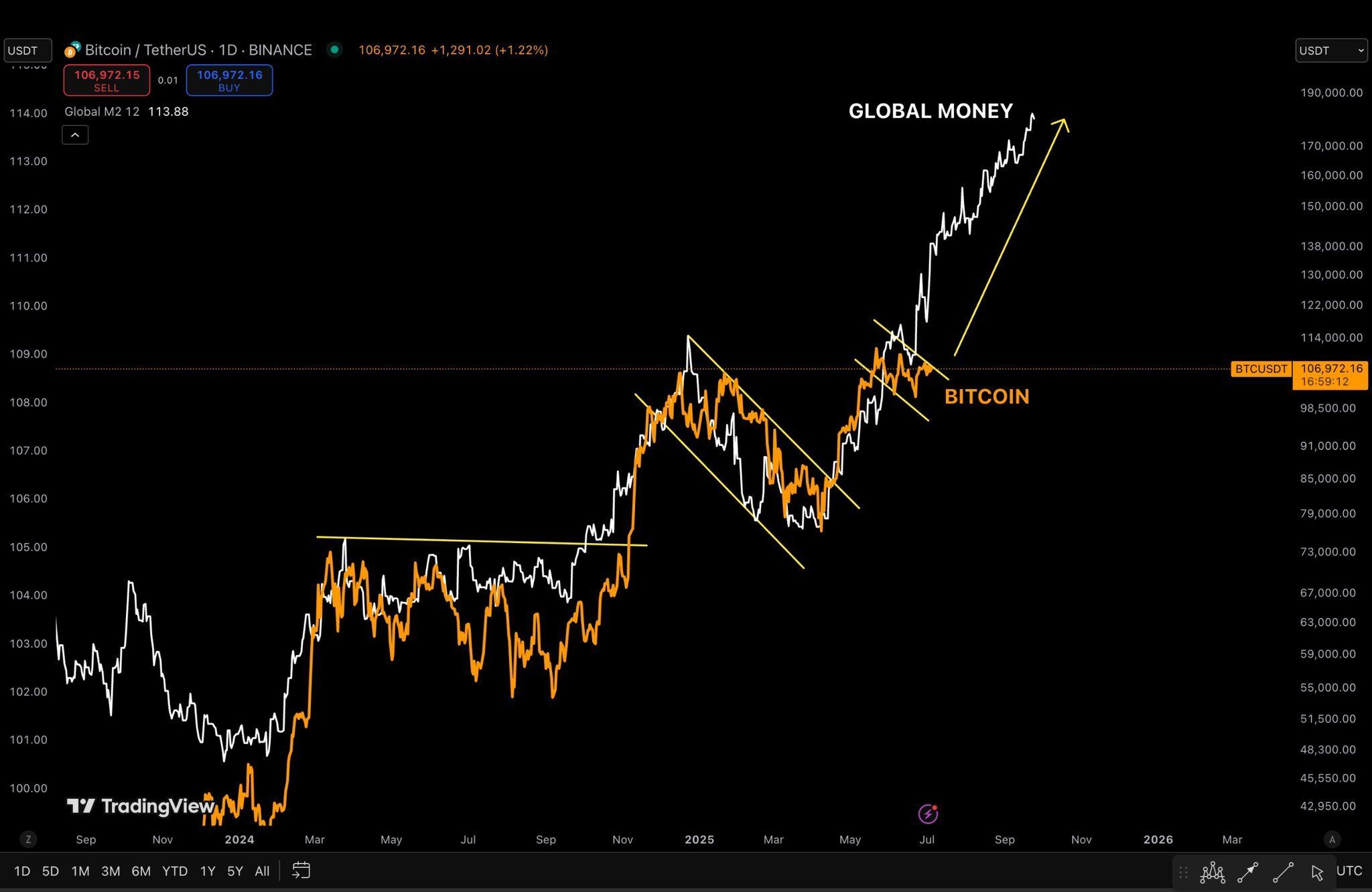
As Cointelegraph continues to report, bullish BTC price bets are also being fueled by an expanding global M2 money supply.
Related: Bitcoin due to copy S&P 500 to hit new all-time high in July: Forecast
A clear correlation has been evident throughout Bitcoin’s history, with BTC/USD following M2 both up and down with a slight delay.
Unpopular #BTC opinion
Global M2 will continue to climb after Bitcoin has peaked in its Bull Market$BTC #Crypto #Bitcoin
— Rekt Capital (@rektcapital) June 16, 2025
This month, popular trader and analyst Rekt Capital acknowledged that M2 can continue rising even after Bitcoin sees a bull market blow-off top.
On July 3, global M2 hit a new all-time high of more than $55.4 trillion.
This article does not contain investment advice or recommendations. Every investment and trading move involves risk, and readers should conduct their own research when making a decision.

