


Cryptocurrency exchanges Phemex and Binance are among the top players within the dynamic cryptocurrency trading industry. Our Binance vs Phemex crypto exchange comparison delves into particular aspects of both platforms. Among the factors we will examine are their backgrounds, trade volumes, supported cryptocurrencies, fee structures, and security features.
By examining the key factors that distinguish these two platforms, our guide will provide you with the insight you need to choose the exchange that best suits your trading needs.
Phemex Overview
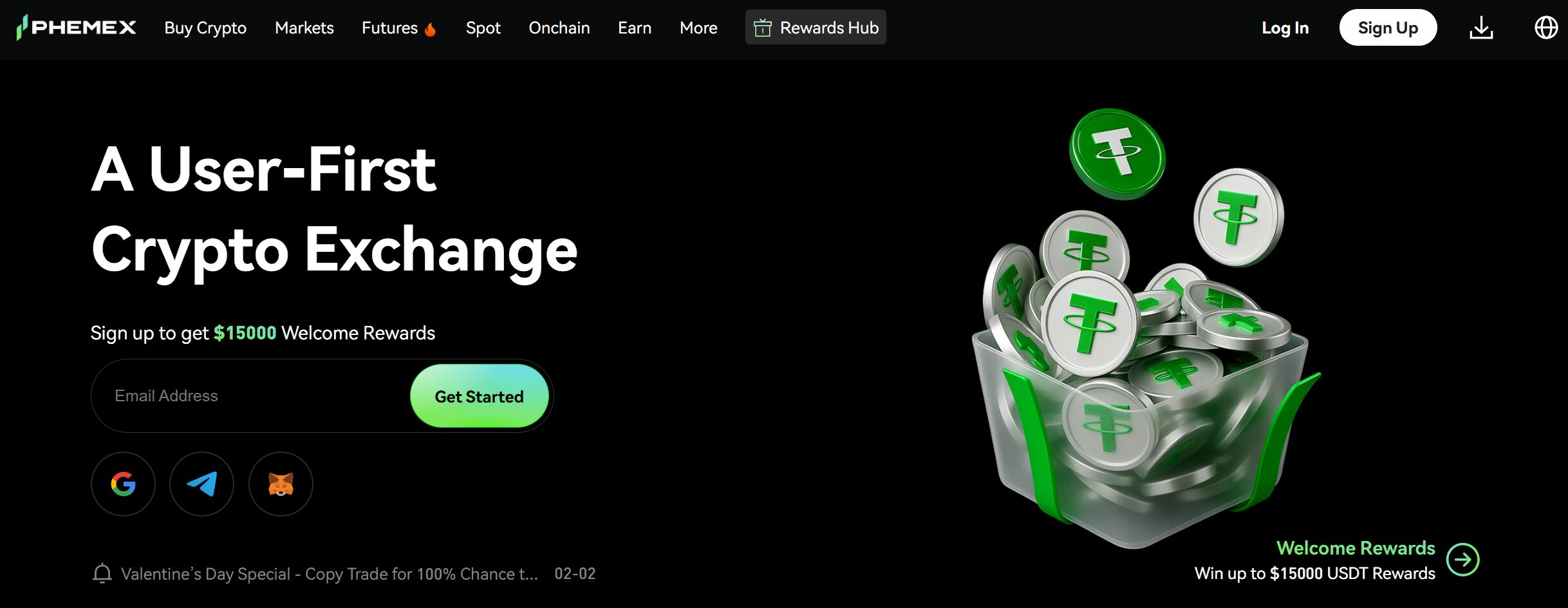
Phemex is a Singapore-based cryptocurrency exchange founded in 2019 by former Morgan Stanley executive Jack Tao. The platform offers users a no-KYC setup, making it a popular choice among privacy-focused crypto enthusiasts. The exchange is popular with traders for supporting perpetual contracts that offer up to 100x leverage, as well as providing educational resources and demo accounts for beginners. Since its founding, Phemex has maintained a record of robust security, with no reported hacking or safety compromises.

Pros of Phemex
- High liquidity that ensures minimum or no slippage, whatever the size of the trade
- Fast trading platform that can process over 300,000 transactions per second
- Flexible leverage for traders interested in derivative trading and margin trading, offering up to 100x leverage on ETH and BTC contracts
- Users can hold perpetual contracts indefinitely, as the platform supports no contract expiration, allowing long–term traders to enjoy flexibility.
- Integrates TradingView with its state-of-the-art charting tools for technical analysis
- Offers multi-collateral margin, allowing traders to use USD, USDT, or crypto as margin for more flexibility
- The platform offers a distinctive hybrid model that combines centralized finance and decentralized finance.
- A referral program that helps users earn rewards for referring friends to the exchange
- A functional mobile app that supports trading on the go
Cons of Phemex
- Phemex doesn’t yet operate in some key regions with a large number of traders, such as the EU or the US, due to a lack of regulatory approval.
- Doesn’t support direct fiat withdrawals, forcing users to convert to crypto for their fiat transfers
- No insurance fund is in place to cover losses in the event of a security breach or hack, and traders may lose their funds.
- The platform doesn’t support traditional futures contracts and only supports perpetual agreements.
- Fluctuating fee structure with long positions facing volatile rate changes
- A high VIP requirement that only benefits users with high trade volumes
- Customer support is bot-heavy, with users complaining of slow or delayed responses
Binance Overview
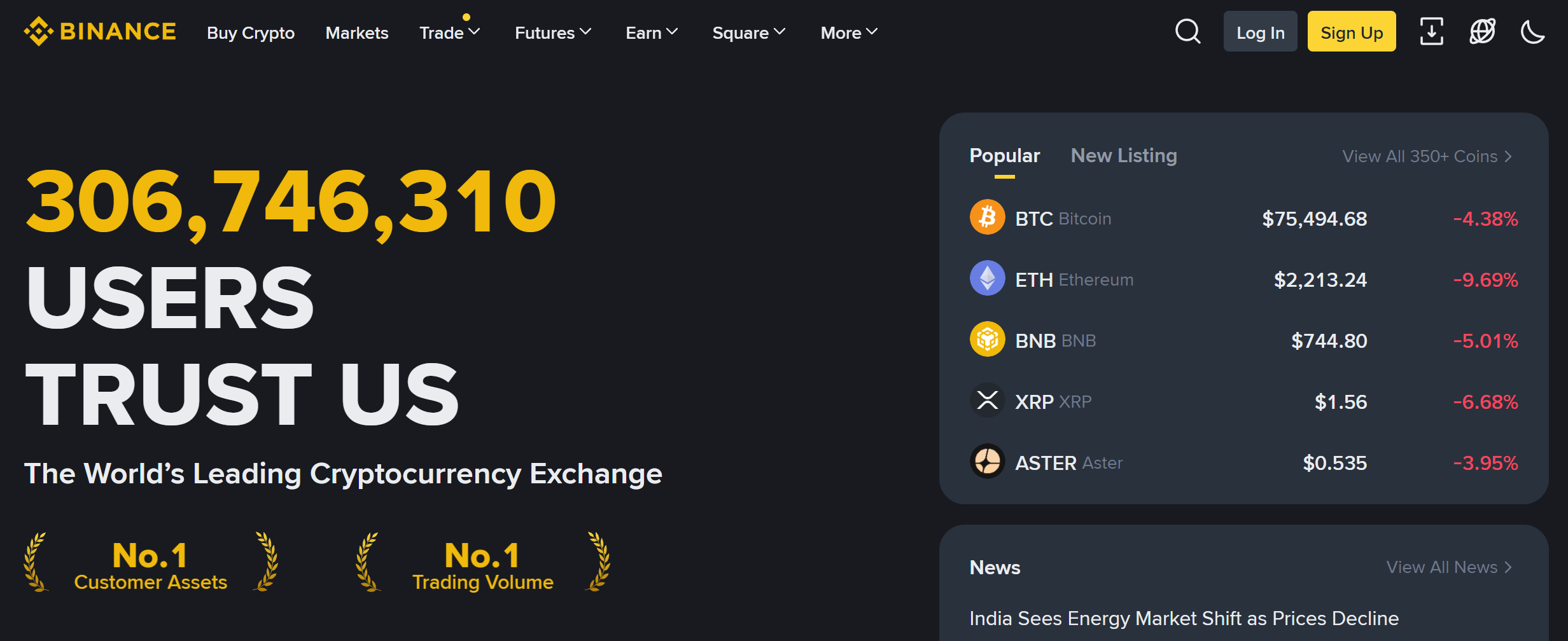
Binance, currently the world’s largest cryptocurrency exchange in terms of daily trade volume, was founded in 2017 by Changpeng Zhao (CZ). The platform supports over 350 cryptocurrencies and offers a range of advanced features, including liquidity farming, staking, and an NFT marketplace. Binance is renowned for its deep liquidity, competitive fee structure, and user-friendly mobile app, which supports trading on the go.

Pros of Binance
- Supports a wide range of cryptocurrencies and an extensive selection of trading pairs
- The platform is renowned for its high liquidity levels
- Binance offers among the most competitive trading fees in the entire market
- The exchange supports advanced trading features, including futures and spot trading, staking, margin trading, and a dedicated NFT marketplace
- The platform puts a strong focus on security, including an insurance program that covers the loss of user funds
- Globally accessible and available to users in most parts of the world
- Has a native cryptocurrency, Binance Coin (BNB), whose holders have access to numerous benefits, including huge discounts on transaction fees
- Allows traders to buy cryptocurrencies using their Debit/Credit cards
Cons of Binance
- The platform’s user interface offers extensive options and trading tools, which can appear complex and overwhelming to beginners.
- Binance has had several brushes with regulators and faced regulatory scrutiny in numerous jurisdictions.
- Customer support response times may be wanting, especially during peak periods where delays are experienced.
- A limited selection of supported fiat currencies
- The platform has experienced several security breaches and hacks in the past.
- Withdrawal fees are applicable for a select number of cryptocurrencies
- There have been user data privacy concerns surrounding the platform in the past
Phemex vs Binance: Trading Features
Phemex
Phemex exchange offers an all-inclusive suite of trading features tailored to meet the diverse needs of its users.
- Contract Trading: This feature enables users to buy or sell cryptocurrencies at a pre-determined price at a future date. Leverage is available to contract traders, allowing them to achieve higher earnings or losses. By using leveraged trading, users can borrow funds to amplify their position by up to 100 times.
- Savings Account: Users can deposit their idle cryptocurrencies into a Phemex savings account and earn interest.
- Phemex Derivatives Trading: Phemex is popular among traders for its derivatives trading offerings. The feature supports 150+ USD-M and Coin-M perpetual contracts.
- Phemex Sub-Accounts: This distinctive feature enables users to set up a sub-account within their existing account, allowing them to hold both long and short positions concurrently. It applies to issues such as using trade bots, hedging positions, or testing different strategies. Users can create up to 20 sub-accounts.
- Phemex Earn: This feature offers multiple ways for users to earn interest on the crypto they hold on the platform. The options include the Flexible Saving Product, where users can lock in products and earn interest ranging from 0.3% to 2% on Bitcoin, Solana, Ethereum, and supported stablecoins. The other option is a Fixed Savings Account, which allows users to lock in assets for a specified period and earn a higher interest rate. The APYs can range from 0.5% to 8.80%, depending on the lock-in period.
Binance
The Binance platform offers a wide range of advanced trading features and passive income opportunities for traders, including:
- Binance Fiat Gateway: Users can buy over two dozen cryptocurrencies using more than 65 fiat currencies via their bank cards and other popular methods. The platform also supports the sale of cryptocurrency for fiat currencies.
- Competitive trading fees: Binance offers among the lowest trading fees in the market, in addition to introducing fee-free trading for several BTC and ETH trading pairs.
- Multi-platform support: Users can access Binance through various platforms, including web-based and desktop-based interfaces for macOS and Windows machines, as well as a mobile app that supports both Android and iOS devices.
- Binance Futures: Offers up to 125x leverage for futures and up to 3x leverage on margin trading.
- Binance Launchpad: The feature acts as an alternative listing model to the popular ICO model. All Binance users are eligible to participate in initial exchange offerings (IEOs) on the launch pad.
- Binance Finance: This is a unique feature that enables traders to earn passive income from their crypto assets through lending, staking, and other related methods.
Phemex vs Binance: Fees
When comparing Phemex and Binance, it is essential to understand their fee structures and reward systems to maximize profitability.
Trading Fees
- Phemex Fee structure: Phemex charges 0.075% as taker fees and 0.025% as maker fees.
- The platform offers rebates for high-volume makers, where, for example, a trader executing a $10,000 maker order can receive a $2.50 rebate.
- Binance Fee Structure: Binance charges taker fees of 0.04% (which may vary based on 30-day trading volume and BNB holdings) and maker fees ranging from 0.025% to 0.10%. Crypto withdrawal fees may differ from one crypto to another.
The exchange operates a tiered fee structure that favors BNB coin holders and frequent traders. For instance, traders who pay with BNB can receive a 25% discount on trading fees.
Deposit and Withdrawal Fees
- Phemex Deposit: Deposits are free
- Withdrawal: A withdrawal fee of 0.0005 BTC per Bitcoin is applicable.
- Binance Deposit: Deposits are free for most cryptocurrencies
- Withdrawal: The fees for different cryptocurrencies may vary, but they begin at 0.0005 BTC for Bitcoin withdrawals.
When choosing between Phemex vs Binance, you need to carefully compare the fee structures and ensure they align with your trading strategies. Consider factors such as trade frequency, trade size, or whether they offer rewards or fee discounts.
Phemex vs Binance: Products & Services
Both crypto exchanges offer a broad range of trading features tailored to different types of crypto traders. These include:
Spot Trading
Binance offers a wide range of spot trading options with high liquidity and substantial trade volume. The platform supports a wide array of trading pairs, making it more suitable for users seeking extensive trading options. On the other hand, Phemex offers a hassle-free spot trading experience focusing on speed and simplicity. New users will find the Phemex interface to be less cluttered and easier to use.
Futures Trading
Phemex stands out among many crypto exchanges with its futures trading product, which focuses on perpetual contracts for select digital assets. The exchange specializes in futures, making it a suitable choice for traders primarily interested in futures trading. Binance offers futures trading product, as well as a broader range of products, including quarterly contracts. The platform offers higher liquidity with leverage of up to 125x for selected futures.
Options Trading
Binance offers crypto options trading, providing flexibility for hedging or speculating on market movements. Phemex doesn’t yet offer this product.
Leveraged Tokens
Binance supports leverage tokens, which enable traders to take prominent positions with capital on various cryptocurrencies —a feature that Phemex doesn’t currently offer.
NFT Marketplace
Binance users can buy, sell, and mint NFTs on the platform’s NFT marketplace. Phemex is yet to enter the NFT space.
Staking
Binance supports crypto staking, allowing users to earn passive income by staking various cryptocurrencies. Phemex doesn’t have a staking platform.
When comparing Binance and Phemex, you’ll notice that Binance offers a more comprehensive trading product range, catering to traders with diverse needs and preferences. On the other hand, Phemex excels in futures trading, offering a more streamlined trading experience for users who prefer speed and simplicity.
Phemex vs Binance: Supported Cryptocurrencies
According to CoinMarketCap, Phemex supports at least 250 assets, including over 137 contract trading pairs and more than 238 spot trading pairs. Users can buy, sell, or trade numerous cryptocurrencies, including BTC, ETH, USDT, and DOGE, among others.
Binance, on the other hand, supports over 350 cryptocurrencies, including a wide range of altcoins and DeFi tokens. This includes popular coins such as Bitcoin (BTC), Ethereum (ETH), and Binance Coin (BNB), among others.
Phemex vs Binance: Regulation & Availability
Phemex operates under specific regulatory considerations and, like most other platforms, it’s not available in all jurisdictions and areas due to strict regulatory requirements. Access to the platform is restricted, primarily in the United States, as the country’s financial regulators, including the SEC and CFTC, have imposed stringent requirements.
Binance, on the other hand, adheres to varying degrees of regulatory standards in different countries worldwide. The platform has been working hard to establish local entities and comply with local regulations in various jurisdictions. Binance has subsidiaries in multiple countries, including Singapore, Malta, and the United States, as a means of complying with local laws and regulations.
Phemex vs Binance: Security
Cryptocurrency trading involves money, and users want to be assured of a secure trade experience. That’s the reason this Binance vs Phemex comparison guide examines the security features of both crypto exchanges.
Phemex
Phemex implements a state-of-the-art security arrangement with various functionalities employed to provide a safe and secure trading environment for clients. Among the robust security features you will find on the platform are a hierarchical deterministic cold wallet, used to store user funds securely. Other security measures include two-factor authentication (2FA) to prevent unauthorized access and a system infrastructure supported by Amazon Web Services.
Binance
Binance implements a robust security system that includes a multi-tiered security architecture. This enables users to access the advanced trading infrastructure safely and securely. The platform also utilizes a cold wallet system to secure users’ funds and protect against online attacks from hackers. The platform encourages users to enable two-factor authentication, in addition to IP Whitelisting and other advanced security measures, to ensure the highest level of security.
Phemex vs Binance: Trading Volume and Liquidity
Trading volume plays a significant role in determining the value of a cryptocurrency exchange, as it affects transaction execution speed, trade efficiency, and price slippage.
Binance is renowned for its substantial trade volume and high liquidity. As a result, transactions can be executed in a matter of minutes with minimum slippage. This is one factor that makes the platform the preferred choice of high-frequency traders.
Compared to Binance, Phemex has a relatively lower trade volume, but it still manages to maintain competitive liquidity. As a result, the speed of transaction execution may be slower, and there’s a slightly higher slippage relative to Binance.
Phemex vs Binance: KYC Requirement
Traders on Phemex can enjoy the privilege of trading anonymously as the platform doesn’t implement KYC standards. However, while KYC registration is optional, providing the information gives users access to more advanced features in the platform.
Binance, on the other hand, requires a mandatory KYC/AML implementation for all users to access platform features. The mandatory KYC implementation is designed to ensure robust security. However, strict adherence to compliance makes the platform less appealing to users who are concerned about their privacy.
Phemex vs Binance: Mobile App
Both Phemex and Binance offer mobile apps that provide users with comprehensive functionality. The Phemex mobile app is designed to provide speed and usability, which makes it suitable for fast trades on the go. The Binance phone app is designed with additional advanced features specifically tailored to facilitate advanced trading experiences.
Phemex vs Binance: User Experience
When comparing Binance and Phemex in terms of user experience, both crypto platforms cater to different clients with varied needs. In terms of interface design, Phemex’s platform features a white background that is not only straightforward but also clean and attractive. On the Binance side, the platform features a modern, aesthetically pleasing design with a black background.
Phemex vs Binance: Customer Support & Service
When comparing Binance vs Phemex, traders must also consider customer support when choosing a trading platform. This is especially important for new traders who may come across technical issues when using the platform for depositing or withdrawing funds. That’s because customer care makes a big difference in a trader’s experience. So, how do the two cryptocurrency exchanges compare?
Phemex
Phemex offers 24/7 support via live chat on its website. Users can also reach the customer support team via email or a dedicated Telegram group. For users interested in gaining more knowledge about cryptocurrency, the platform offers an all-inclusive knowledge base, including blogs, an FAQ section, and general articles that address the most common issues.
Binance
As for Binance, the customer support team addresses customer needs through a virtual chatbot feature that provides answers to the most basic questions about the platform’s services. Users who require personal assistance can also contact the platform via email or the customer service team’s Telegram account.
How to Choose a Crypto Exchange for Yourself?
Navigating the world of crypto can be an overwhelming exercise, especially when you consider the number of platforms you’re going to choose from. With each platform claiming to be the best, selecting the right platform for your needs becomes a critical exercise. That’s because your choice will determine the success of your investment plan, trading experience, and the security of your assets.
It doesn’t matter whether you’re a beginner just taking baby steps in crypto trading or an experienced hand seeking advanced features. You want to locate an exchange that combines essential features such as competitive fees, robust security, an easy-to-use interface, and a streamlined trading experience.
The following are the features to look for when choosing a cryptocurrency exchange:
Give Security a First Priority
The security of crypto exchanges should be your primary concern when choosing a platform. Due to the digital nature of cryptocurrencies, they have become easy targets for online hackers, who steal millions of dollars’ worth of crypto when they breach security. To protect your investment, look for exchanges that employ robust security measures, such as cold storage, two-factor authentication (2FA), and regular security audits. There are crypto exchanges that offer insurance coverage for user funds, in addition to maintaining clear communication regarding their security practices.
Trading Features and Functionality
Since every trader has their own different needs, you want to choose a crypto exchange offering the features that address your needs. If you’re starting, prioritize factors such as simplicity in buying and selling. However, if you’re experienced, don’t shy away from a platform with advanced features, such as sophisticated charts, multiple order functionality, or margin trading functionality. Consider a platform with advanced features if you plan to engage in futures contracts, spot trading, staking services, margin trading, and advanced functions such as limit orders and stop-losses.
Supported Crypto Assets and Trading Pairs
The number of supported crypto assets and trading pairs has a direct impact on your investment opportunities. Bitcoin and Ether may be the dominant cryptocurrencies in the market, but there are several other altcoins, including meme coins, that also have trading potential. Select an exchange that adds emerging coins regularly and maintains high liquidity across different trading pairs.
Fees and Cost Structure
Transaction fees across crypto exchanges can easily eat into your profitability, especially when you’re an active trader. Many platforms implement a maker-taker fee model, where makers pay lower fees than takers. Take the time to compare different fees, such as margin trading fees, deposit and withdrawal fees, trading fees, and conversion fees, between cryptocurrencies. You must also be cautious of crypto exchanges that have hidden costs.
Interface Design and User Experience
An intuitively designed platform will enhance your trading experience and could mean the difference between successful trades and a frustrating experience. Select an exchange with a clean-looking, user-friendly interface that turns even the most complicated trading process into a fulfilling experience. The key factors to consider include clarity in navigation, fast loading times, comprehensive help documentation, and seamless mobile app functionality.
Liquidity and Market Depth
A crypto exchange’s liquidity level determines how quickly you can buy or sell a crypto asset, which in turn affects its market price. With high liquidity comes better execution of large orders, tighter spreads, and stable pricing.
Compliance and Reputation
Opt for an exchange that prioritizes compliance with existing regulations. This will help eliminate the possibility of legal complications and service interruptions. Conduct thorough research to determine if the platform holds valid regulatory licenses, review the company’s background, read online user reviews, and assess its transparency in operations.
Conclusion: Which is better?
When comparing Phemex and Binance, both crypto exchanges share similarities and have some differences. They have both invested in creating robust trading platforms and implementing secure trading infrastructure. Moreover, both exchanges offer high trading volumes and good-quality customer support.
Phemex appears ideal for beginners seeking a user-friendly platform with high volume, low fees, and an intuitive interface, complemented by a comprehensive futures market. However, if you have established a foothold in the market and are seeking more advanced features, then Binance is the way to go. Binance supports a broader range of cryptocurrencies and offers lower transaction fees, but its interface has more features, which can make it more complicated.
Although the Binance platform may appear intimidating at first, it’s worthwhile to learn how to use it effectively. That’s because Binance offers several earn and finance products that make it excel in the broader cryptocurrency market. You select the best crypto exchange between Binance vs Phemex depending on your preferences.
FAQs
Both Phemex and Binance have competitive fee structures, particularly for high-volume trading. The standard spot trading fee for Binance starts at 0.1%, which can be reduced through its VIP program, targeting high-volume traders and BNB holders. On the other hand, spot trading fees on Phemex begin at 0.1%, with maker and taker fees at 0.01% and 0.06%, respectively.
Binance may have a more robust trading platform, but when it comes to user friendliness for beginners, Phemex has an edge over Binance for new traders.
While Phemex offers a simpler trading fee structure, Binance provides better leverage and a wider range of trading options. Moreover, Phemex doesn’t currently offer as many trading options as Binance, making Binance a better choice.
Binance may offer better staking rewards compared to Phemex, in addition to having a more comprehensive staking platform. Phemex offers a staking option that includes the Launchpool with higher APYs. Still, Binance provides a broader range of staking options with more flexible lock-up periods and support for a wider range of cryptocurrencies.
Several Binance alternatives offer robust security, competitive fees, and advanced trading features to cater to traders with different needs. Such platforms also prioritize broad cryptocurrency support, accessibility, security, and feature user-friendly interfaces. Among the best alternatives are Coinbase, Kraken, KuCoin, eToro, OKX, and Bybit.

