


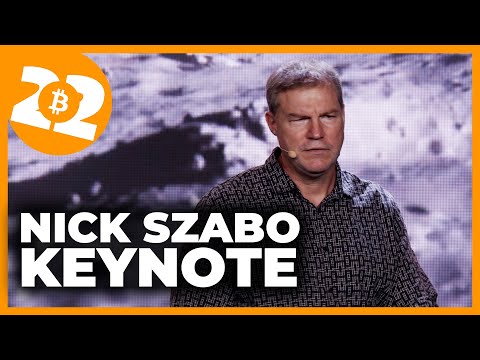
At a Bitcoin conference in 2021, Nick Szabo, often called the father of smart contracts, reflected on those early experiments. His memories offer a reminder that Bitcoin did not appear out of thin air. It grew from decades of trial, debate and failed but valuable attempts.
In the mid 1990s, Szabo recalled reading Extropy magazine, a niche publication that explored how technology could reshape society. In a 1995 issue, writers discussed ideas like virtual banks and a digital currency called Hayeks. These concepts were not usable products. They were thought experiments. That same year, Szabo proposed the idea of smart contracts, simple computer programs that automatically enforce agreements without needing a trusted middleman.
Early Digital Money and Minimal Trust
One of the most important real world examples Szabo pointed to was DigiCash, created by cryptographer David Chaum in the late 1980s. DigiCash used a technique called blind signatures. In simple terms, this allowed users to make payments without revealing their identity to the issuer. Its test token, Cyberbucks, is often described as the first true private digital currency.
DigiCash eventually failed as a business, but its ideas lived on. It proved that digital cash could work with very little trust in central parties. That lesson shaped later designs. In the late 1990s and early 2000s, Szabo helped run the Libtech mailing list, a small online forum where developers shared ideas about privacy, money and cryptography.
Those conversations directly influenced several key projects that came before Bitcoin. Bit Gold, designed by Szabo, explored how scarce digital assets could be created without a central issuer. Wei Dai’s b money proposed a distributed ledger for tracking balances. Hal Finney’s RPOW tested reusable proof of work. None of these systems fully solved the problem. Together, they formed the missing pieces Bitcoin later assembled.
Why These Ideas Matter Today
This history feels newly relevant. A recent trend in crypto is a renewed focus on fundamentals. As speculation cools, builders are returning to core ideas like trust minimization and user control. Smart contracts now secure real value. Ethereum alone processes more than one million transactions per day and supports tens of billions of dollars in decentralized finance.
Father of Smart Contracts Reflects on the Decentralized Experiments Before Bitcoin’s Birth
Nick Szabo, “father of smart contracts,” recalled at a 2021 Bitcoin conference that the 1995 Extropy magazine discussed concepts like virtual banks and a digital currency called… pic.twitter.com/grGGbyAAiP
— Wu Blockchain (@WuBlockchain) January 30, 2026
For investors, this context matters. Bitcoin and modern blockchains are not sudden miracles. They are the result of long experimentation and careful iteration. Understanding those roots helps explain why decentralization and simplicity remain central values.


Disclaimer
The information provided by Altcoin Buzz is not financial advice. It is intended solely for educational, entertainment, and informational purposes. Any opinions or strategies shared are those of the writer/reviewers, and their risk tolerance may differ from yours. We are not liable for any losses you may incur from investments related to the information given. Bitcoin and other cryptocurrencies are high-risk assets; therefore, conduct thorough due diligence. Copyright Altcoin Buzz Pte Ltd.


