


US President Donald Trump has nominated Kevin Warsh as the new Federal Reserve chair, which introduced a mixed signal for cryptocurrency markets and dollar liquidity, threatening to extend the current consolidation.
Trump nominated Bitcoin-friendly Warsh on Friday, and he is set to replace Jerome Powell when his term ends in May, assuming the Senate approves him.
Warsh’s nomination could mean the Fed will continue its interest rate cut trajectory. But according to Thomas Perfumo, a global economist at cryptocurrency exchange Kraken, it also signals that broader market liquidity is expected to “stabilize rather than meaningfully expand.”
He told Cointelegraph:
“This sustains the mixed macro backdrop for Bitcoin and crypto, which are sensitive to overall liquidity conditions, perhaps moreso than changes to the Fed Funds Rate.”
However, investors may be disappointed with Warsh’s “skeptical posture on balance sheet expansion,” explained Perfumo, which includes measures like quantitative easing — a shift that involves bond-buying to lower borrowing costs and stimulate economic activity.
Related: Crypto loses speculative edge as AI and robotics attract capital: Delphi
The comments come shortly after cryptocurrency markets lost $250 billion in market capitalization over the weekend, as part of a wider sell-off impacting stock markets and precious metals.
Popular analyst Raoul Pal pointed to the US liquidity drought as the main reason behind the crypto and equities crash, rather than crypto-specific events, Cointelegraph reported earlier on Monday.
Related: Top Bitcoin mining stocks rise as US winter storms cut hashrate
Market crash caused by Warsh nomination, liquidity concerns: Puckrin
Warsh’s nomination ignited liquidity concerns among investors, becoming the main reason for the crash in crypto, stocks and precious metals, according to Nic Puckrin, investment analyst and co-founder of educational platform Coin Bureau.
“Markets are digesting Warsh’s views on future Fed policy – most notably the central bank’s balance sheet, which he says is ‘trillions larger’ than it needs to be,” the analyst told Cointelegraph, adding:
“If he does indeed adopt policies to shrink the balance sheet, markets will have to reckon with a lower-liquidity environment – a backdrop that isn’t supportive of either risk assets or precious metals.”
Still, questions remain on Warsh’s interest rate policy and how much he is “willing to align himself” with Trump’s push for lower interest rates, said Puckrin.
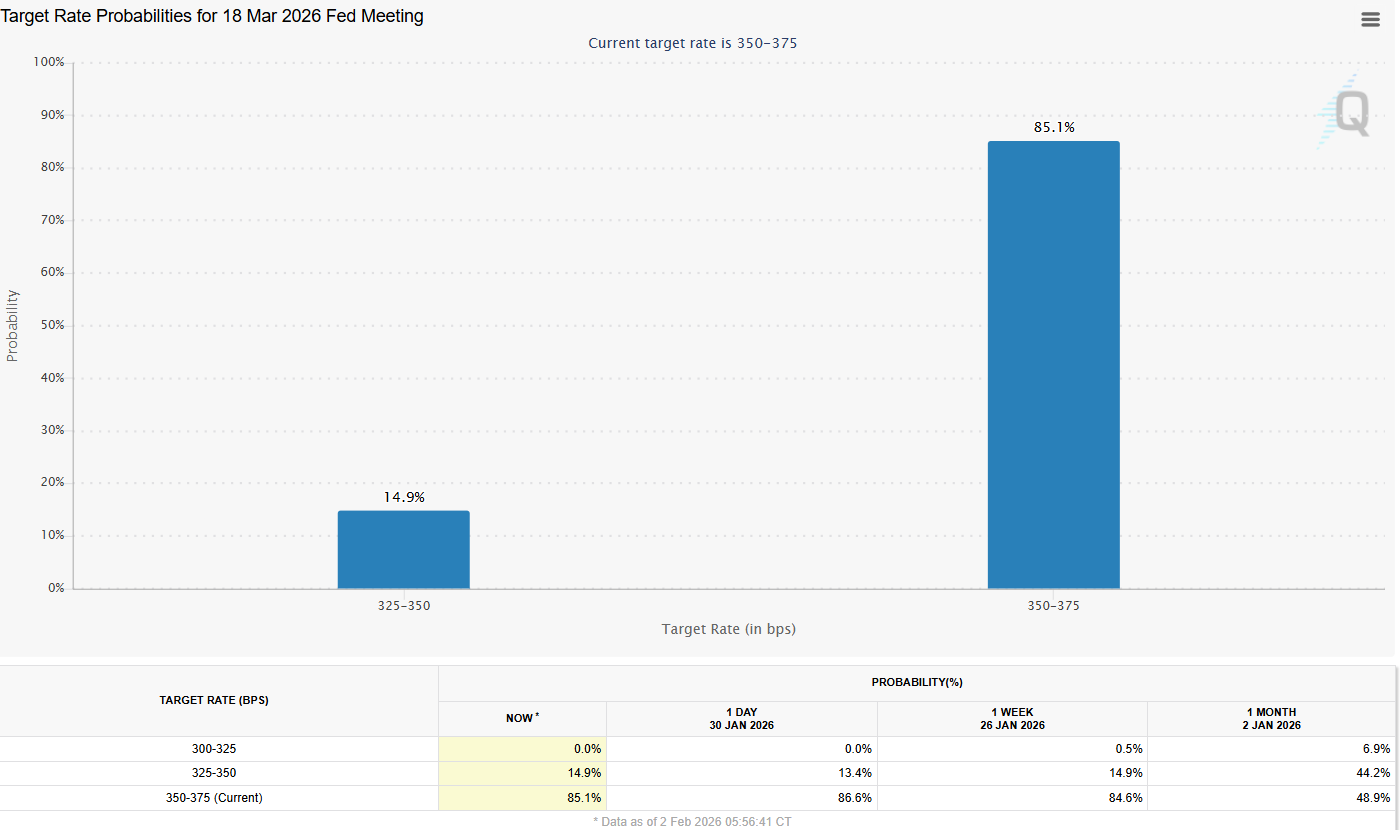
Interest rate expectations have remained largely unchanged since Warsh’s nomination, with 85% of market participants expecting rates to remain steady at the next meeting on March 18, according to data from the CMEGroup’s FedWatch tool.
Interest rate policy expectations also remain stable for the June 17 meeting, with 49% expecting a 25 basis-point interest rate cut, up from 46% the week prior. This would mark the date of the first Federal Open Market Committee meeting after Powell’s term ends in May.
Magazine: Mysterious Mr Nakamoto author — Finding Satoshi would hurt Bitcoin