


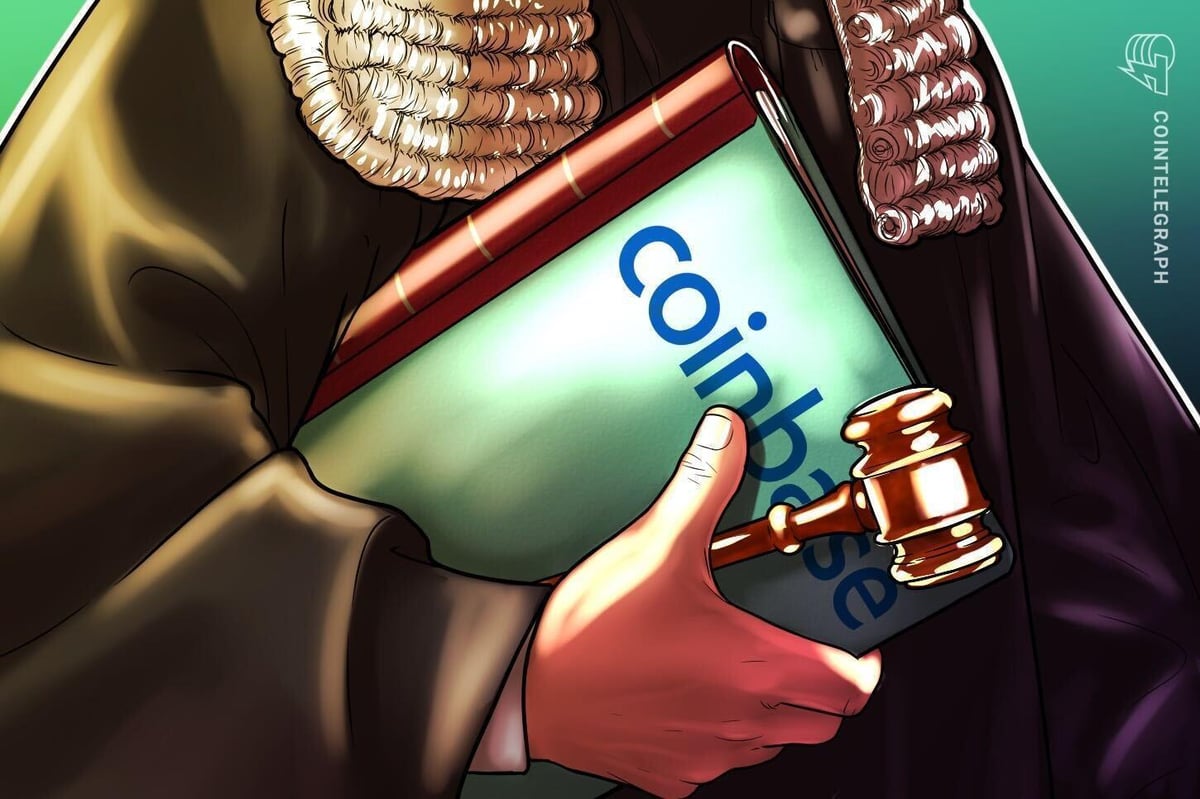
A Delaware judge has allowed a shareholder lawsuit accusing several Coinbase directors of insider trading to proceed, despite an internal investigation that cleared the executives of wrongdoing.
The case, filed by a Coinbase shareholder in 2023, alleges that company directors, including CEO Brian Armstrong and board member Marc Andreessen, used confidential information to sidestep more than $1 billion in losses by selling shares around the company’s public debut in 2021. According to the complaint, insiders sold more than $2.9 billion worth of stock, with Armstrong personally offloading about $291.8 million.
On Friday, Delaware Chancery Court Judge Kathaleen St. J. McCormick rejected a request to dismiss the suit following a probe by a special litigation committee formed by Coinbase, Bloomberg Law reported. While the judge noted that the committee’s findings present a strong defense for the directors, she ruled that questions surrounding the independence of one committee member were enough to keep the case alive, per the report.
The claims center on Coinbase’s decision to go public through a direct listing rather than a traditional initial public offering (IPO). Unlike an IPO, the direct listing did not include a lockup period, allowing existing shareholders to sell immediately, nor did it involve issuing new shares that could dilute ownership.
Related: Coinbase launches prediction markets in all 50 US states via Kalshi
Andreessen accused of selling $118 million in Coinbase shares
Andreessen, who joined Coinbase’s board in 2020, is accused of selling roughly $118.7 million in shares through his venture firm, Andreessen Horowitz. The plaintiff alleges the directors knew Coinbase’s valuation was inflated and sold stock to avoid subsequent losses.
Coinbase and the defendants have denied the allegations, arguing there is no evidence they possessed or acted on material nonpublic information. Coinbase reportedly told Bloomberg Law that it was “disappointed by the court’s decision” and vowed to continue fighting the “meritless claims.”
The lawsuit was paused last year while the special litigation committee conducted a 10-month review. The committee ultimately recommended ending the case, concluding the sales were limited and largely aimed at providing sufficient liquidity for the direct listing. It also argued Coinbase’s share price closely tracked Bitcoin (BTC)’s movements, rejecting claims the trades were driven by insider knowledge.
However, the shareholder challenged the committee’s independence, pointing to past business ties between committee member Gokul Rajaram and Andreessen’s firm. McCormick agreed that those connections raised legitimate concerns, but acknowledged there was no suggestion of bad faith.
Cointelegraph reached out to Coinbase for comment, but had not received a response by publication.
Related: Coinbase, JPMorgan CEOs clashed over market structure bill at Davos: Report
Coinbase faces new insider trading allegations
Meanwhile, new allegations of insider trading have surfaced after crypto researchers claimed certain traders may have profited from advance knowledge of token listings on Coinbase. The claims suggest that blockchain data and technical signals may have been used to anticipate which assets the exchange was preparing to list, allowing some market participants to trade ahead of public announcements.
In response, Coinbase said it plans to adjust its token listing process over the coming quarters to reduce information leaks and uneven access to market signals.
Magazine: Bitget’s Gracy Chen is looking for ‘entrepreneurs, not wantrepreneurs’