


The European Union’s new crypto tax reporting regime under DAC8 is intentionally focused on enforceable targets, leaving decentralized finance (DeFi) outside its scope for now.
Colby Mangels, a former adviser to the Organisation for Economic Co-operation and Development (OECD) and now Taxbit’s global head of government solutions, said the rules prioritize identifiable intermediaries such as custodians and exchanges, which will be required to collect and report standardized user activity data under the OECD’s Crypto Asset Reporting Framework (CARF).
However, the DeFi carve-out may not last. Mangels said tax authorities are increasingly drawing on Anti-Money Laundering (AML) frameworks to define accountability in crypto markets, and regulators are closely watching whether DeFi platforms can be classified as virtual asset service providers.
Animoca, RootstockLabs partner to bring Bitcoin DeFi to Japanese institutions
Animoca Brands Japan partnered with RootstockLabs to bring Bitcoin-native DeFi tools to Japanese corporations, with a focus on treasury management.
The collaboration will localize Rootstock’s institutional program for Japan, enabling companies to manage their Bitcoin holdings and access onchain financial tools built on the Rootstock network, which is secured by Bitcoin’s proof-of-work (PoW) through merged mining.
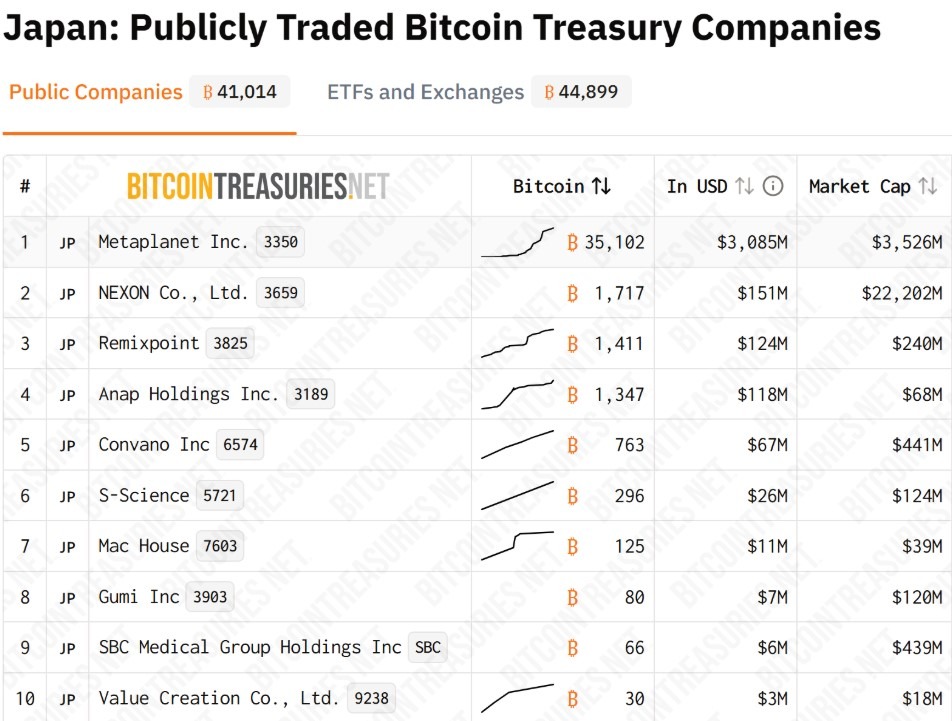
The move reflects growing interest among Japanese companies in using Bitcoin as a treasury asset, with companies exploring infrastructure beyond simple custody.
US senators to weigh amendments to crypto market structure bill, DeFi
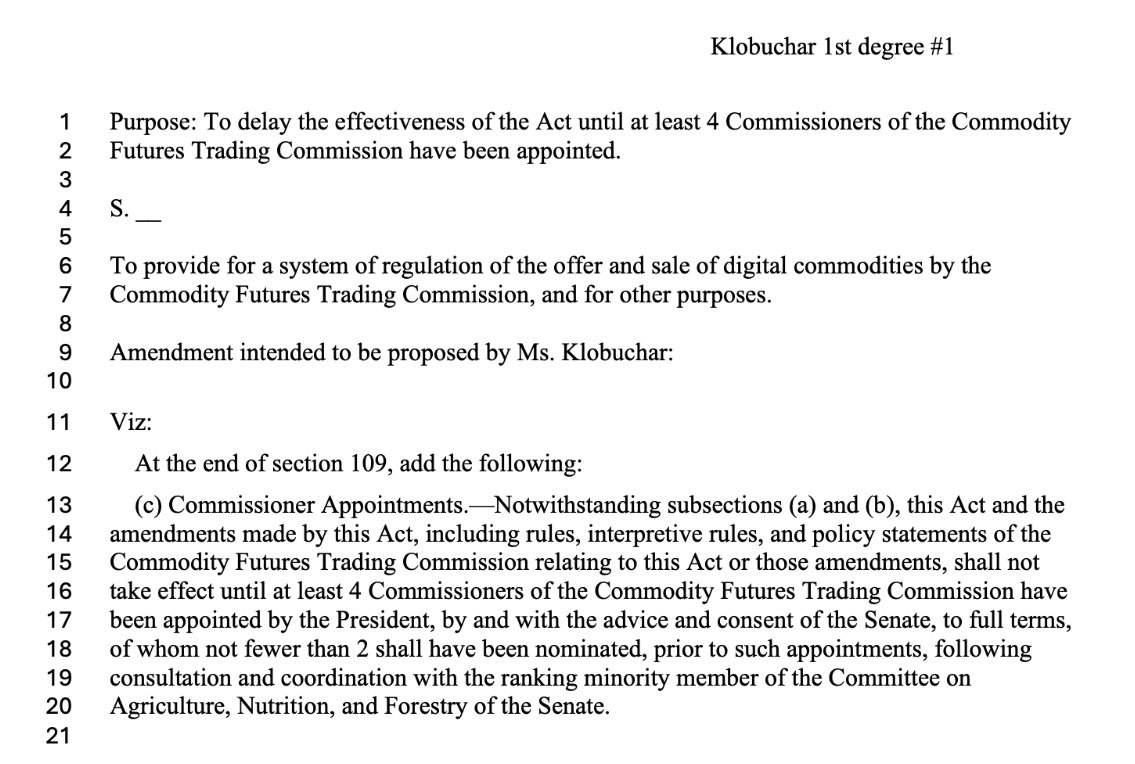
US senators are preparing to weigh amendments to the Digital Commodity Intermediaries Act (DCIA), a long-awaited crypto market structure bill, with decentralized finance emerging as one of the contested areas.
The bill would clarify regulatory roles between the Commodity Futures Trading Commission and the Securities and Exchange Commission, but lawmakers and industry groups have raised concerns over how provisions affecting DeFi could be implemented.
The debate signals that DeFi remains a fault line in US market structure talks, even as lawmakers pushed to advance a framework after years of delay.
DePIN grows into a $10 billion sector despite token slump, Messari says
A new “State of DePIN 2025” report from Messari and Escape Velocity says decentralized physical infrastructure networks (DePIN) have quietly grown into a roughly $10 billion sector, generating about $72 million in onchain revenue last year.
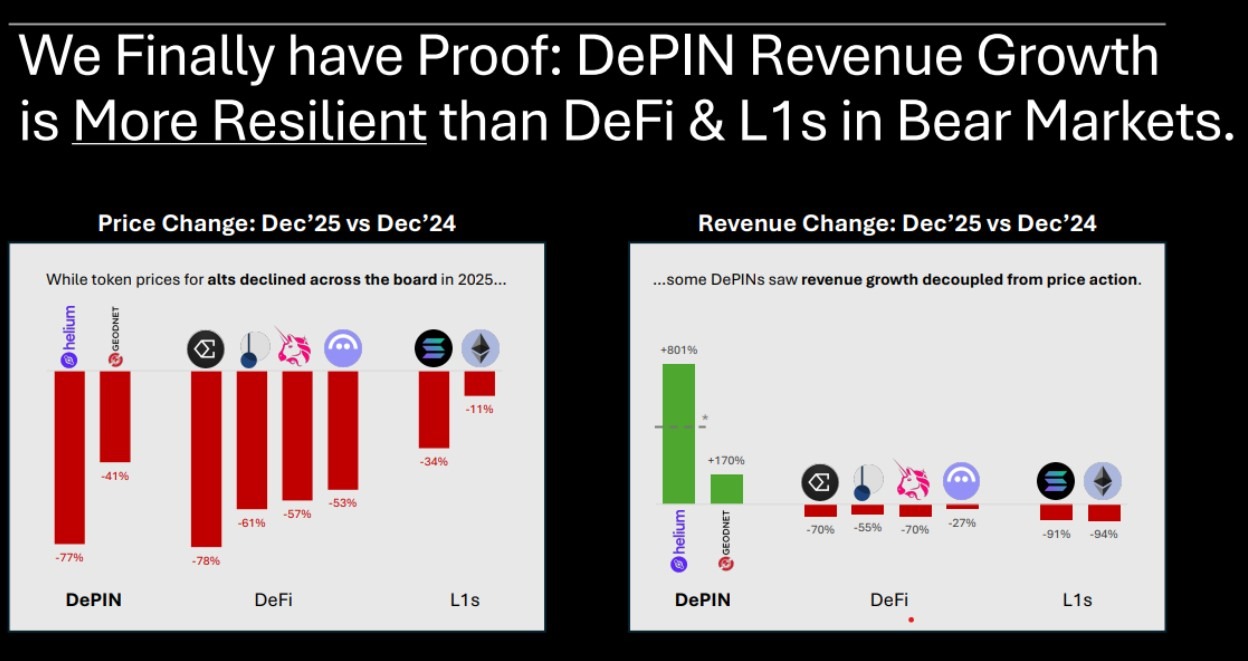
While many tokens in the category are down 90% or more from prior highs, the report finds that the leading networks are posting recurring revenue from real-world usage across areas like bandwidth, compute, energy and sensor data.
Messari said DePIN is moving closer to an infrastructure business model, where usage and cash flow matter more than token performance. This dynamic has made DePIN revenues more resilient than DeFi protocols and layer-1 networks during the current downturn, according to the report.
Citrea ZK-rollup launch reignites Bitcoin block space debate
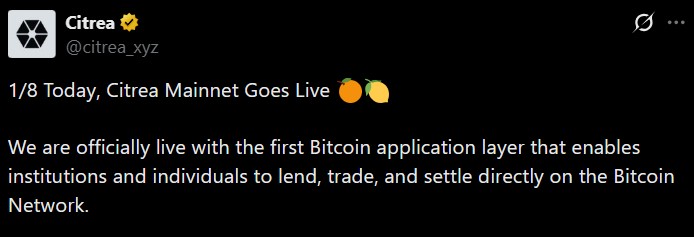
Citrea launched its Bitcoin zero-knowledge rollup mainnet with BTC-backed lending, structured products and a natively issued US dollar stablecoin, ctUSD, positioning Bitcoin as base collateral for DeFi and payments.
The project aims to turn “economically idle” BTC into active onchain liquidity while anchoring proofs and data availability to Bitcoin’s base layer. The team expects early DeFi liquidity to reach $50 million.
The launch reignited Bitcoin’s long-running block space debate, as Citrea’s DeFi activity consumes measurable Bitcoin bandwidth and raises questions about how much complexity the base layer should support.
DeFi market overview
According to data from Cointelegraph Markets Pro and TradingView, most of the 100 largest cryptocurrencies by market capitalization ended the week in the red.
The Yei Finance (CLO) token fell by over 58% throughout the week, marking the biggest drop in the last seven days. This was followed by a token called Seeker (SKR), which dropped 55% last week.
Thanks for reading our summary of this week’s most impactful DeFi developments. Join us next Friday for more stories, insights and education regarding this dynamically advancing space.