



Bybit’s push to offer neobank-style services is testing how far crypto exchanges can expand into traditional finance (TradFi), highlighting regulatory hurdles and the growing reliance on licensed banking partners.
Bybit CEO Ben Zhou announced the exchange’s push into retail banking on Thursday, with a planned launch of its retail banking product, “MyBank,” in February. The move would mark one of the most ambitious attempts yet by a major exchange to offer bank-like services to retail users.
As crypto increasingly intersects with TradFi, industry observers and executives warned that Bybit’s neobank move could trigger major challenges as it enters largely uncharted territory for a crypto-native company in pursuing banking services.
“The idea of a crypto exchange expanding into ‘banking’ is conceptually feasible, but in practice extremely complex from a regulatory perspective,” Gal Arad Cohen, a blockchain lawyer and partner at the independent law firm S.Horowitz & Co, told Cointelegraph.
Bybit bank partner Pave Bank backed by Tether Investments
To offer banking services, Bybit must either partner with a licensed bank or obtain a full banking license, a years-long, capital-intensive process, Cohen said.
“No major global crypto exchange currently operates as a fully licensed bank in the traditional sense, offering deposit-taking and core banking services under its own license,” the lawyer added.
A Bybit spokesperson confirmed to Cointelegraph that the exchange is working with Pave Bank, a licensed lender based in Georgia, to support its retail banking offering.
Founded in Tbilisi in 2023, Pave Bank positions itself as a programmable bank for businesses, combining crypto and fiat services. That same year, it received a digital banking license from the National Bank of Georgia.
In 2025, Pave Bank raised $39 million in a Series A funding round from major industry players, including Tether Investments, the venture arm of Tether, which issues the world’s largest stablecoin, USDt (USDT).
Industry cautions on trade-offs of full-service banking
The scope of Bybit’s banking ambitions remains a key question for industry observers.
“If they want to operate in the US and seek a US banking charter, which would be surprising to me but is possible, then they’ll have a lot of structuring to do,” Ryne Saxe, co-founder and CEO of blockchain company Eco, told Cointelegraph.
Many exchanges, including Binance, Coinbase and Kraken, have experimented with bank-like features such as fiat on- and off-ramps, cards and payment accounts. But operating as a bank is a substantially different undertaking, said Yuriy Brisov, a lawyer at Digital & Analogue Partners.
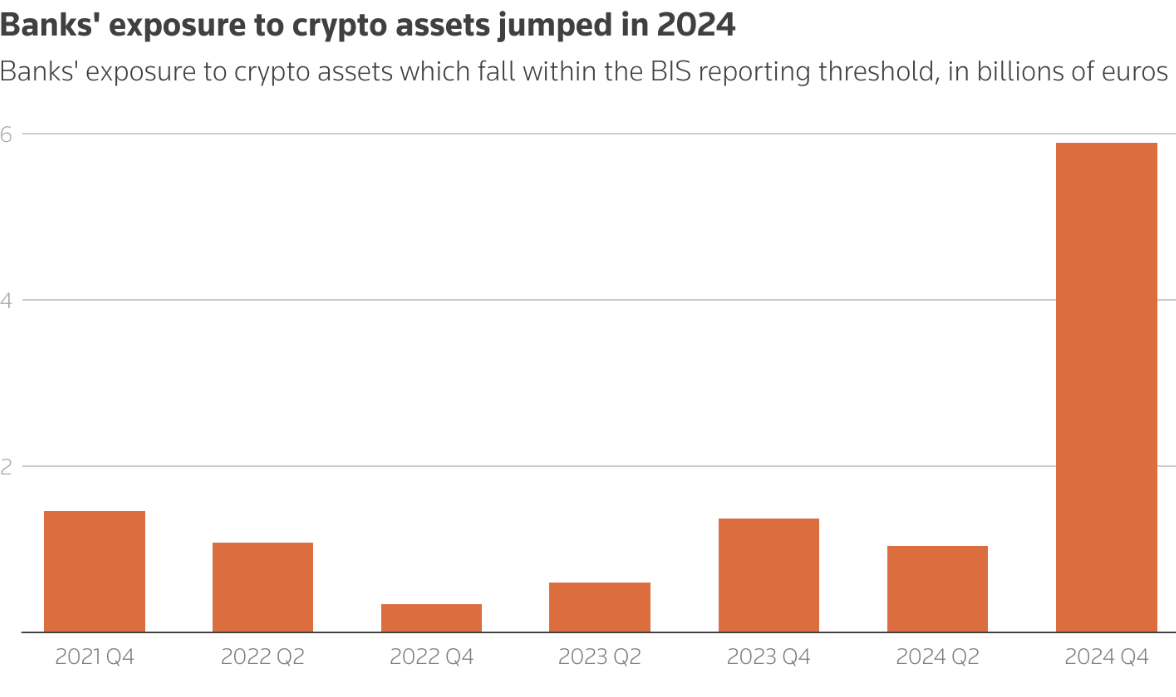
“It is logical that crypto firms will compete with banks more directly in 2026–2027,” Brisov said. “However, the closer a platform gets to offering full-service banking, the more it inherits banking burdens,” he added, referring to capital and liquidity requirements, sanctions enforcement, operational resilience and incident liability.
Related: UK banks block or delay 40% of crypto exchange transfers: Survey
Bybit’s push also reflects the broader crypto and TradFi convergence. Petr Kozyakov, co-founder and CEO of payment platform Mercuryo, said platforms in crypto are increasingly making inroads into TradFi, while traditional financial services explore crypto.
Megan Knab, CEO of Franklin, framed the move as part of “embedded finance,” where users could eventually be abstracted from cumbersome money movement, with borderless, near-instant payments becoming the norm.
Retail users could face friction from heavier KYC rules
While Bybit’s potential bank move could simplify fiat-to-crypto transactions, it may also present trade-offs for retail users.
Nick Denisenko, co-founder of digital finance platform Brighty, said the exchange’s banking push could “create more problems than benefits” as it would likely introduce heavier Know Your Customer (KYC) procedures.
Related: Revolut drops takeover plans, seeks US banking license: Report
“A lot of users choose crypto exchanges, especially Asian ones, because onboarding is simple and KYC is relatively light compared to banks,” Denisenko told Cointelegraph, adding:
“If Bybit goes down this route, it would be the first major exchange to seriously try it, and I’m not sure that’s what most retail users are asking for right now.”
Cointelegraph contacted Bybit for further details on the scope of its planned banking services but did not receive a response by the time of publication.
Magazine: A ‘tsunami’ of wealth is headed for crypto: Nansen’s Alex Svanevik