


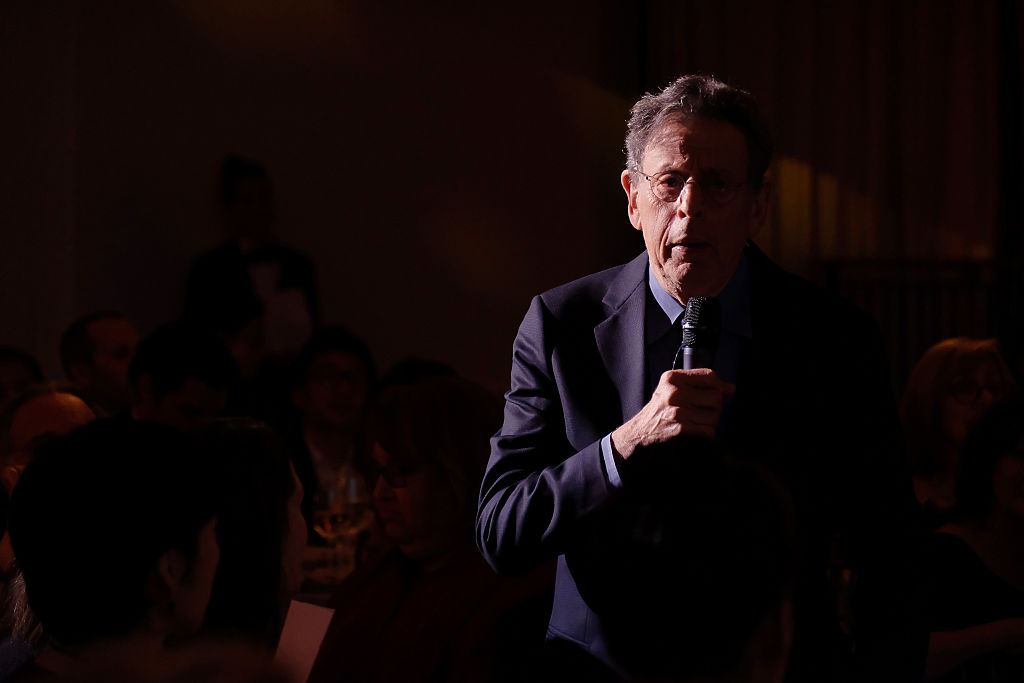
Celebrated composer Philip Glass has withdrawn a symphony he composed on commission honoring Abraham Lincoln for the 50th anniversary of the John F. Kennedy Center for the Performing Arts, he said in a statement today. The work, Symphony No. 15, was scheduled for its first-ever performance by the National Symphony Orchestra this June.
Glass informed the center of his decision in a letter on Tuesday that he later shared on social media. “Symphony No. 15 is a portrait of Abraham Lincoln, and the values of Kennedy Center today are in direct conflict with the message of the symphony,” he wrote, adding that he viewed the decision as an “obligation.”
The Kennedy Center has grown increasingly marooned from its many patrons and performing arts peers, with the National Symphony Orchestra emerging as the most significant casualty of the ideological overhaul launched by the Trump administration at the Center last year. Glass joins artists including renowned soprano Renée Fleming in severing ties with the center, while the Washington National Opera, which had performed there since 1971, moved out earlier this month, citing low attendance.
“We are going to make this work,” Joan Bialek, the chair of the National Symphony Orchestra board, told the New York Times of its commitment to staying at the Kennedy Center. “I was born in Washington, grew up with the Kennedy Center, grew up in the N.S.O., and I can’t let it disappear. We will make it through this.” She added that the center’s current priority is attracting people back to its concert hall.
The symphony’s music director, Gianandrea Noseda, told the Times that he has no plans to leave his post, while Jean Davidson, executive director of the orchestra, also vowed to stay. Davidson described the orchestra’s finances as closely tied to the Kennedy Center, which has been its home for 55 years.
“We have great admiration for Philip Glass and were surprised to learn about his decision at the same time as the press,” Davidson added.
Last December, the board of trustees of the Kennedy Center voted to add President Donald Trump’s name to the institution—a move that prompted questions about its legality and drew disapproval from members of Kennedy’s family. Legal experts noted that the vote may have violated a stipulation established after Congress renamed the center following JFK’s assassination in 1963.
A board spokesperson later described the vote as unanimous, a claim that immediately challenged by Democratic Representative Joyce Beatty, an ex-officio member of the board. “I was on that call and as I tried to push my button to voice my concern, to ask questions, and certainly not to vote in support of this, I was muted,” Beatty said. “Each time I tried to speak, I was muted.”

