


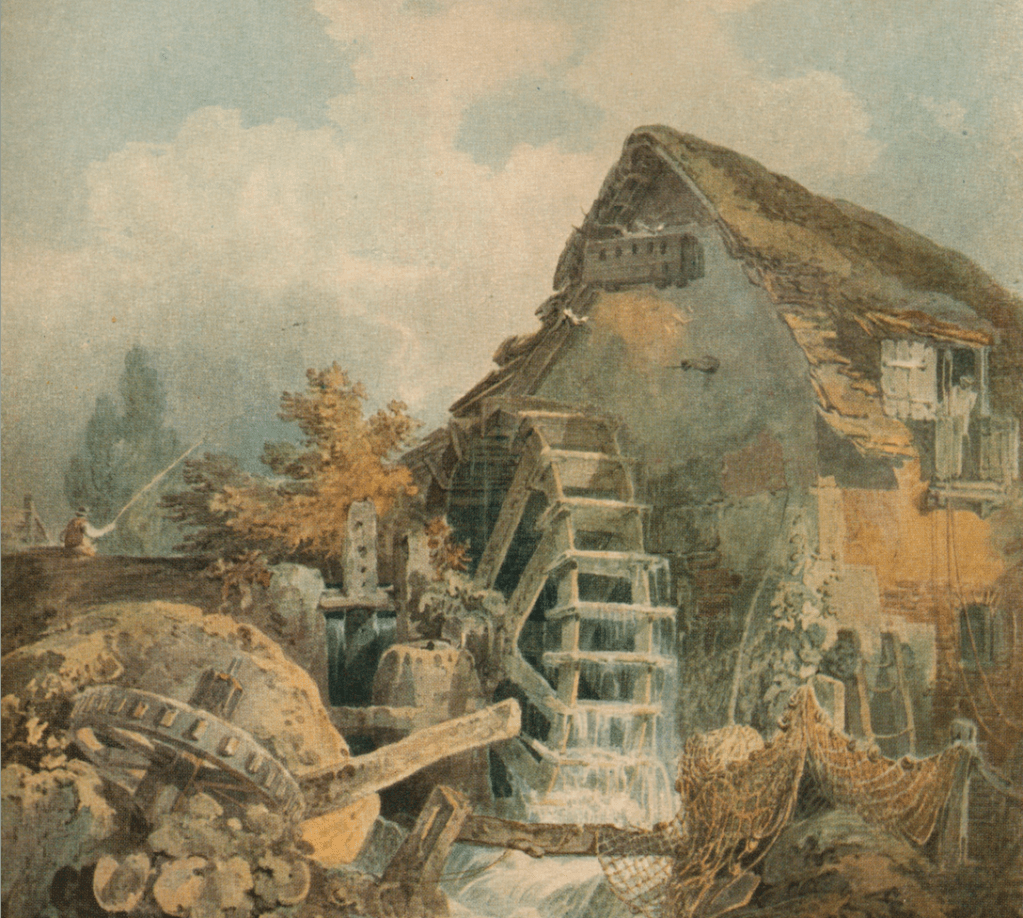
Brendan and Celia Wilson’s home, you could say, is museum-quality. As the BBC reported, their Grade II-listed home—called Rossett Mill—in Wrexham, UK, dates to 1588 and once inspired a painting by J.M.W. Turner, the artist widely regarded as one of Britain’s greatest landscape painters.
The Wilsons first encountered the watermill 17 years ago, when it was boarded up, uninhabitable, and slated for demolition. A newspaper advertisement initially caught their attention, and a chance drive through the area soon sealed their fate. “We knew within five minutes that we wanted to buy it,” Brendan Wilson said. They purchased the property for £660,000 and embarked on a meticulous two-year restoration costing roughly £250,000, transforming the derelict structure into a four-bedroom home with multiple reception rooms while preserving its historic character.
To maintain the mill’s integrity, the couple sourced reclaimed oak beams from a barn in France and carefully integrated modern comforts such as central heating and a new kitchen. Seasonal changes, Brendan said, remain one of the great pleasures of living there: winters spent by the fire and summers picnicking along the shallow River Alyn, which runs beneath the mill wheel and through the surrounding trees.
The mill itself is still functional. An undershot waterwheel, powered by water flowing beneath it, continues to grind corn, and the property’s deeds include an ancient right allowing the owner to draw water from the river to operate the machinery. Brendan, who taught himself to run the mill using books and online resources, admitted that the first attempt was nerve-racking, though it now operates smoothly several times a year.
Turner’s painting of the mill, titled Marford Mill (1795), was made during one of several tours of Wales. According to Nicola Moorby, curator of historic British art at Tate Britain, Turner was drawn to such sites for their picturesque qualities and their layered social histories. His Welsh subjects helped him develop the technical ambition and philosophical depth that would come to define his work, often emphasizing the endurance of nature against the fleeting presence of human life.
After 15 years, the Wilsons are now selling Rossett Mill for £1.5 million so they can move closer to their children. “We’ll be very sad to leave,” Celia Wilson said, “but it’s time.” As Brendan put it, “There is history in every corner of this building. We just happened to be the first people to live in it.”