



Bitcoin (BTC) traders highlighted multiple signals, predicting a “massive” price upswing. Still, onchain data shows that BTC price recovery could be delayed as market participants take a more defensive stance.
Key takeaways:
-
Bitcoin surged 600% in 2021 after a similar key bullish cross was confirmed.
-
Onchain data points to persistent sell-side pressure, suggesting that a BTC price recovery might take time.
BTC bullish cross hints at a bull run ahead
Analyst Coinvo Trading spotted the appearance of a bullish cross involving the Stochastic RSI of the United States 10-Year Treasury Yield (US10Y) and China 10-Year Government Bond Yield (CN10Y) against Bitcoin’s weekly chart.
Related: Bitcoin investor sentiment cools amid US shutdown fears, Fed policy jitters
This is “Bitcoin’s most accurate bull run signal” and has only occurred four other times in the past, leading to massive price rallies, Coinvo Trading said in a recent post on X.
The last time Stoch RSI of the US10Y and CN10Y crossed was in October 2020, signalling the start of a 600% BTC rally to its 2021 all-time highs of $69,000.
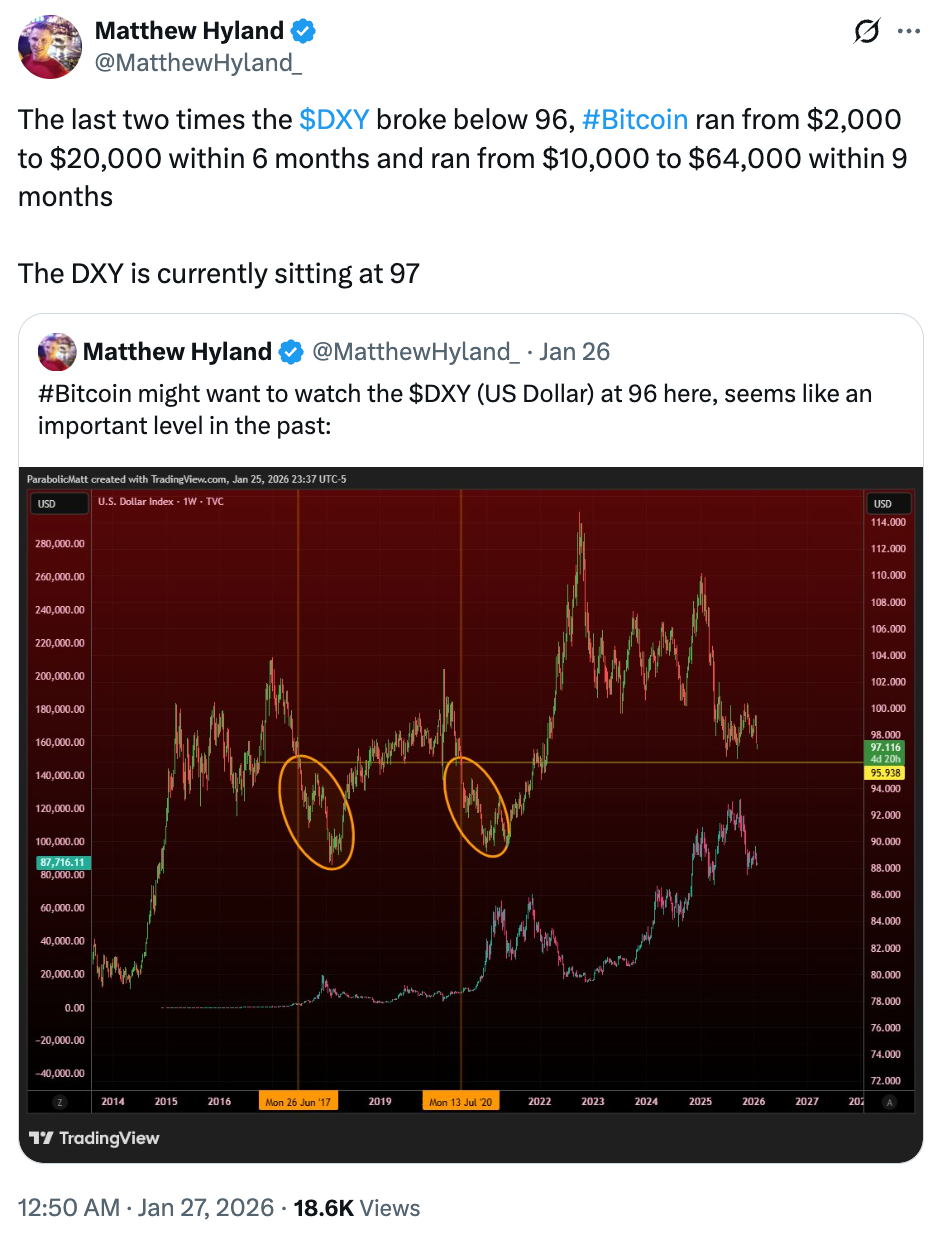
Fellow analyst Matthew Hyland also foresees a possible BTC price breakout, based on the performance of the US dollar strength index (DXY).
He anticipates the BTC/USD pair to rally once the DXY edges below 96, as seen in 2017 and 2022.
Meanwhile, gold hit a record high above $5,000, while Bitcoin remains rangebound as the divergence between the two assets widened.
Analysts at Swan said investors should not be worried about this divergence, however, as gold usually moves first while Bitcoin moves sideways for months before “violently” breaking out.

Bitcoin market remains “fragile”
Bitcoin’s ability to stage a sustained recovery above key levels could be limited due to the absence of buyers.
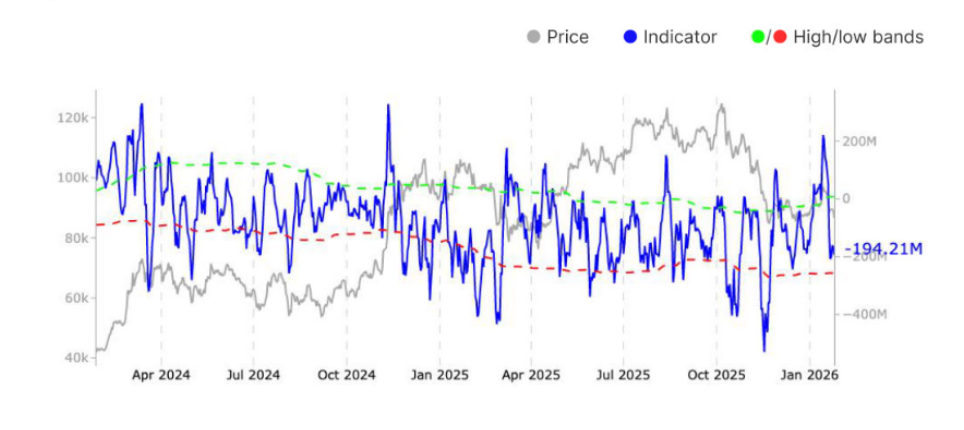
Bitcoin’s spot cumulative volume delta (CVD) metric, an indicator that measures the net difference between buying and selling trade volumes, has flipped sharply negative, confirming a clear shift toward sell-side dominance.
This metric saw a steep drop to -$194.2 million last week from $54.2 million the week prior, suggesting “trader behavior has turned meaningfully risk-off, and reflects fading confidence in near-term upside price continuation,” Glassnode said in its latest Weekly Market Impulse report.
Meanwhile, spot Bitcoin ETF weekly net flows flipped from a $1.6 billion inflow to a $1.7 billion outflow, suggesting “cooling institutional demand and increasing near-term downside pressure,” the onchain data provider said, adding:
“Overall, market conditions have shifted more defensive, while persistent sell-side pressure and rising hedging demand suggest the market remains fragile.”
As Cointelegraph reported, Bitcoin could be in for another prolonged period of consolidation, citing stiff overhead resistance, selling pressure from spot BTC ETFs and growing macroeconomic uncertainty.
This article does not contain investment advice or recommendations. Every investment and trading move involves risk, and readers should conduct their own research when making a decision. While we strive to provide accurate and timely information, Cointelegraph does not guarantee the accuracy, completeness, or reliability of any information in this article. This article may contain forward-looking statements that are subject to risks and uncertainties. Cointelegraph will not be liable for any loss or damage arising from your reliance on this information.