



Bitcoin (BTC) heads into the January close in dangerous territory as macro volatility factors ramp up.
-
Bitcoin closes the week below key support in a move that opens the door to new lows.
-
FOMC week dawns, but markets are focused on Japan, tariffs and geopolitical instability.
-
Precious metals smash historic records while crypto fails to match them.
-
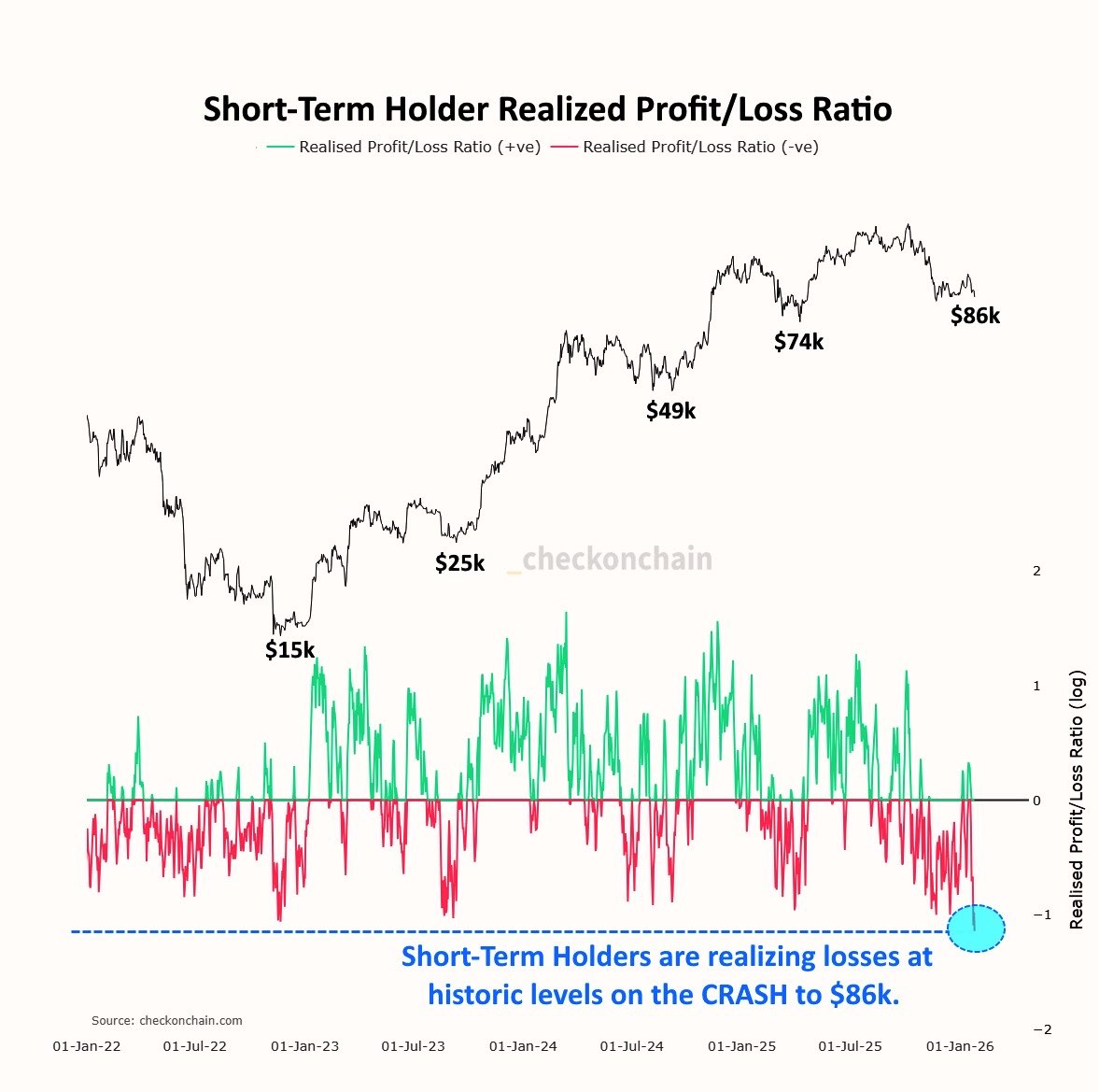
Bitcoin short-term holders show signs of record capitulation at current price levels.
-
“Tactical” Bitcoin selling pressure is ongoing, with liquidity able to absorb the distribution.
BTC price analysis sees new lows
Bitcoin dropped to $86,000 around Sunday’s weekly close — a target already on the radar for traders.
Data from TradingView shows buyers defending that level into the week’s first Asia trading session, with $90,000 still out of reach.
“There’s so much volatility ahead of us coming week. Not only on the Bitcoin & Crypto markets, but also in forex, commodities & bond markets,” crypto trader, analyst and entrepreneur Michaël van de Poppe summarized in a post on X.
“Crypto is preparing for the worst, hence the deep selloff and that’s why I think coming week brings a generational opportunity across the board.”
After closing the week below $86,500, BTC/USD is in a thoroughly bearish position, per Material Indicators cofounder Keith Alan.
In his latest analysis, Alan warned of consequences in the event of a weekly close under the 2026 yearly open level near $87,500 and the 100-week simple moving average (SMA) at $87,250.
Pay close attention to the weekly close for $BTC! The only thing more bearish than a weekly close below the Yearly Open Timescape Level at $87.5k, would be a weekly close below the 100-Week SMA. pic.twitter.com/WjMitP2Ez6
— Keith Alan (@KAProductions) January 25, 2026
“Wicks don’t count, it’s the close that matters,” he added in a separate post showing exchange order-book liquidity data and whale orders.
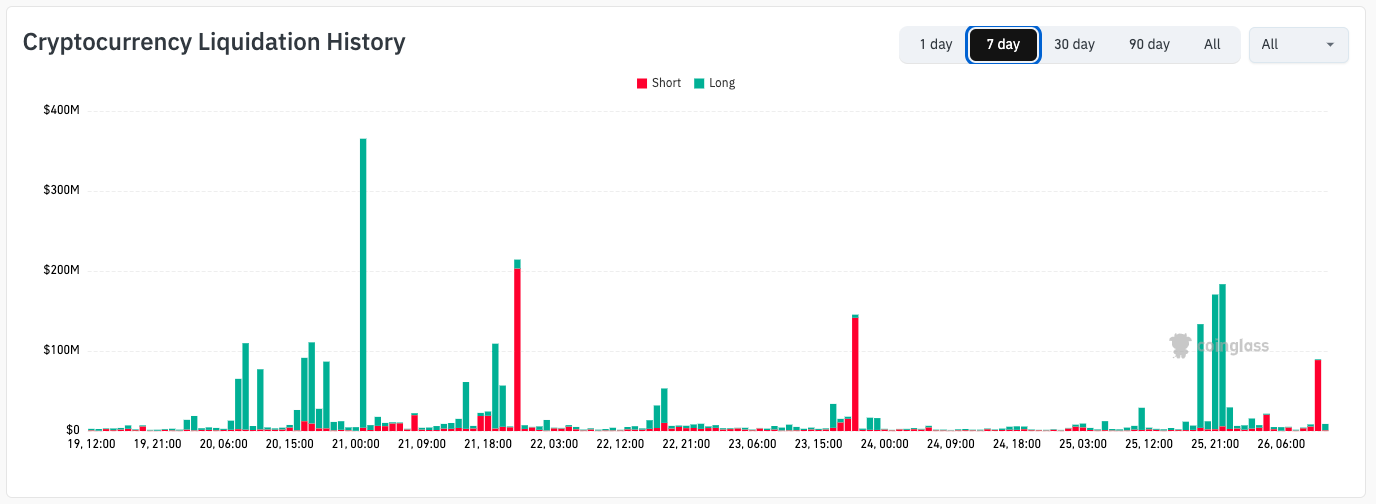
Data from monitoring resource CoinGlass confirmed 24-hour cross-crypto liquidations of nearly $750 million at the time of writing.
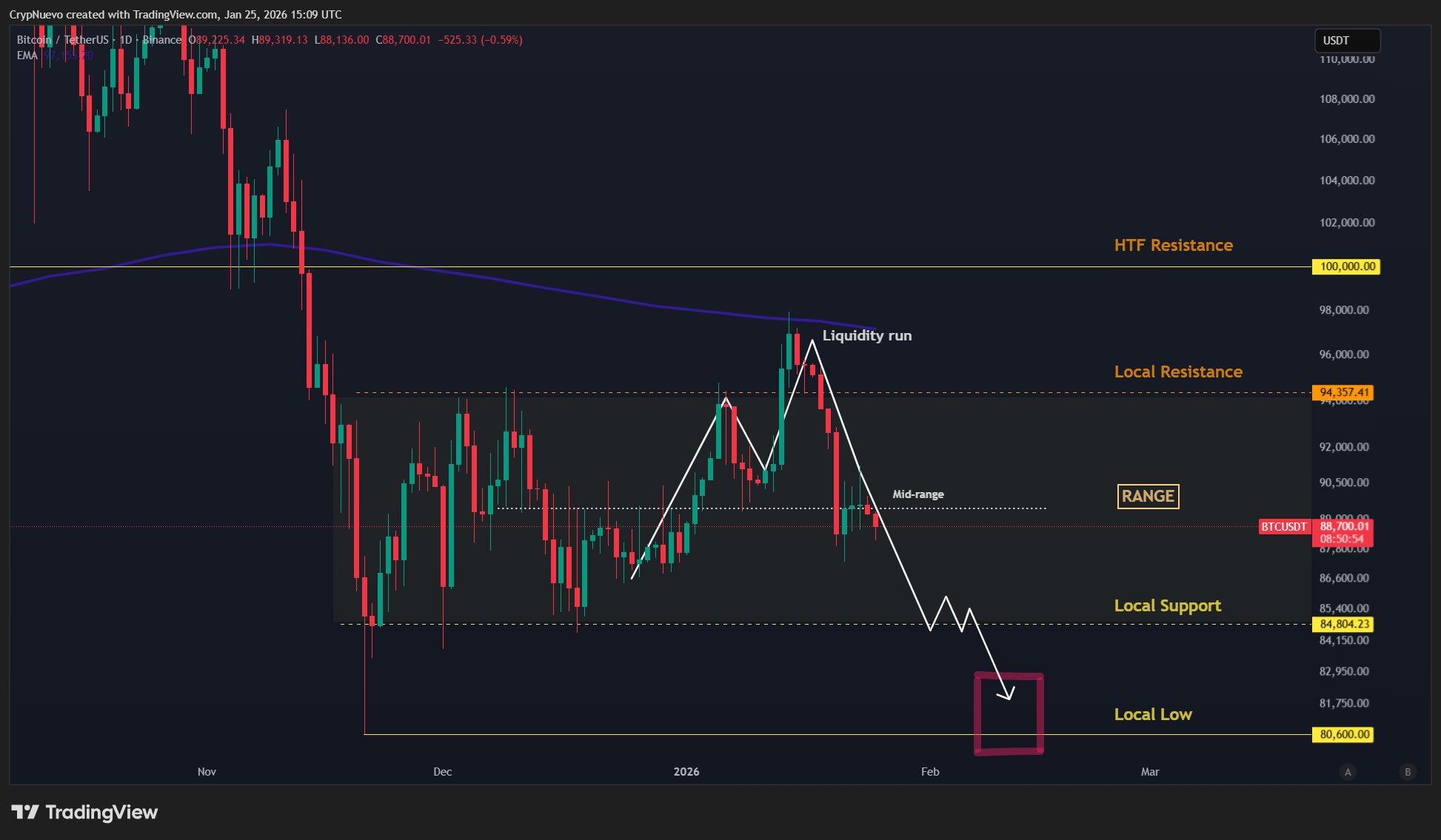
“Based on Bitcoin losing the mid-range; HTF liquidations to the downside; and the possible US Gov. shutdown, we still think that the most likely scenario is that Bitcoin drops back to low $80s in the coming weeks,” trader CrypNuevo forecast at the weekend.
In a bold prediction, meanwhile, trader, analyst and commentator BitQuant went on record to announce an inflection point for BTC price action.
“The coming week is significant in that it marks the end of the bottoming phase,” he told X followers.
BitQuant retains the view that a long-term high for Bitcoin has not yet been reached, with this due at $145,000.
Fed to conduct first FOMC meeting of “wild year”
The Federal Reserve’s decision on interest rates forms the week’s key macroeconomic event, but traders have multiple volatility sources to contend with.
These include worries over the Japanese economy and the Fed’s move to buy yen, along with international trade questions still hanging in the air.
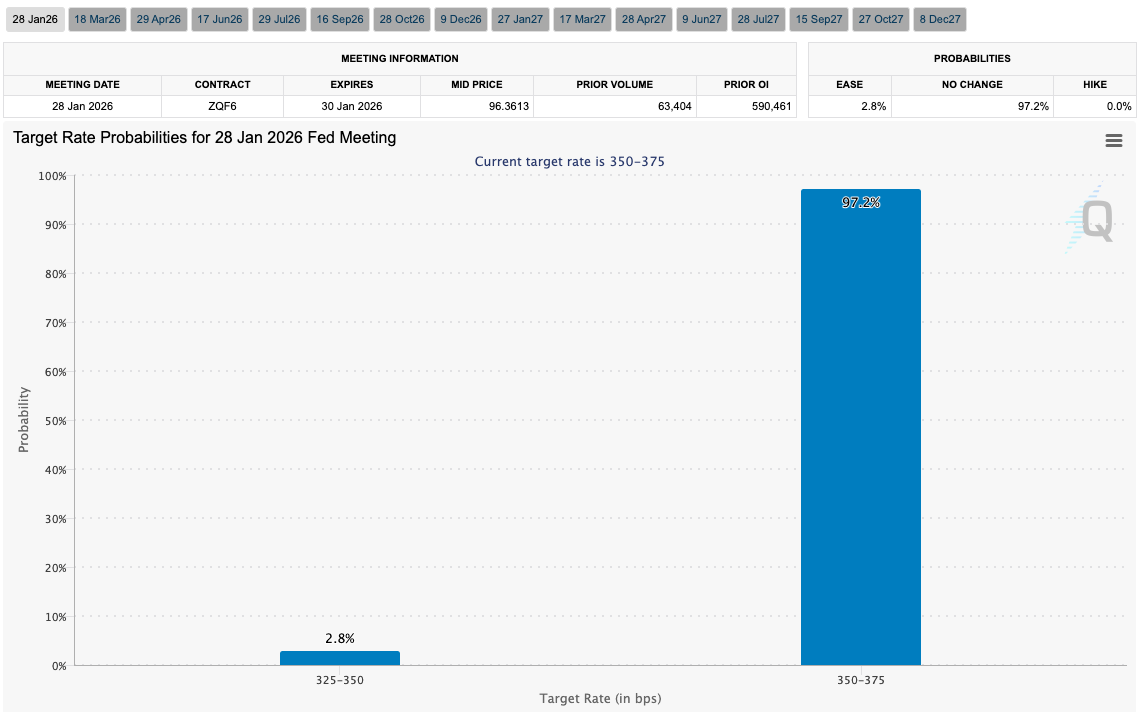
On Wednesday, the Federal Open Market Committee (FOMC) will announce any changes to its benchmark rate, with Chair Jerome Powell delivering guidance in an accompanying speech and press conference.
Markets will be watching Powell’s language in particular for signs of policy change. Expectations for the meeting itself have long been that rates will stay the same.
At the same time, tensions between him and US President Donald Trump remain, along with a legal investigation into Fed building renovations that Powell dismissed as a pretext for changing his policy trajectory before his imminent replacement.
“The Chief Investment Officer of BlackRock is now expected to be the next Fed Chair. And, Trump says cutting rates is a ‘requirement’ for the next Fed Chair and is actively calling for 1% interest rates. 2026 is going to be a wild year,” trading resource The Kobeissi Letter commented on X.
Macro data itself has given mixed signals over US inflation. Regardless, stocks continue to enjoy a strong start to 2026, while crypto languishes.
“Loose monetary policy and an expanding global money supply are key drivers behind bullish financial conditions. But if those conditions also deliver stronger than expected economic growth, inflation could become more problematic in the year ahead,” trading outfit Mosaic Asset Company wrote in the latest edition of its regular newsletter, “The Market Mosaic.”
“Core measures of consumer inflation have remained near the 3% level on a year-over-year basis, with the disinflation trend since mid-2022 stalling out well above the Fed’s 2% inflation target.”
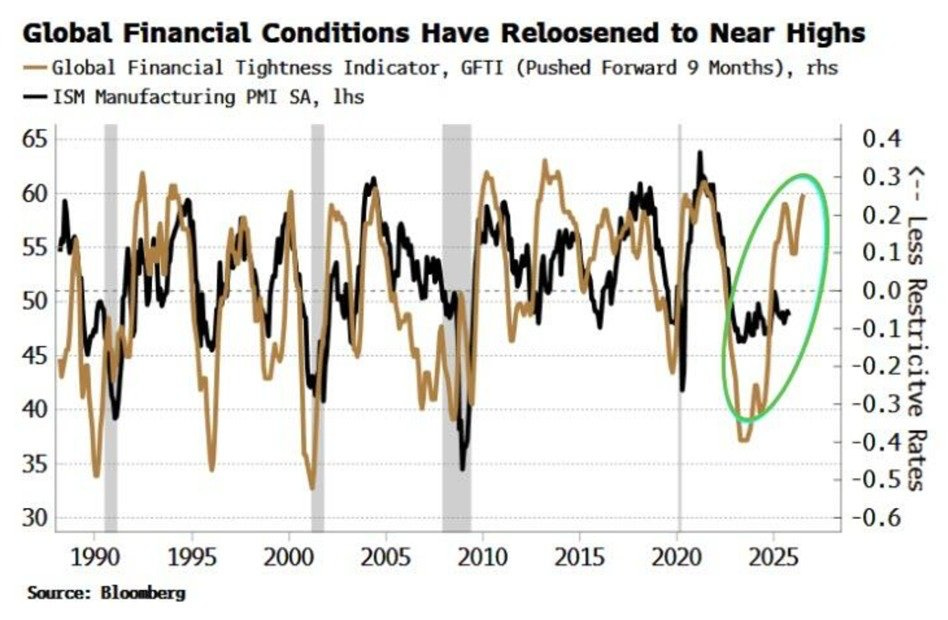
Mosaic warned that a rebound in inflation this year would trigger moves seen during the 1970s.
This week, meanwhile, will also see the December print of the Producer Price Index (PPI). November’s release came in above expectations.
“World is waiting on crypto” as gold, silver boom
In a predictable milestone, gold and silver crossed historic thresholds to start the week, passing the $5,000 and $100 marks, respectively.
XAU/USD reached $5,111 per ounce, with XAG/USD hitting $110 for the first time during Monday’s Asia trading session.
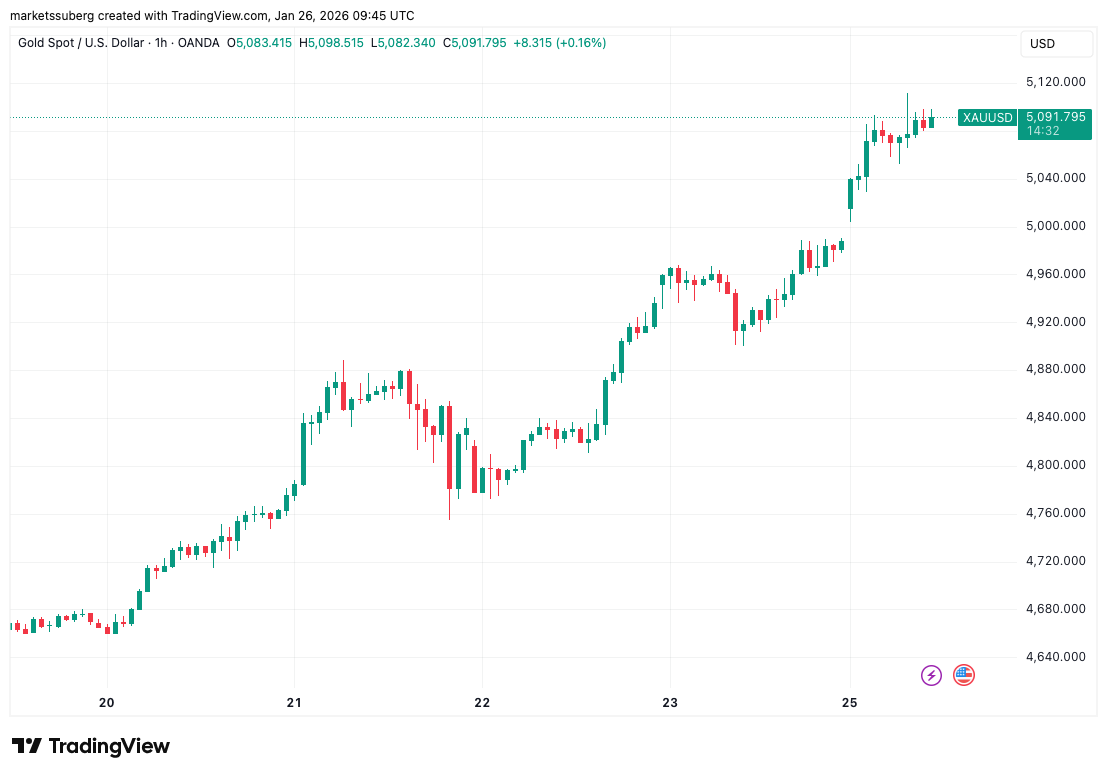
The relentless rise in precious metals continues as Bitcoin and altcoins fail to catch a bid, having been stuck in a narrow range for several months.
That inverse relationship is now beginning to make waves beyond the crypto trading community.
“Where is Bitcoin?” The Kobeissi Letter queried in a dedicated X post on the phenomenon.
“Silver prices are now outperforming Bitcoin by one of their widest margins on record. In ~13 months, Silver is up +270% as Bitcoin has fallen -11%. This makes Silver’s market cap 3.5 TIMES larger than Bitcoin. The world is waiting on crypto.”
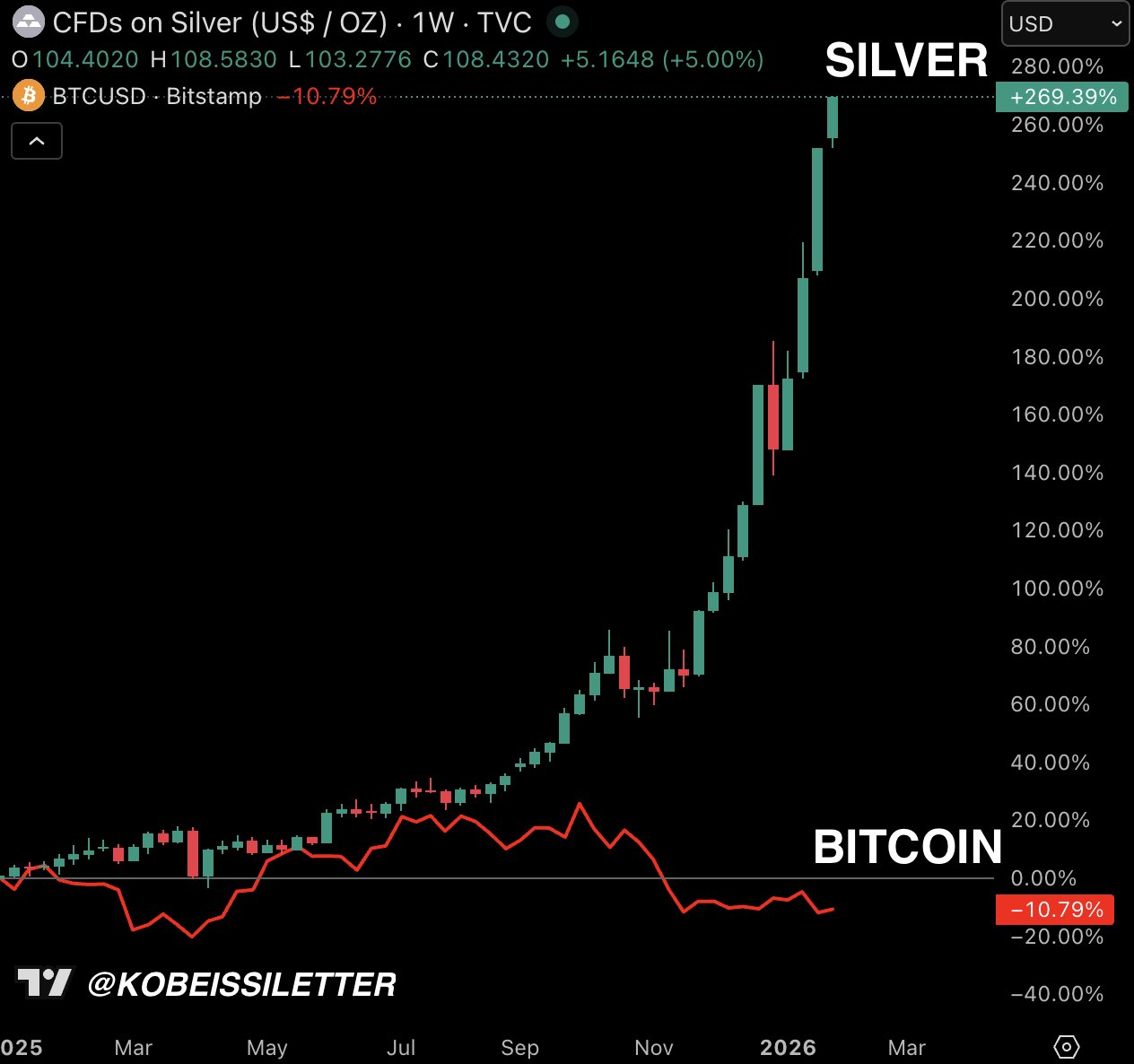
Kobeissi suggested that the threat of another US government shutdown, which it described as “likely,” was “adding fuel to the fire” across precious metals.
Van de Poppe captured the pro-crypto mood around BTC versus gold.
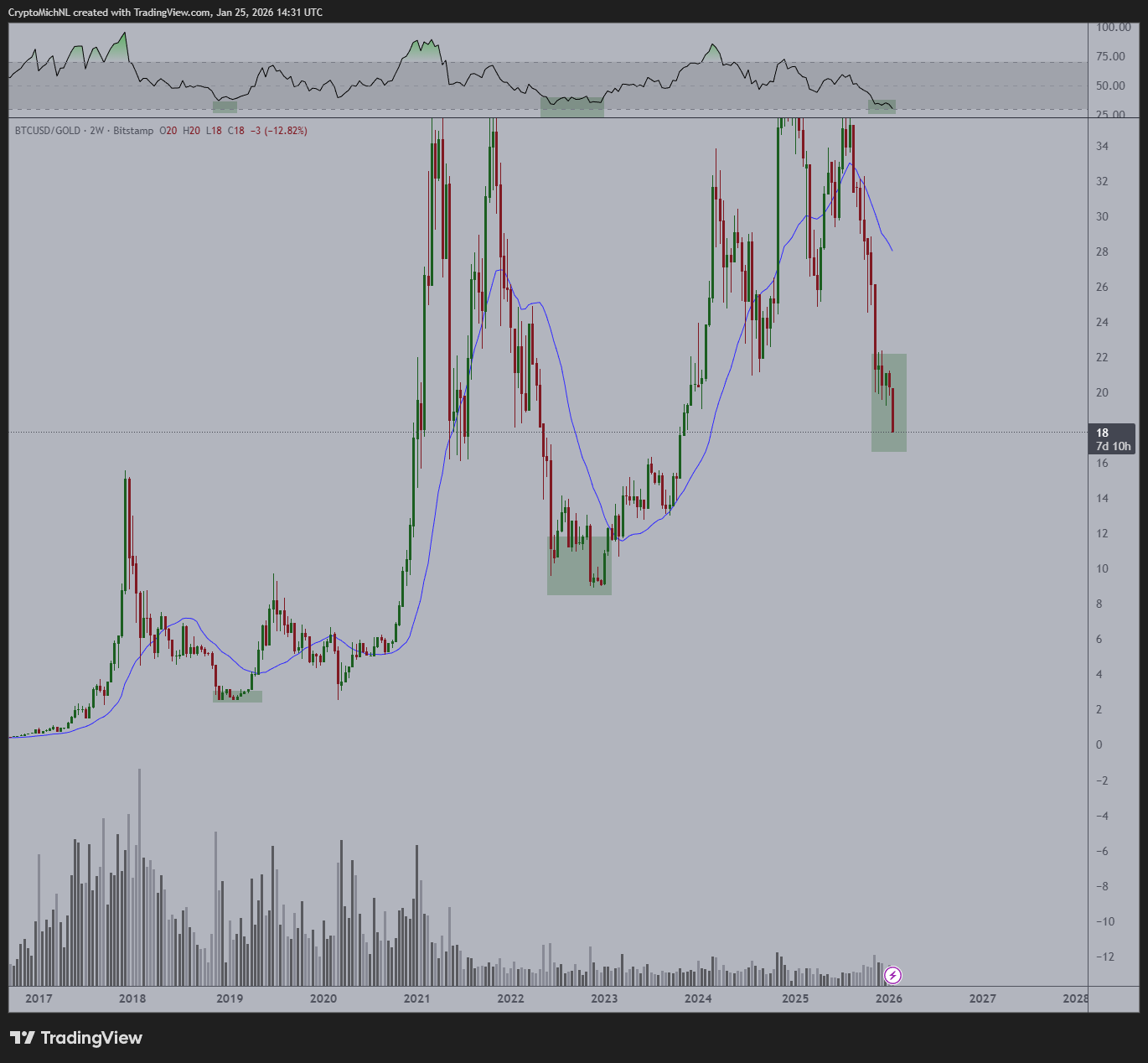
“Bitcoin vs. Gold is the cheapest it has ever been. At least, the gap between the two has never been this big in terms of fair value. The 2-Week RSI is the lowest ever. Lower than in 2022, lower than in 2018,” he wrote Sunday.
“It doesn’t make sense to be valuing an asset like Bitcoin against the dollar, it makes sense to value Bitcoin against other assets, in this case Gold. In that aspect, Gold is expensive, Bitcoin is super cheap.”
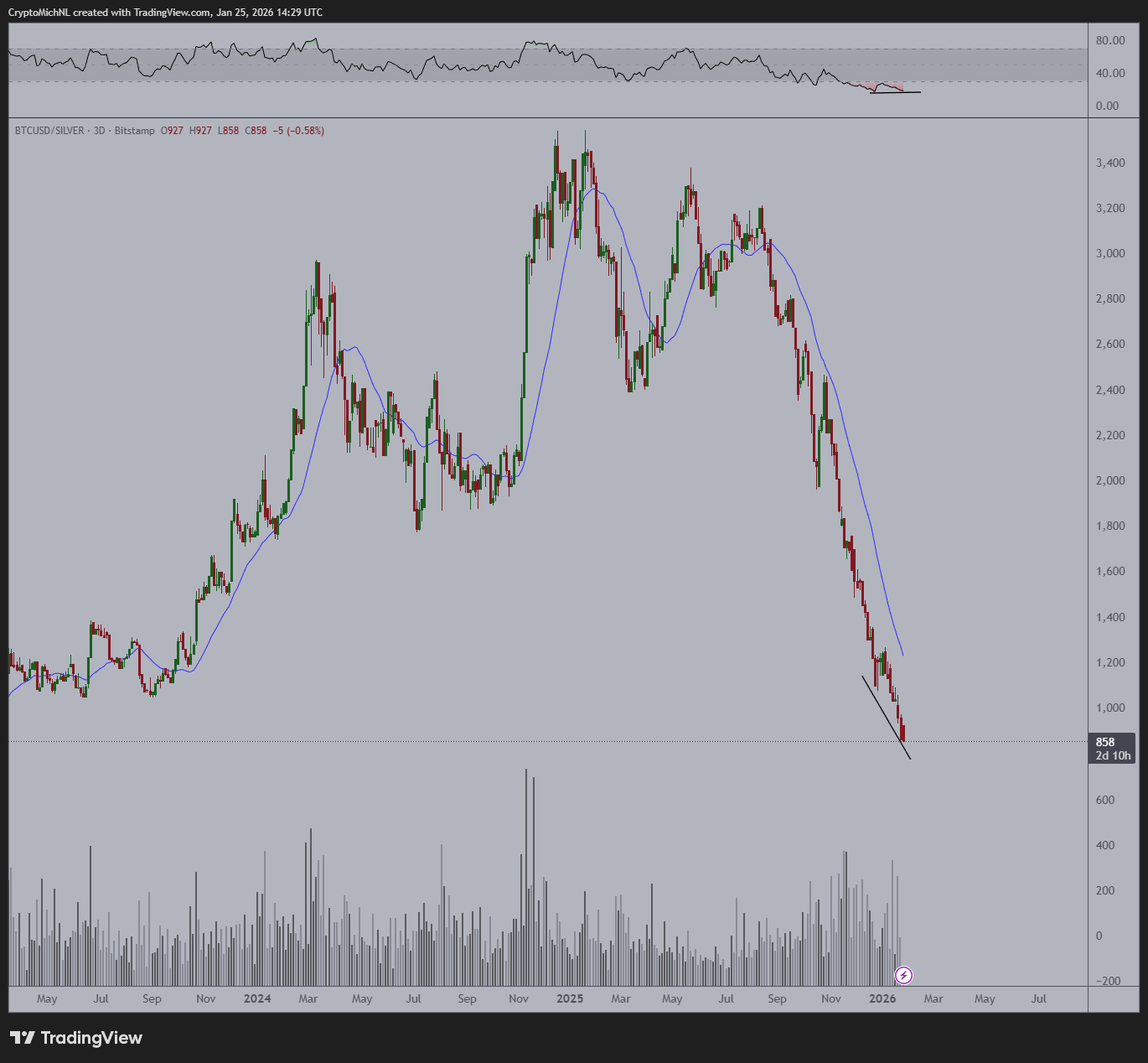
At the same time, Van de Poppe revealed an unprecedented potential bullish divergence on BTC/XAG.
“What does this say? This does say that the coming week is going to be extremely volatile and could indicate a bottom on this metric and therefore, Silver is likely to peak and money is likely rotating towards other assets,” he commented.
Short-term holders panic at a loss
BTC price action may be rangebound, but onchain activity shows that newer investors are as sensitive as ever to sudden moves.
Uploading data to X from onchain analytics resource Checkonchain, the analytics account named after famous economist Frank Fetter wrote that loss-making trades were making history.
“Short-term holders are realizing losses at historic levels on the bitcoin CRASH to $86k,” it stated.
The data showed the realized profit/loss ratio for Bitcoin’s short-term holder (STH) cohort — the group of wallets holding a given amount of BTC for six months or less.
The proportion of transactions from STH wallets in which BTC is moving at a lower price than that at which it last moved is now higher than ever. The ratio is lower than during the 2022 bear market bottom, when BTC/USD hit $15,600 after a near 80% drop from its old 2021 all-time highs.
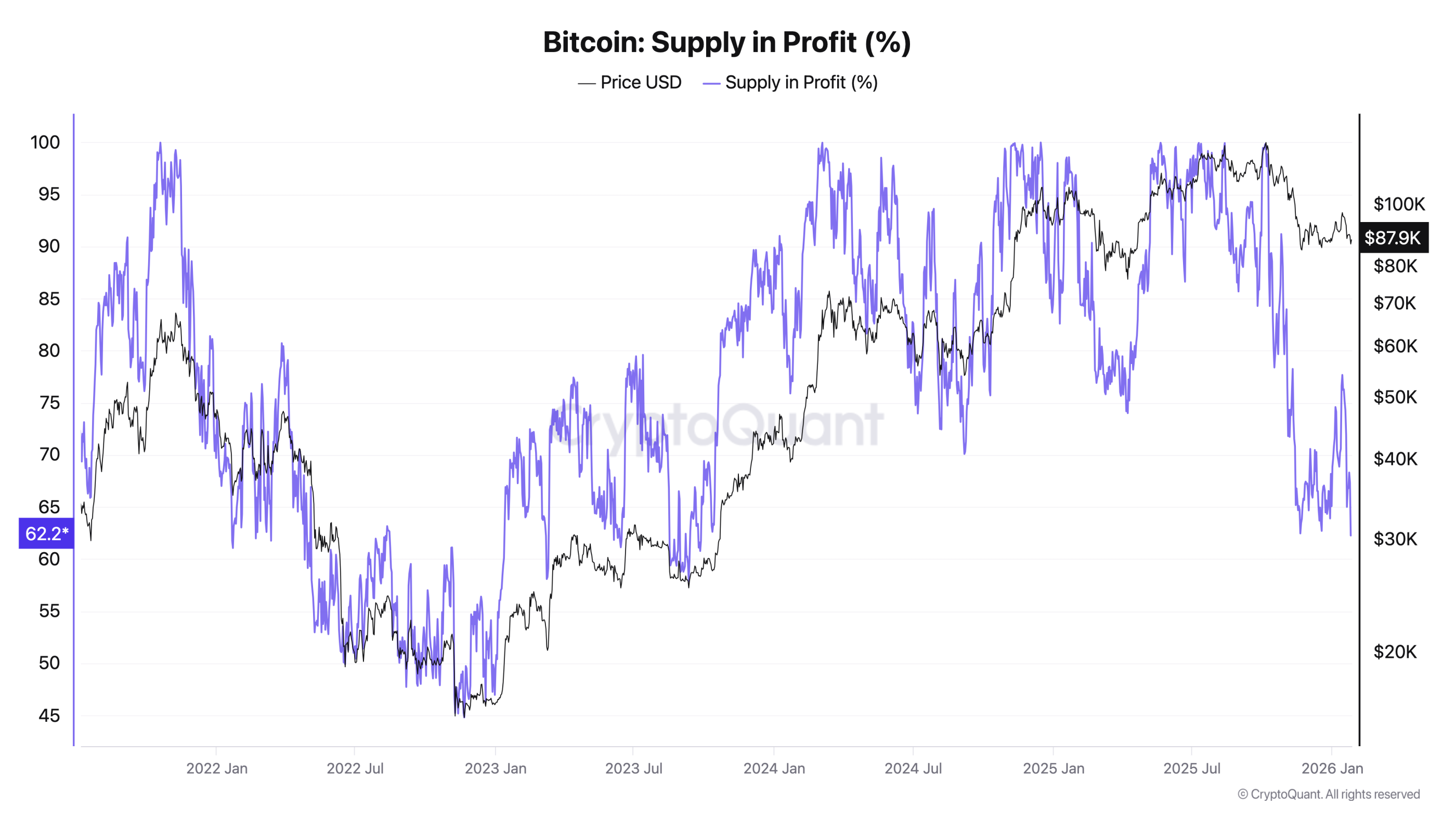
Continuing, onchain analytics platform CryptoQuant confirms that the overall BTC supply has crossed a bearish profit threshold of its own.
Supply in profit currently stands at 62% — the lowest level since September 2024, when Bitcoin traded at around $30,000.
“When Bitcoin Supply in Profit drops below 70% and fails to recover above 80%, it is historically a sign of a potential further decline and often a confirmation of a bear market,” contributor El Crypto Tavo wrote in an accompanying “Quicktake” blog post.
Bitcoin selling “genuine but controlled”
Discussing the weekend’s drop to $86,000, CryptoQuant appeared unalarmed.
Analyzing volume delta on exchange order books, contributor Arab Chain argued that the market was not experiencing a rush for the exit.
Volume delta reached a relatively modest $59.6 million on Binance during the dip, indicating only slight dominance of sellers over buyers.
“Numerically, this represents significant selling pressure; however, its true significance becomes apparent when compared to price action,” Arab Chain explained.
“Despite this large negative figure, no sharp price collapse was observed, indicating strong liquidity absorption within the order book.”
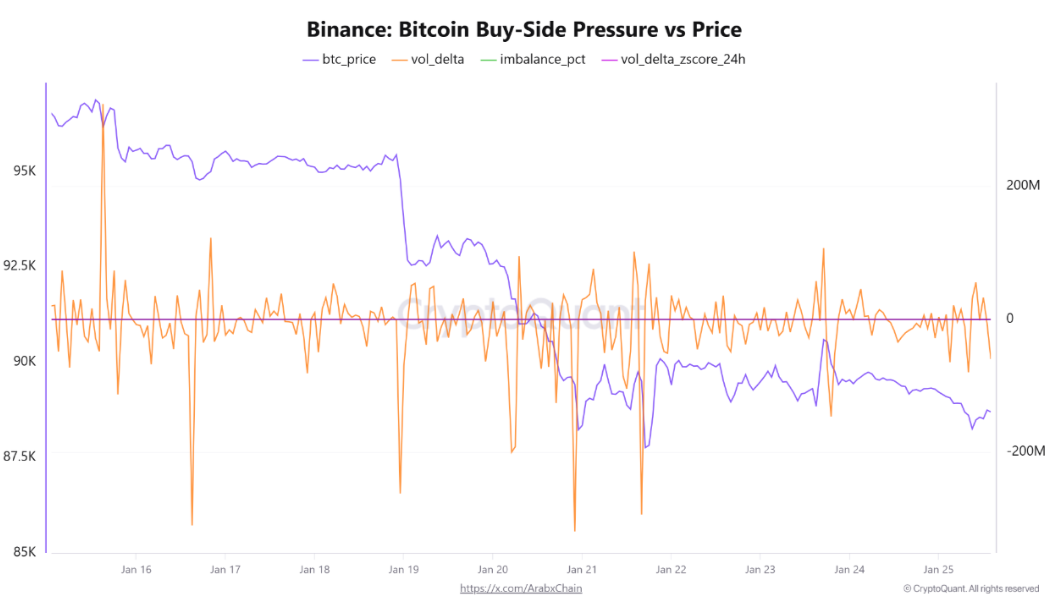
Volume delta z-score readings, it added, represented “short-term tactical selling pressure rather than a phase of panic or widespread forced liquidation.”
Last week, Cointelegraph reported on split intentions among the professional Bitcoin investor base amid unclear price trends heavily influenced by external factors.
“These values reflect genuine but controlled selling pressure, characterized by elevated selling liquidity, limited imbalance, and moderate statistical deviation,” Arab Chain concluded.
“This combination often defines rebalancing phases, during which momentum temporarily weakens without a breakdown in market structure.”
This article does not contain investment advice or recommendations. Every investment and trading move involves risk, and readers should conduct their own research when making a decision. While we strive to provide accurate and timely information, Cointelegraph does not guarantee the accuracy, completeness, or reliability of any information in this article. This article may contain forward-looking statements that are subject to risks and uncertainties. Cointelegraph will not be liable for any loss or damage arising from your reliance on this information.