


35
Medical training has a long-standing, quiet problem: the “patient” is often made of plastic.
For decades, doctors-in-training have practiced life-saving maneuvers on high-fidelity mannequins. These machines can breathe, blink, and even bleed, but they cannot look you in the eye with fear. They cannot exhibit the subtle, chaotic body language of a person in pain.
The friction in medical education wasn’t a lack of information; it was a lack of emotional urgency. When a student knows the “patient” is a machine, the brain remains in a state of academic detachment.
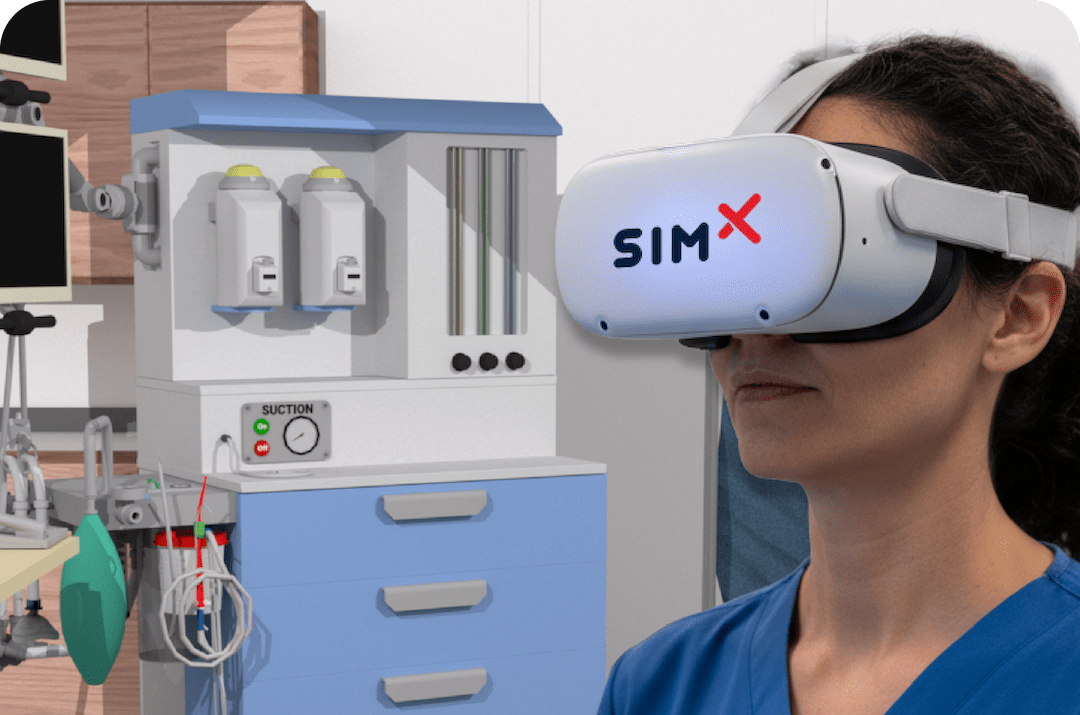
SimX, a virtual reality (VR) platform, was born from the realization that to save a life, you first have to feel the pressure of a human presence.
The problem: the sterile gap
In a real emergency room, the clinical data — the heart rate, the blood pressure — is only half the story. The other half is the environment: the crying relative in the corner, the flickering light, the limited space around the bed, and the non-verbal cues of a patient who is struggling to speak.
Traditional simulation is sterile. It happens in a lab. It removes the “noise” of reality to focus on the procedure. But the noise is the reality.
When medical practitioners move from the lab to the ER, they face a “sensory shock.” SimX identified that the gap between a textbook and a trauma bay was too wide. They didn’t just need a better mannequin; they needed a way to simulate stress.
The breakthrough: the virtual encounter
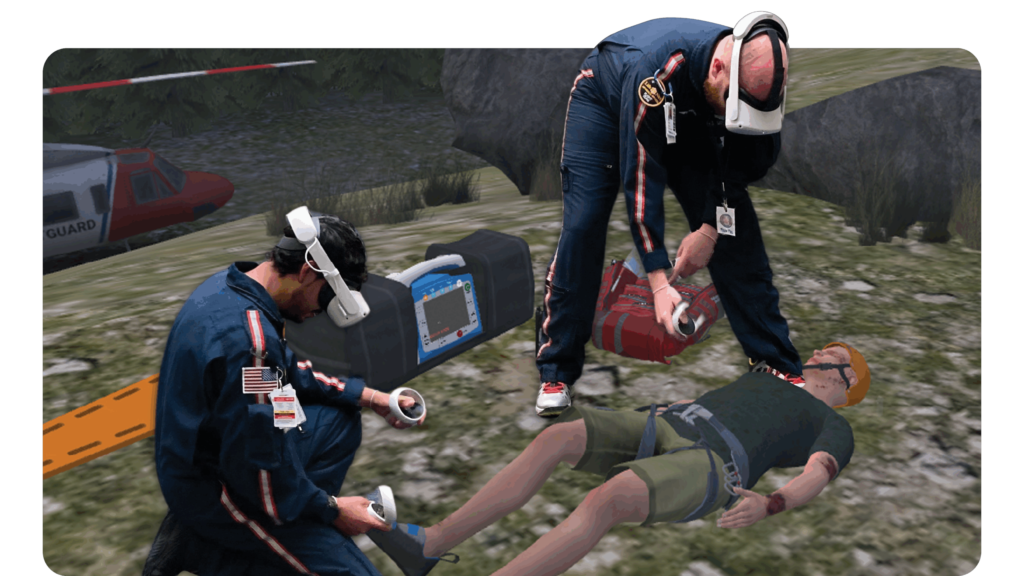
SimX’s innovation isn’t just a VR platform; it is the virtual patient encounter. Unlike traditional software, SimX is built to be multiplayer and modular.
- The human variable: instead of a fixed script, a “Moderator” (an instructor) can change the patient’s vitals or behavior in real-time. If the student asks the wrong question, the patient can become agitated or unresponsive.
- Environmental fidelity: it allows doctors to practice in the exact digital twin of their own hospital’s specialized rooms.
- The mirror effect: because the software uses spatial computing, multiple students can stand around the same virtual body. They have to navigate the physical space, bumping into each other’s digital avatars, mimicking the “dance” of a real medical team.
The impact: from memory to muscle
What quietly changes when a doctor trains in SimX? The training moves from the “prefrontal cortex” (where we store facts) to the “basal ganglia” (where we store habits).
By introducing the visual and auditory chaos of a real patient encounter, SimX allows for failure without consequence. A student can make a fatal mistake in the simulation, feel the genuine emotional “jolt” of that failure, and then reset. This creates a type of “emotional muscle memory.” When they finally stand in a real ER, the environment feels familiar. The panic is gone. All that remains is the work.
What’s next: the decentralized classroom
The future of SimX suggests a world where a specialist in London can lead a surgical simulation for students in a rural clinic in sub-Saharan Africa. But it also raises a question: as we become more comfortable in the simulation, do we risk becoming desensitized to the real thing?
For now, the goal remains simple: to ensure that the first time a doctor feels the weight of a life in their hands, it isn’t actually the first time.