



BTC price faces pressure as markets brace for a sustained rise in long-term yields driven by economic deficits, particularly in Japan.
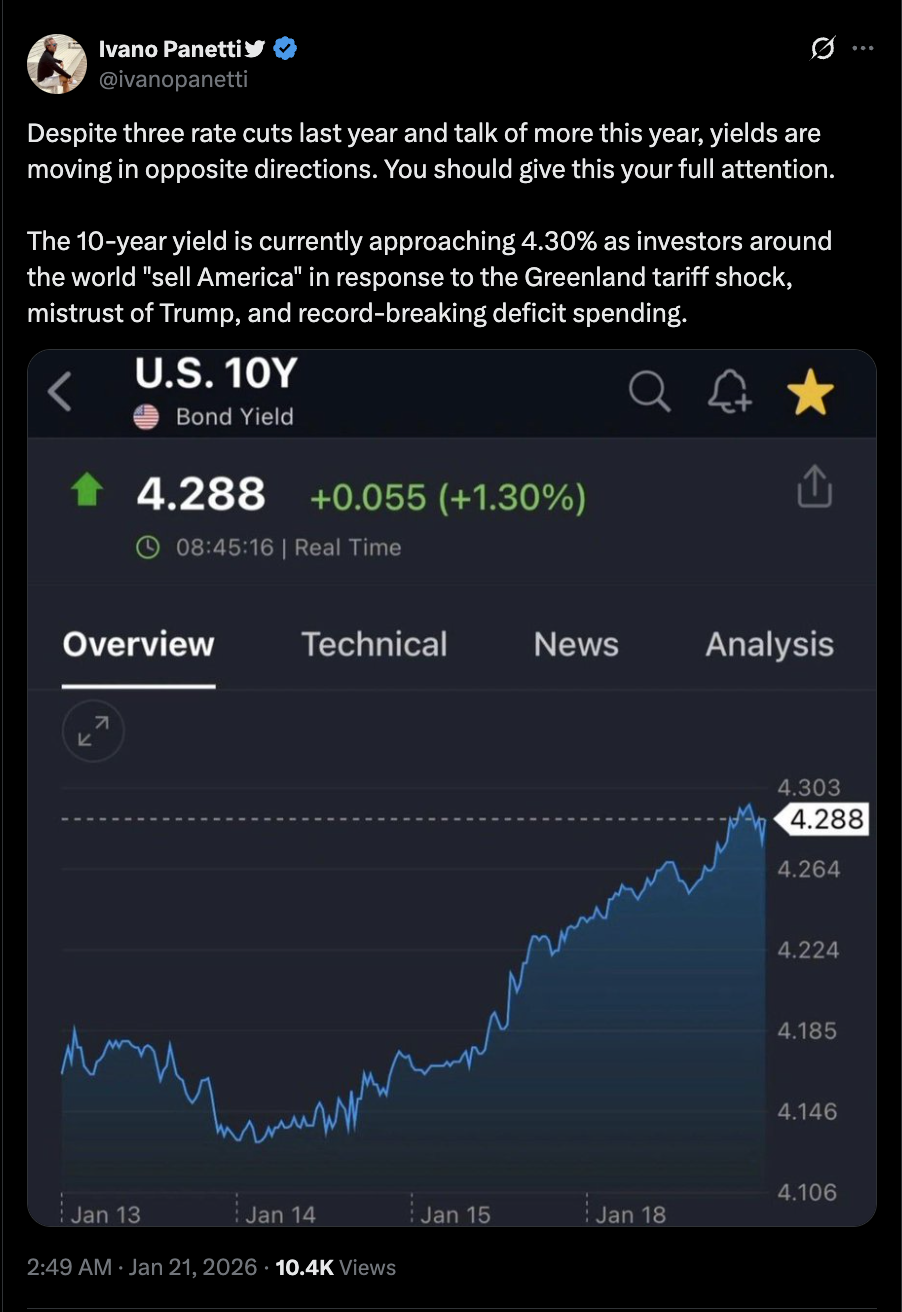
The gap between the United States’ longer-dated and shorter-dated bonds has widened to its highest level since 2021, signaling potential trouble for Bitcoin (BTC) in 2026.
Key takeaways:
-
A wider gap means long-term yields are rising, which can pressure Bitcoin.
-
Japan’s long-bond sell-off is driving the move and pulling US yields higher.
Rising yield gap can hurt equities (and Bitcoin)
Bitcoin’s market outlook looks increasingly bearish, if an assessment made by David Roberts, head of fixed income at Nedgroup Investments, on the global equity market is to be believed.
Roberts told Bloomberg that equities would suffer due to “a sustained push higher in yield.” He said the pressure is concentrated in longer-dated yields, particularly in Japan.
This week, Japan’s 30-year bond yield rose to a record 3.92%, widening its gap with the two-year bond yields by 220 bps–325 bps.
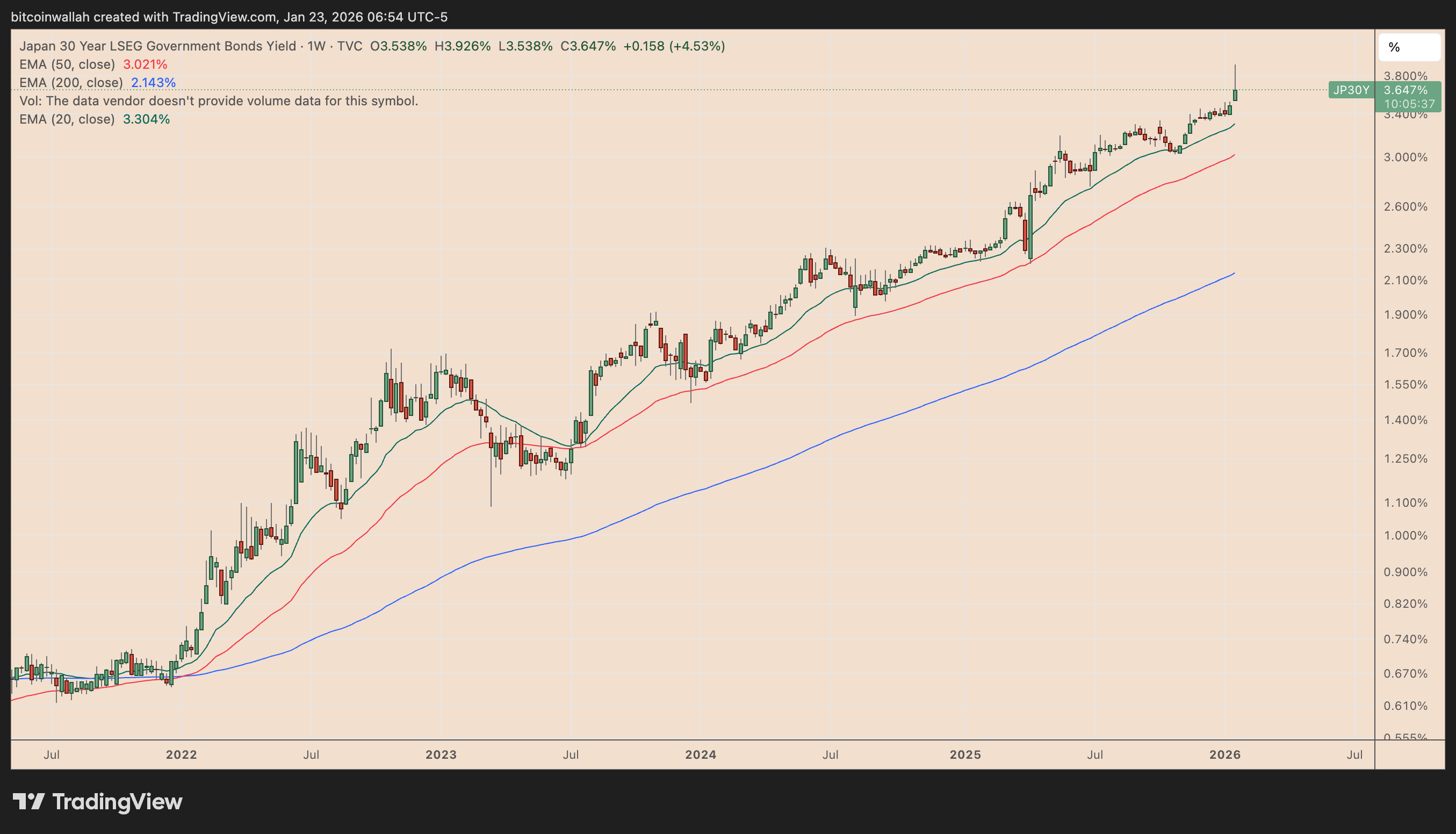
It can increase by another 75 bps–100 bps, said Lauren van Biljon, senior portfolio manager at Allspring Global Investments, citing Japan’s Prime Minister Sanae Takaichi’s election vows to increase spending.
The US 30-year yield closely tracks its Japanese counterpart, indicating that it would rise alongside in the coming weeks or months.
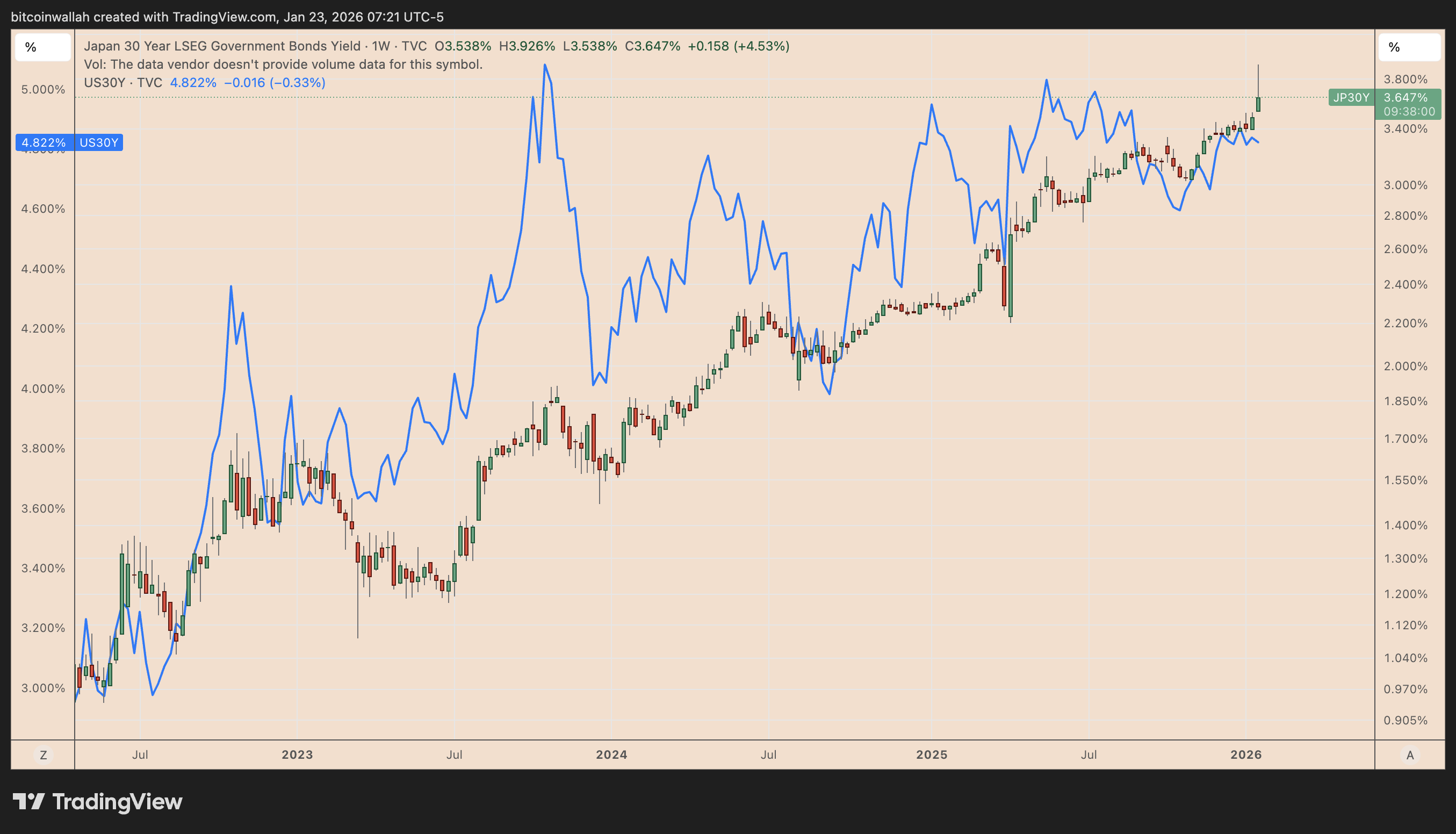
Higher yields typically reduce the opportunity cost of holding non-yielding assets like equities, which increases the probability of Bitcoin, a “high-beta” risk asset, dropping alongside.
Related: Spot Bitcoin, Ether ETFs see heavy outflows as ‘institutional caution’ grows
The assessment aligns with the so-called four-year cycle, which predicts BTC’s price to bottom in the $40,000-$50,000 range by the end of 2026.
Can BTC catch up to gold’s “historic alpha grab”?
Gold’s outperformance is adding another headwind for Bitcoin, according to Bloomberg Intelligence strategist Mike McGlone.
In a Friday post, McGlone argued that gold’s “historic alpha grab” is pulling capital toward the traditional inflation hedge at a time when higher long-term Treasury yields are also competing for flows.
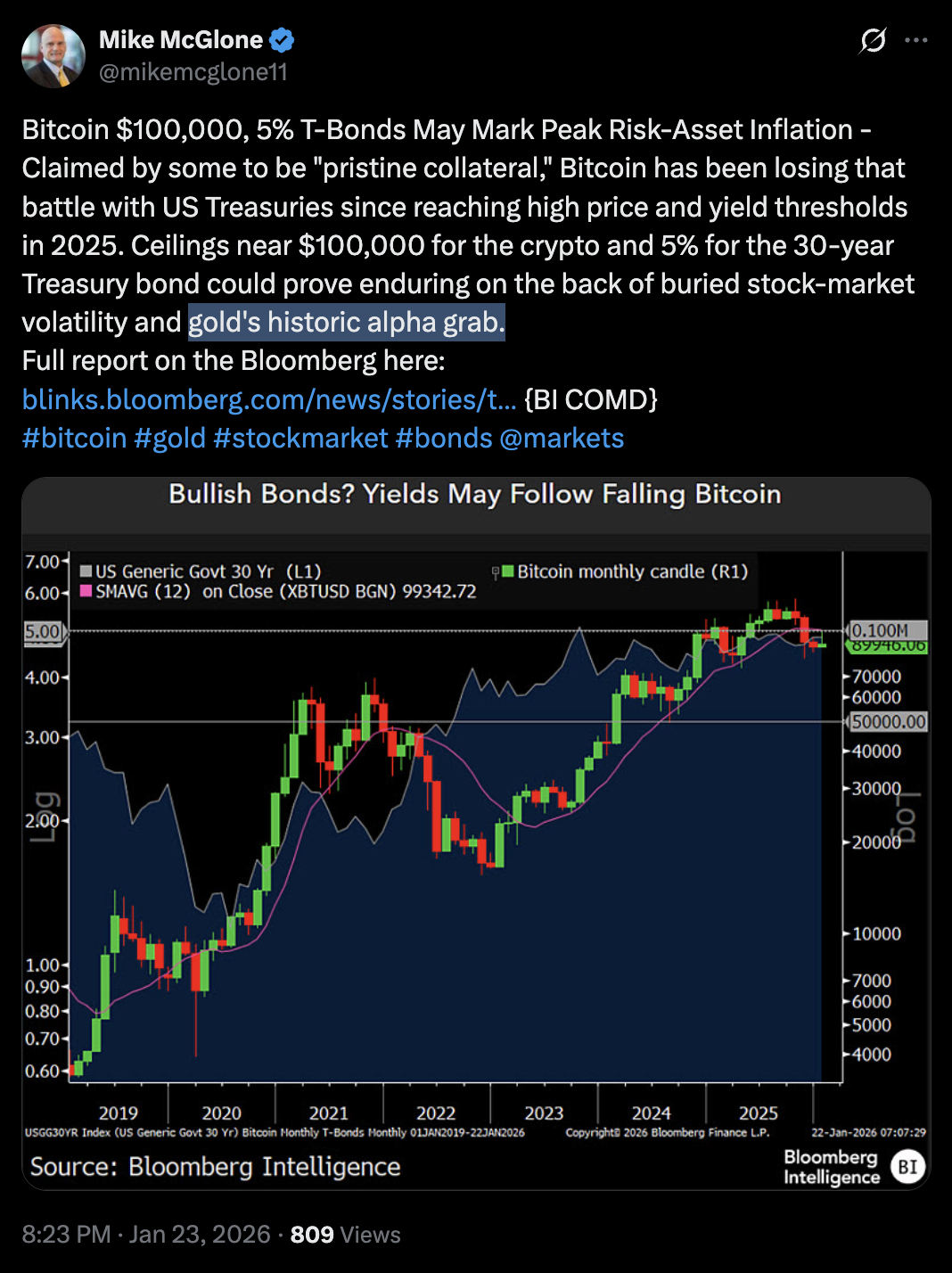
In that setup, Bitcoin faces a tougher hurdle to reclaim key psychological levels at or above $100,000, especially if investors continue to favor lower-volatility stores of value over high-beta risk assets.
This article does not contain investment advice or recommendations. Every investment and trading move involves risk, and readers should conduct their own research when making a decision. While we strive to provide accurate and timely information, Cointelegraph does not guarantee the accuracy, completeness, or reliability of any information in this article. This article may contain forward-looking statements that are subject to risks and uncertainties. Cointelegraph will not be liable for any loss or damage arising from your reliance on this information.

