


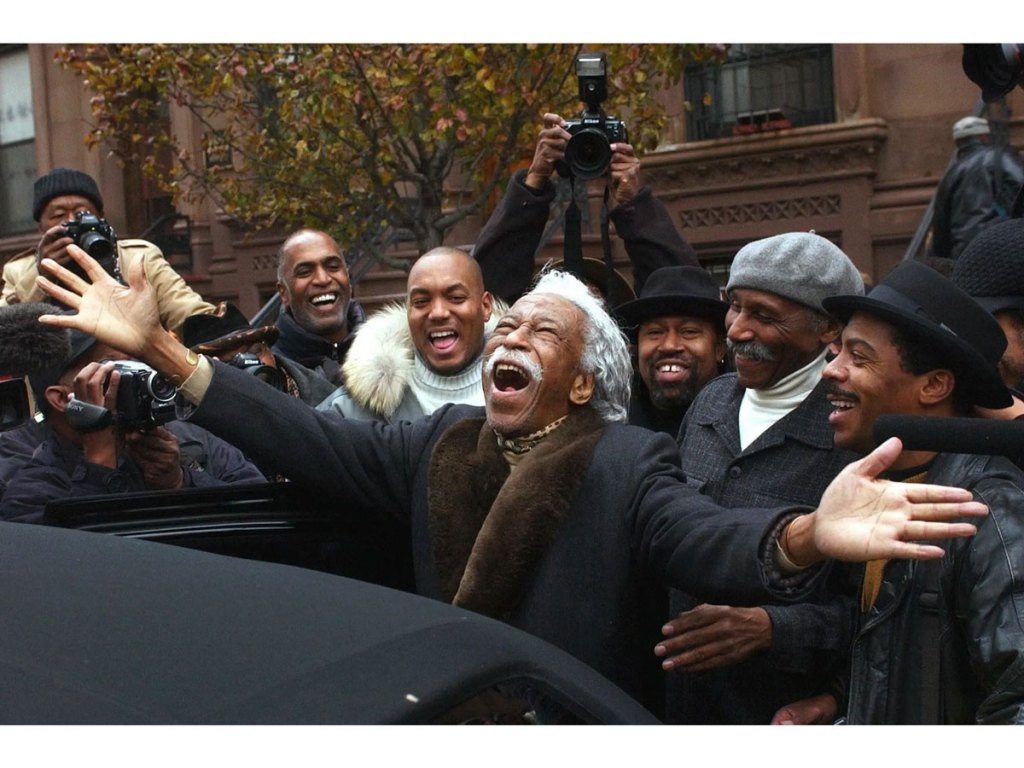
This year marks the 20th anniversary of the passing of photographer and artist Gordon Parks, who is known for his images that chronicled the segregated South, the civil rights movement, poverty, and the impact that racism had on the lives of African Americans. 2026 also marks the 20th anniversary of the founding of the Gordon Parks Foundation, which is tasked with preserving the legacy of Parks but also has become known for its work in supporting the next generation of artists and writers whose practices share affinities with that of Parks.
“This is our 20th anniversary,” Peter W. Kunhardt, Jr., the foundation’s executive director, told ARTnews in a recent interview. “To look back on it 20 years later and to see what we’ve done and how we’ve done it—the exhibitions, the partnerships with museums, the publications, the fellowships and scholarships—brings me great joy to see that these aspects of Gordon’s career could be so vibrant and monumental through the work of the Gordon Parks Foundation.”
“Over the past 20 years I’ve witnessed firsthand the profound growth, dedication and precision of the Gordon Parks Foundation,” Darren Walker, the former president of the Ford Foundation, said in an email. “Gordon Parks was a transformational figure using his camera to show the world the harsh realities of poverty, racism and bigotry. Gordon’s photographs woke us up and shook us to our core. Peter W. Kunhardt, Jr. and his team at Tte Gordon Parks Foundation have kept Gordon relevant while supporting the next generation of artists through so many important programs and it’s been an honor for me to watch this important work continue.”
Kunhardt noted that Parks and his grandfather, Phil Kunhardt, cofounded the foundation in 2006 and both died within weeks of each other in March of that year, leaving him to plot the future of the organization alone and while he “dealing with the loss of these two great giants.”
Part of the work of the early days of the foundation was to get Parks accepted by the mainstream art world, beyond just the impression of him as a photojournalist for Life magazine. “In the early days of the foundation that was really a struggle, and it was a lot of hard work,” Kunhardt said. “There was not much of a market for Gordon. It’s now a whole reversal.”
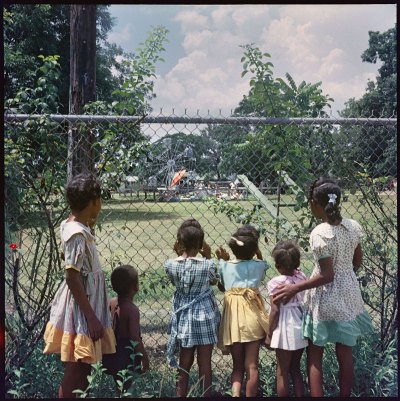
Gordon Parks, Outside Looking In, Mobile, Alabama, 1956.
Courtesy of and copyright The Gordon Parks Foundation
An important piece of advice Kunhardt received at the time came from Thelma Golden, director and chief curator of the Studio Museum in Harlem. “She helped me come up with this concept of going deep, not wide: don’t always do this retrospective, do the focused, in-depth study on a project instead,” he said. “Each year, since 2012, we’ve partnered with museums to uncover a different facet of Parks’s career to bring new scholarship around a particular body of work.”
One of those exhibitions took place at the Studio Museum and focused on “A Harlem Family,” which Phil Kunhardt worked on with Parks for the March 1968 issue of Life. As part of the 20th anniversary celebration, the foundation is publishing this spring a newly expanded edition of that body of work, titled Gordon Parks: Diary of a Harlem Family, 1967/1968. It’ll include unpublished texts and ephemera, including the correspondence between Parks and the Fontenelle family, the subject of the series, as well as essays by Golden, NYU film professor Michael Boyce Gillespie, and director Cord Jefferson.
“The idea is that each of these projects builds on the next,” Kunhardt said.
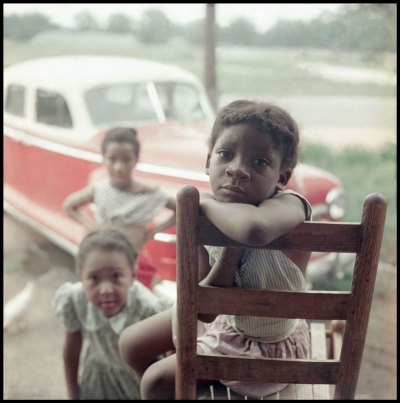
As part of the 20th anniversary year, the Gordon Parks Foundation will help realize three gallery exhibitions focused on Parks. The first of these opens in March at Alison Jacques Gallery in London. Titled “We Shall Not Be Moved,” the exhibition is curated by Bryan Stevenson, the founder of the Equal Justice Initiative, and will bring together both iconic and rarely seen work by the photographer.
“The scope of the images from Parks represents the struggle, resilience and constant striving of Black Americans,” Stevenson told ARTnews in an email. “As an African American survivor of racial injustice, Parks was keenly aware of race and class in America, and this palpably informed his work.”
Courtesy of and copyright The Gordon Parks Foundation
Jacques last mounted a two-part exhibition for Parks in 2020 and the goal for this exhibition, Kunhardt said, is to highlight the “social justice component” of Parks’s work overseas, where “there is a much lesser understanding of who Gordon Parks was.”
April brings “The South in Color,” curated by photographer Dawoud Bey, at Atlanta gallery Jackson Fine Art. Focusing on Parks’s 1956 series “Segregation Story,” the exhibition brings to life an essay by Bey from the 2022 book Gordon Parks: Segregation Story (Expanded Edition), published by the foundation and Steidl. In that essay, Bey describes how Parks’s color photographs from the 1950s were often reproduced in black and white, obscuring his innovation within the medium.
“Parks was making photographs in which color was not the subject, but was evocatively wedded to the subject in such a way as to heighten actual and material experience,” he writes.

A portrait of Gordon Parks, ca. 1969, by an unknown photographer.
Courtesy of and copyright The Gordon Parks Foundation
In the fall, Jack Shainman Gallery in Tribeca will mount an exhibition that gathers some of Parks’s best-known works all filtered through people who knew him or the descendants of his images’ subjects. Muhammad Ali’s widow, Lonnie Ali, for example, will reflect on Parks’s images of Ali, while Qubilah Shabazz, daughter of Malcom X and goddaughter of Parks, will take stock of “Gordon and Malcolm X in Harlem in the ’60s,” Kunhardt said.
At the foundation’s gallery space in Pleasantville, New York will be several exhibitions throughout the year dedicated to past fellows, including Devin Allen, D. Watkins, Derek Fordjour, Salamishah Tillet, and Scheherazade Tillet, as well as the 2026 recipients of the Gordon Parks Foundation Legacy Acquisition Fund, for mid- and late-career artists whose work continues to be underrecognized.
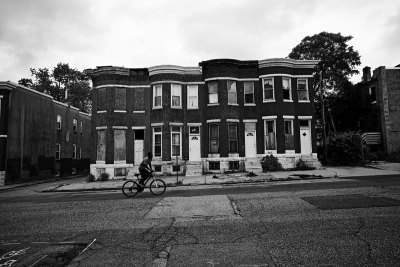
Devin Allen, Untitled, Baltimore, June 3, 2018.
Courtesy the artist and the Gordon Parks Foundation
“This foundation, which really was designed to preserve and promote the legacy of Gordon Parks, has become this umbrella to support art and contemporary practices and look at artists who are following in the footsteps of Gordon Parks,” Kunhardt said.
At the heart of the foundation’s work, Kunhardt said, is keeping Parks’s legacy alive and filtering it through the current moment. “Gordon captured a lot of things in ways that people weren’t able to do and used Life magazine as this platform to show the racial injustice and the harsh realities of racism and poverty in America,” he said. “We’re living in very harsh, unprecedented times, and I’m reminded that Gordon stood for fighting for the right thing and doing the right thing and getting the message out there.”