



Key takeaways:
-
Ether trades near $3,200 as weaker network usage and US economic uncertainty limit its price upside.
-
Layer-2 networks drive most Ethereum activity, but cheaper rival blockchains reduce the chance of Ether reclaiming $4,000 soon.
Ether (ETH) price has repeatedly failed to sustain levels above $3,300 over the past 60 days, leading traders to question whether a durable bullish momentum is still achievable in 2026. Despite the Ethereum network rolling out important upgrades and maintaining its leading position in terms of deposits, investors worry that the chances of reclaiming the $4,000 level remain low.
Ether’s performance since November has closely tracked the broader cryptocurrency market capitalization. As a result, the lack of optimism appears to be driven more by weaker overall decentralized application (DApps) usage than by issues specific to the Ethereum ecosystem. Regardless of whether traders’ concerns stem from broader economic risks, ETH price upside in the short term seems limited.
Ether tracks broader crypto market amid weaker application usage
Irrespective of the factors influencing bullish crypto investors, traders have shown less interest in DApps, as reflected by declining activity on decentralized exchanges (DEX). According to DefiLlama, aggregate DEX volumes over the past two weeks totaled $150.4 billion, down 55% from the $340 billion all-time high recorded in January 2025.
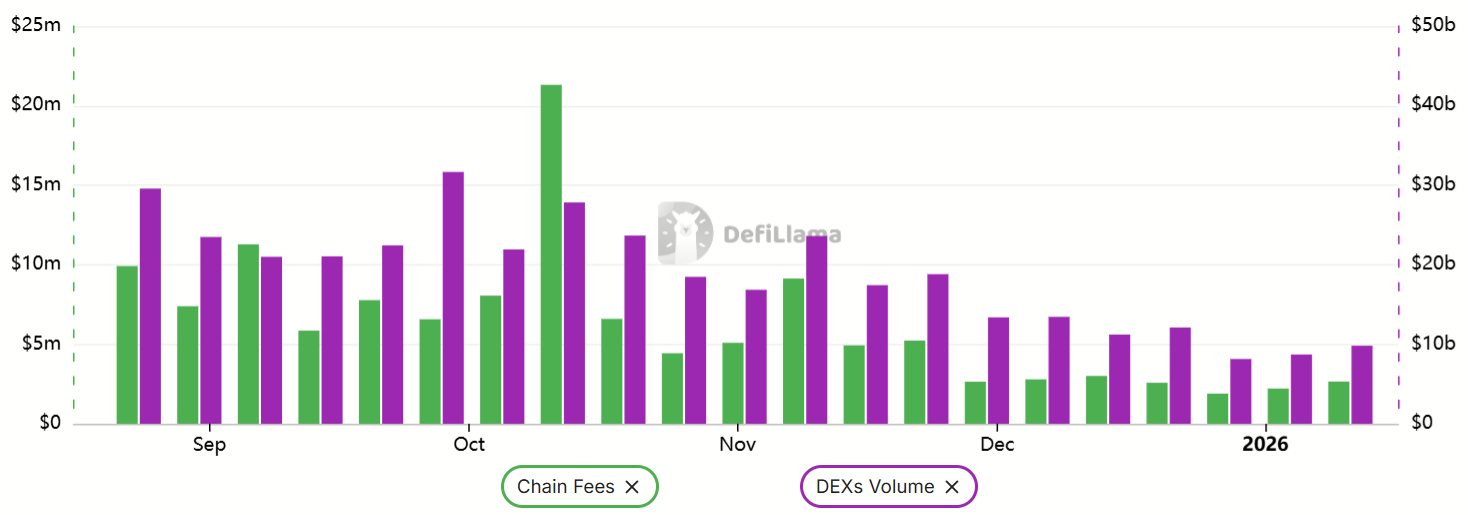
Ethereum 7-day DEX volumes have hung near $9 billion after peaking at $27.8 billion in October 2025. This 65% pullback pushed Ethereum network fees down 87% to $2.6 million, from $21.3 million three months earlier. Even so, the Ethereum ecosystem continues to dominate, holding roughly a 50% share of DEX activity when combining data from Base, Arbitrum, Polygon and other layer-2 solutions.
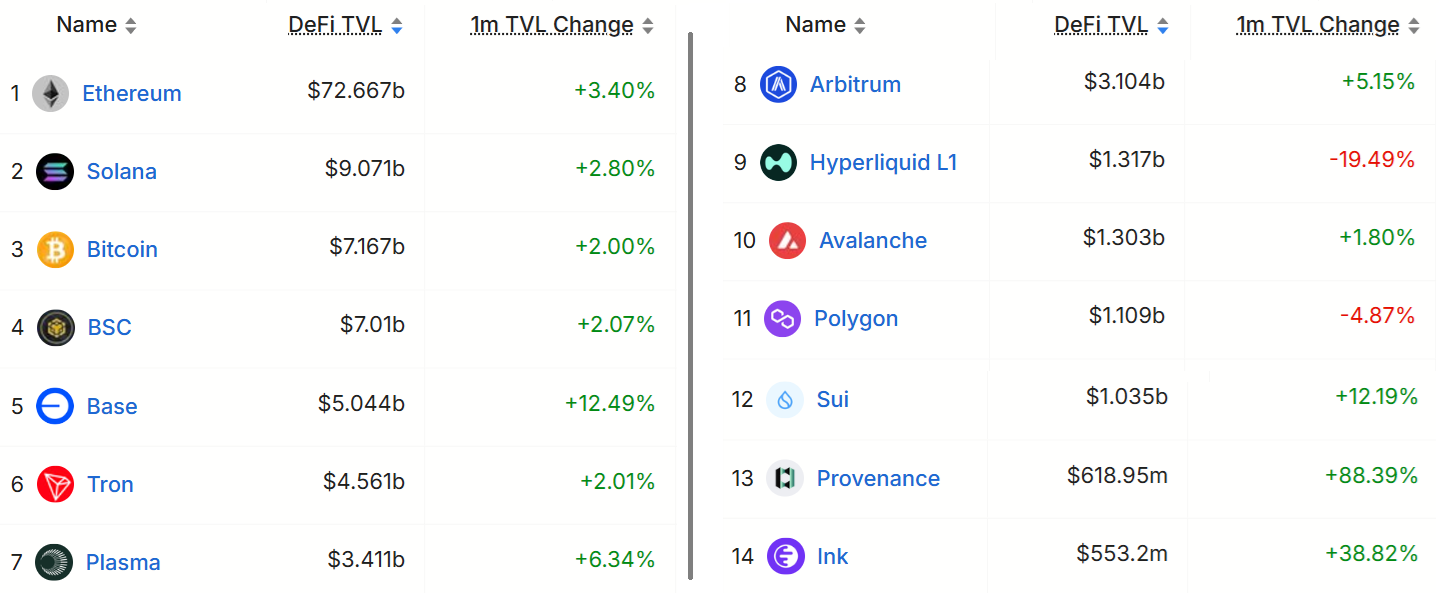
Ethereum’s lead in total value locked (TVL) is strong evidence of institutional investor preference, even as competitors such as Tron, Solana and BNB Chain generate higher network fees. While some market participants argue that Ethereum has failed to fully monetize its dominance in smart contract deposits, this outcome is largely intentional and stems from its scalability strategy built around rollups.
Related: VanEck says policy clarity could make Q1 a ‘risk-on’ quarter

The number of transactions on Solana exceeds the combined total of its top 10 competitors, highlighting the network’s reliance on intensive validation processes and a semi-centralized development structure led by Solana Labs. According to Nansen data, Ethereum processed 54.4 million transactions over a 30-day period, while its layer-2 network Base recorded more than 600 million transactions over the same timeframe.
Ether’s two-month stretch trading below $3,200 has been particularly challenging for companies that raised debt or equity to build ETH reserves. Bitmine Immersion (BMNR US), for example, currently holds $13.2 billion worth of Ether, while its shares trade at a 9% discount to the value of those holdings, based on CoinGecko data.
It remains unclear what catalyst could shift momentum back in ETH’s favor, especially as rival networks provide comparable DApps and functionality for average users, often with lower friction due to base-layer scalability. Ether’s path back to $4,000 and beyond depends heavily on renewed demand for blockchain applications and broader cryptocurrency risk appetite amid ongoing uncertainty in the US economy.
This article does not contain investment advice or recommendations. Every investment and trading move involves risk, and readers should conduct their own research when making a decision. While we strive to provide accurate and timely information, Cointelegraph does not guarantee the accuracy, completeness, or reliability of any information in this article. This article may contain forward-looking statements that are subject to risks and uncertainties. Cointelegraph will not be liable for any loss or damage arising from your reliance on this information.