


In the process of excavating a Roman forum near the ancient city of Amastris (now known as Amasra) in present-day Turkey, archaeologists uncovered a Medusa carving with an unusual expression. The smiling stone Medusa was discovered on the top of decorative marble columns that once made up a covered walkway or gallery (called a stoa). Popular Mechanics covered the news, which was first reported by Turkey Today.
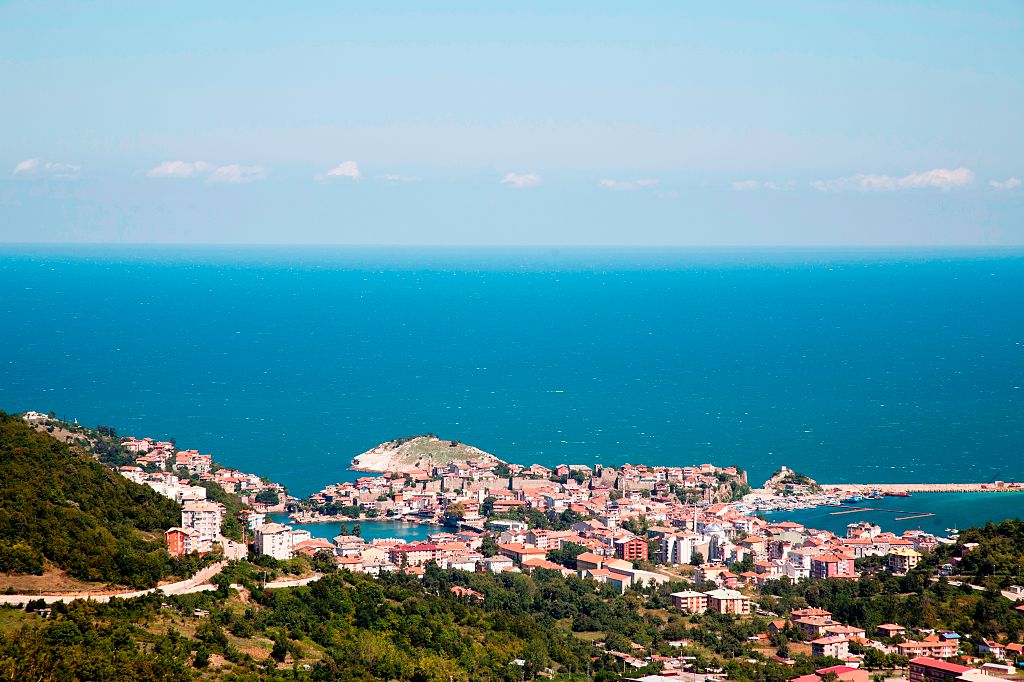
The Amasra district is along the northern coast of Turkey, bordering the Black Sea. Excavations of the Roman forum began three years ago, following the discovery, in 2017, of historical remains during the construction of a local school.
Bartin University’s Archaeology Application and Research Center is overseeing the project, which covers over 30,000 square feet. The Turkish Ministry of Culture’s “Heritage of the Future” initiative has supported the meticulous reconstruction of the stoa; so far, three columns have been rebuilt.
Even those not very well schooled in Greek mythology can likely picture a typical image of the goddess Medusa: a head of hair made up of snakes and a menacing face that would turn onlookers to stone. This Medusa, on the other hand, is smiling in an almost childlike fashion.
Turkey Today noted that Fatma Bagdatli Cam, a professor at Bartin University, elaborated on this unusual depiction of the goddess: “Medusa normally became a symbol with a frightening expression and snake hair in order to scare the enemy and create fear, but our Medusa was made just like an Eros, like the face of a very small child and in a smiling pose.” According to Cam, the smiling Medusa is a likely indication that the ancient Roman city’s peacefulness and prosperity.