


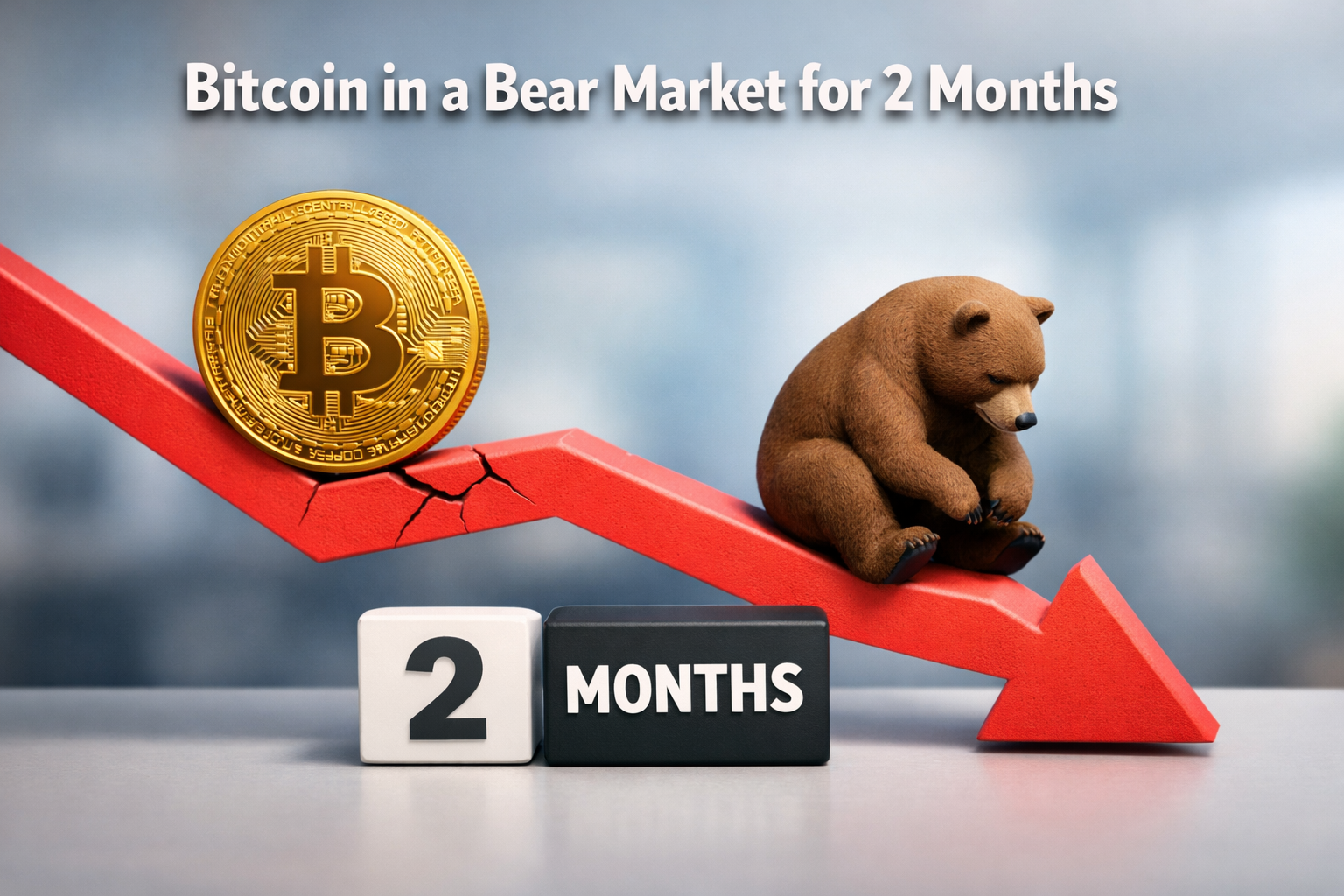
For many investors, market downturns ignite fear and uncertainty — but seasoned market participants recognize that within these quieter cycles lie some of the most lucrative opportunities. Bitcoin’s recent price and on-chain signals suggest that the leading cryptocurrency could be traversing a stealth bear market, offering a low-noise accumulation stage for forward-thinking investors.
Over the past two months, Bitcoin has shown signs of losing upward momentum and has quietly slipped below some critical technical levels. Most notably, Bitcoin has traded persistently under its 200-day moving average (200DMA) — a widely watched indicator that often signals whether BTC is in a bull or bear phase. Since late April, Bitcoin has failed to reclaim this important threshold, leading many analysts to suggest that the market has entered a consolidation or bear trend zone.
While this trend may rattle less experienced investors, for contrarians it increasingly looks like an asymmetric risk/reward setup. This is particularly true during periods when negative sentiment dominates and mainstream coverage wanes. When the 200DMA is breached to the downside with little media panic, it often signals a transition phase — one where accumulation quietly begins beneath the radar of the average retail participant.
Are Technical and Market Indicators Leading Investors Astray?
Data from multiple sentiment indicators shows a marked decline in retail excitement. Google Trends data for “Bitcoin” has plummeted to multi-month lows, and mentions across social media platforms like Twitter (now X), Reddit, and cryptocurrency forums have dropped significantly. A lower level of retail chatter might seem bearish on the surface, but history suggests that such times often precede massive upward moves. Some long-time traders refer to this condition as “the silence before the breakout.”
These dips in public interest typically signal periods of market exhaustion — a clearing out of weak hands, overleveraged positions, and speculative mania. Right now, leverage in derivatives markets is notably lower than it was during aggregate peak periods earlier in the year. The liquidity squeeze, while painful for some, resets the structural foundation of the market.
Beneath this bearish veneer, the underlying fundamentals of the Bitcoin network remain exceptionally robust. Despite weaker price action, Bitcoin’s hashrate remains near record highs, indicating that miner confidence in the network has not been shaken. This important on-chain metric reflects the total computational power protecting the Bitcoin blockchain and signals network resilience despite price volatility.
At the same time, institutional interest in Bitcoin continues to evolve — albeit more quietly than during previous hype cycles. ETFs and other regulated investment vehicles are seeing inflows, and sovereign actors are quietly exploring or expanding their exposure to Bitcoin through both direct buys and strategic infrastructure investments.
The Stealth Accumulation Phase — Echoes From the Past
Long-term holders and institutional investors are no strangers to periods like this. In both 2015 and 2018, Bitcoin significantly underperformed its long-term moving averages, slipping below the 200DMA and consolidating for several months. These so-called “crypto winters” were marked by low volatility and a general lack of speculative interest — yet they turned out to be among the best periods in Bitcoin’s history to begin accumulating.
In 2015, for example, BTC traded sideways between $200 and $300 for many months, eliciting little enthusiasm from traders and analysts. Yet from those levels, it began an astronomical climb, peaking at $20,000 by the end of 2017. A similar pattern repeated after the 2018 bear market. BTC dropped below $4,000 and lingered with minimal trading volume, only to surge past $60,000 just a few years later.
This cyclical nature of Bitcoin markets means that bearish phases, while uncomfortable, often lay the groundwork for the next phase of explosive growth. Investors who understood how to read these signals — and had the conviction to stay or expand their positions — wound up benefitting handsomely.
Strategic Moves for Forward-Thinking Investors
So what should savvy investors do during this quieter period? One prudent strategy is dollar-cost averaging (DCA), where individuals allocate a fixed amount of capital at regular intervals regardless of the current price. This helps mitigate risks associated with market timing and smooths out volatility over time, especially during periods of accumulation.
The DCA approach can be applied not only to Bitcoin itself but also to broader components of the Bitcoin ecosystem. Increasingly, long-term investors are beginning to allocate to adjunct areas that strengthen the network’s long-term utility and adoption metrics. These areas include:
- Layer-2 Scaling Solutions: Protocols like Lightning Network are gaining traction for enabling near-instant, low-fee transactions over Bitcoin. Their growth signals real-world utility even in low-price environments.
- Privacy-Focused Altcoins: While not all altcoins offer long-term value, some projects focused on privacy and data sovereignty are building niche utility markets underpinned by Bitcoin’s ethos.
- Custody and Infrastructure Providers: Institutional-grade wallets and crypto banks that facilitate secure storage and transactions for large holders are positioning themselves as essential pillars in the next wave of adoption.
- Bitcoin-Native DeFi: Emerging DeFi protocols leveraging Bitcoin’s security model via wrapped assets or direct integrations are opening new opportunities for yield-generation and lending without leaving the Bitcoin ecosystem.
By building exposure to this wider ecosystem during market lulls, investors establish more resilient portfolios while positioning themselves for outperformance during the next positive cycle shift.
Don’t Let Short-Term Price Movements Obscure Long-Term Vision
For newer investors, it’s easy to fall into the trap of equating short-term price movements with long-term value. In reality, the smartest capital in the market sees Bitcoin less as a price ticker and more as a transformative asset class with the potential to revolutionize how we view money, energy, and decentralized sovereignty.
As we look ahead, there are multiple macro and structural indicators that reinforce confidence in Bitcoin’s long-term bullish thesis — including mounting sovereign inflation concerns, the rise of currency devaluation across fiat systems, and the increased recognition of Bitcoin as a hedge asset by financial institutions worldwide.
This is not to say the market won’t experience further dips or volatility. However, the current bear phase is unlikely to last forever. The accumulation behavior we’re seeing from long-term holders, miners, and institutions suggests a deepening conviction in the asset, not weakening interest.
Ultimately, investors willing to look beyond the noise and lean into innovation, infrastructure, and conviction-based accumulation strategies will be in the strongest position to take advantage of the next bull cycle. Volatility may fade headlines and pace trading desks, but transformation continues — powered by hash power, belief, and innovation.
Bear markets may shake short-term confidence, but the fundamentals and forward vision behind Bitcoin remain stronger than ever. Smart money isn’t retreating — it’s repositioning.

