


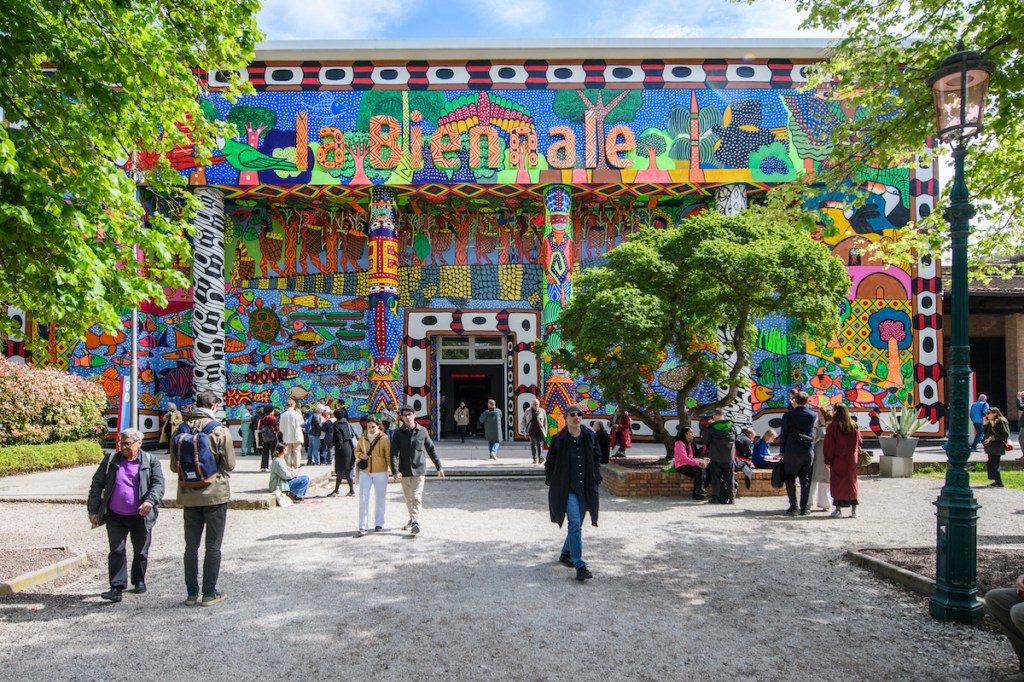
The central attraction at the Venice Biennale is its main exhibition, a curated show meant to pinpoint a dominant theme in art as it stands right now. But all around it are pavilions staged by countries, with each nation selecting one or more artists to mount their own show or installation. These national pavilions have contributed to the common conception of the Biennale as the art world’s Olympics: a place where stars are born and nations flex their might.
The national pavilions tend to remain in flux until the very end. In 2024, the wars in Ukraine and Gaza upended several nations’ plans to exhibit at the Biennale. In 2026, those conflicts have once again roiled this area of the Biennale, with Australia canceling and then reinstating its selected artist and the status of Israel and Russia’s participations still unclear. Uncertainty within a given country can also affect their planned participation, as was the case with the government shutdown delaying the announcement of the US Pavilion.
But to get a sense of how the national pavilions currently stand, we’ve collected a list of all the national pavilions announced for the 2026 Venice Biennale, whose main exhibition will take the title “In Minor Keys.” While not a requirement, a number of countries often align their picks to resonate with the theme of the main exhibition.
Koyo Kouoh, the former executive director and chief curator of Zeitz Museum of Contemporary Art Africa in Cape Town, South Africa, was selected as the main exhibition’s curator in late 2024. She died unexpectedly on May 10, 2025, just weeks before her theme was to be announced. The Biennale has made the decision to proceed with Kouoh’s vision for the exhibition, “with the full support” of Kouoh’s family, and a team of five curatorial advisers will realize the show.
Nearly all of these shows are official national pavilions. But this list also include some presentations that are technically considered collateral events, since the Biennale only confers national pavilion status to countries that have official diplomatic ties with Italy. We’ve noted which pavilions listed below are classed as collateral events.
Below, a guide to every 2026 Venice Biennale national pavilion announced so far. This list will be regularly updated as additional countries announce their pavilions.
-
Albania
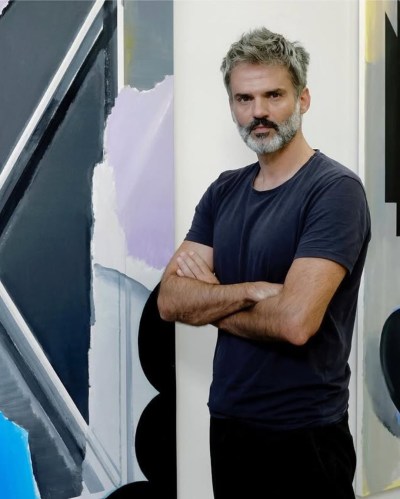
Image Credit: Courtesy Double Q Gallery While Genti Korini’s paintings and sculptures may sometimes resemble the fashionable kind of figurations seen in commercial galleries across the globe, his work is rooted in heady ideas about Eastern Europe’s past, present, and future. He’ll return to those ideas with his Albanian Pavilion, titled “A Place in the Sun,” which will feature pieces that draw on both Albanian history and Polish experimental theater traditions. Małgorzata Ludwisiak will curate.
-
Argentina
Image Credit: Courtesy Casa Triângulo You’ll want to watch your step at Matías Duville’s Argentine Pavilion, since the entire floor will be covered by a drawing made using charcoal and salt. Such a gesture may not be exactly unexpected for those familiar with Duville, who often works with burnt wood to create images of scorched landscapes. His latest outing will be titled “Monitor Yin Yang” and will be curated by Josefina Barcia.
-
Armenia

Image Credit: Sean Drakes/Getty Images This year’s Armenian Pavilion may offer the rare case where one of its curators is better known than its artist representative. That curator is Tony Shafrazi, who is best known as a dealer of the 1980s New York scene; he will co-organize the pavilion with Tina Shakarian. Together, they are spotlighting artist Zadik Zadikian, who acted as an assistant to Richard Serra early in his career and has since produced an array of abstract sculptures, including a monument to Armenian soldiers killed in the 2020 war in Nagorno-Karabakh. At the Independent 20th Century fair this past fall, Shafrazi, who had not participated in an art fair since 2012, showed Pop-inflected work by Zadikian and a sculpture of gold bricks revisiting one of his pieces from the ’70s.
-
Australia
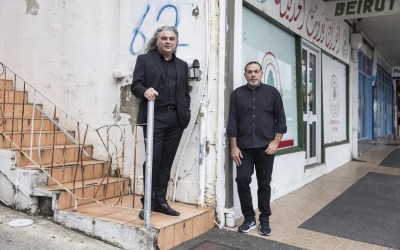
Image Credit: Anna Kucera Already, no pavilion at the 2026 Biennale has proven more controversial than Australia’s, which is being done by artist Khaled Sabsabi, who is working in tandem with curator Michael Dagostino. Not long after its initial announcement, in February 2025, Sabsabi’s pavilion was canceled by its organizer, Creative Australia, which raised concerns over prior works by the Lebanese-born artist, including one that featured images of a Hezbollah leader. Creative Australia said that “a prolonged and divisive debate” would pose a “risk” to the pavilion; Sabsabi and Dagostino said they were being censored. But the cancelation ended up itself provoking a divisive debate that saw Creative Australia board members resign and open letters issued, and eventually, five months later, Sabsabi was reinstated as Australia’s representative. He and Dagostino said the reinstatement provided them with “a sense of resolution.”
-
Austria
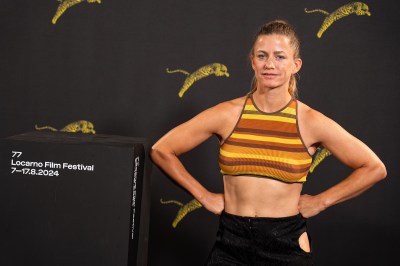
Image Credit: Alessandro Levati/Getty Images Continuing an emphasis on dance seen at Anna Jermolaewa’s 2024 pavilion, Austria’s 2026 pavilion will be given over to the choreographer Florentina Holzinger. Holzinger has quickly risen as one of the most in-demand choreographers worldwide for pieces that are often sexually charged and sometimes tough to watch. Sancta, her opera featuring nuns who roller-skated in the nude and a lesbian priest, was bitterly critiqued in her home country upon its premiere in 2022, with religious figures condemning her. When it traveled in 2024 to Germany, it raised controversy anew after audience members complained of severe nausea while watching a scene involving a piercing. Her project for the Biennale, titled Seaworld Venice, has the potential to be no more pleasant.
-
The Bahamas
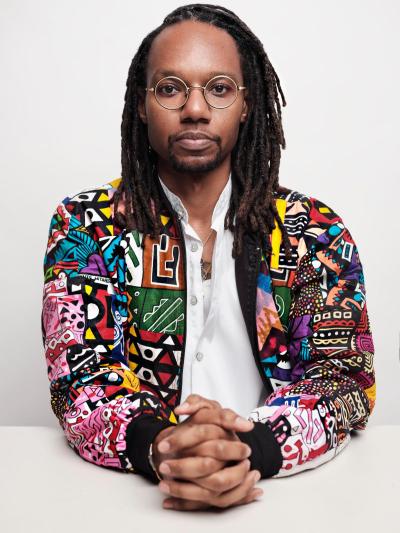
Image Credit: Roy Cox Participating for a second time in the Venice Biennale more than a decade after its debut, The Bahamas has chosen both a living artist and a dead one as its representatives. The pavilion will serve in part as a tribute to John Beadle, who died in 2024, leaving behind an oeuvre that explores how traumatic histories of enslavement and colonialism linger on. His work will be shown alongside that of Lavar Munroe, whose paintings and installations explore how individuals are shaped by local traditions. Art historian Krista Thompson will curate.
-
Belgium
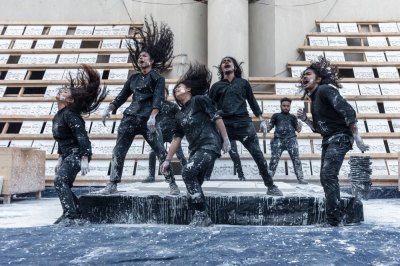
Image Credit: ©Shahrear Kabir Heemel/Courtesy the artist, MORPHO, and KANAL-Centre Pompidou Belgium has selected Miet Warlop, who is known for her performances that combine the visual arts with theater, as its representative for the 2026 Biennale. Supported by MORPHO in Antwerp and Kanal–Centre Pompidou in Brussels, her pavilion will take the title “IT NEVER SSST” and is to be curated by Caroline Dumalin. Warlop’s performances have been staged at S.M.A.K. in Ghent, the KW Institute for Contemporary Art in Berlin, and the Palais de Tokyo in Paris, as well as at the 2012 Baltic Triennale in Vilnius, Lithuania, and the 2024 Venice International Theatre Festival.
-
Brazil
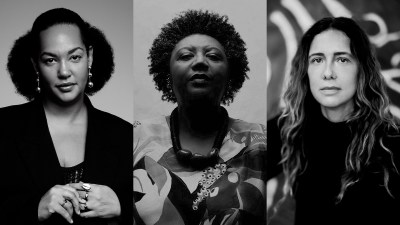
Image Credit: Wallace Domingues, Rodrigo Ladeira and Tinko Czetwertynski/Courtesy Fundação Bienal de São Paulo In Portuguese, the phrase “Comigo ninguém pode” can act as a saying that translates to “Nobody can beat me” or as the colloquial name for a plant known as dumbcane. It lends its name to this year’s Brazilian Pavilion, which will be done by artists Rosana Paulino and Adriana Varejão, both of whom are well-known internationally—the former for installations that attest to histories of enslavement that continue to afflict the Afro-Brazilian community, the latter for lush paintings and installations that allude to violence more obliquely. They are set to work with Diane Lima, who recently organized the Panorama of Brazilian Art in São Paulo. Can the pavilion live up to its name and win the Biennale’s top honors? Time will tell.
-
Canada

Image Credit: Photo Alex de Brabant In Canada, Abbas Akhavan has steadily racked up accolades, appearing in the Toronto Biennial of Art, winning the Sobey Art Award for Canadian artists, and staging shows at well-regarded institutions. He is set to receive a new level of fame in the country he now calls home with this pavilion, which will continue his fascination with how national histories become embedded in material objects. Born in Tehran and now based between Montreal and Berlin, Akhavan has gradually gained international recognition as well. In 2026, Minneapolis’s Walker Art Center will survey his work.
-
Chile
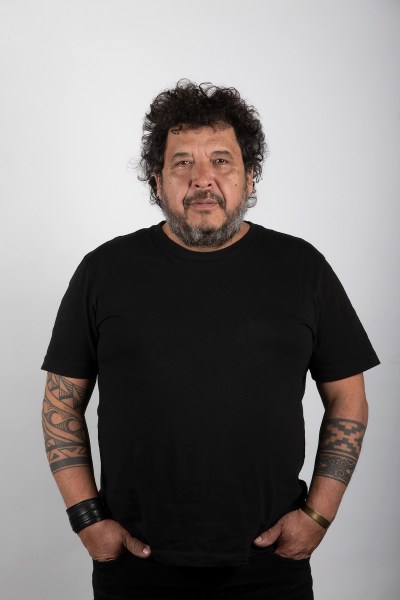
Image Credit: Courtesy the artist Norton Maza has kept his Chilean Pavilion, titled “Inter-Reality,” cloaked in mystery. He has teased a large-scale work that will involve water and sound, describing the project as being akin to a “canal of life; you travel through different levels of water and their intensities”—a fitting gesture for Venice. Marisa Caichiolo will organize the installation.
-
Cyprus

Image Credit: Courtesy the artist and Hot Wheels, Athens and London Sculptor Marina Xenofontos will represent Cyprus at this Biennale, and she’s given her pavilion the lush name of “It rests to the bones”—a poetic evocation of her interest in traditions of the past that are not so dead after all. Kyle Dancewicz, who formerly showed Xenofontos’s work at SculptureCenter, the New York art space where he is deputy director, will organize her pavilion.
-
Czech Republic and Slovakia
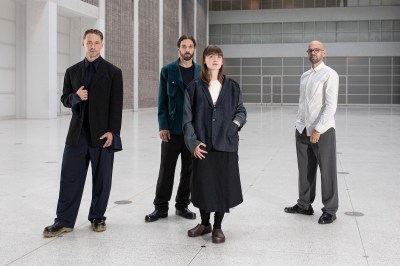
Image Credit: Shotby.Us Whereas in 2024 the Czech Republic and Slovakia mounted separate presentations, they will, in 2026, stage a combined pavilion entitled “The Silence of Mr. Mole.” Jakub Jansa and Selmeci Kocka Jusko (a duo composed of Alex Selmeci and Tomáš Kocka Jusko) will work together on the pavilion, whose titular protagonist “has turned into a mascot of cultural diplomacy, a licensed commodity, and a nostalgic myth, a symbol of stolen fantasy,” according to the pavilion’s description. “Sent to represent the Czech Republic and Slovak Republic as a diplomatically acceptable, politically neutral figure, the mole also embodies reproach, silence, and a confused identity.” Peter Sit, a curator who serves as art director of e-flux, will organize their presentation.
-
Denmark
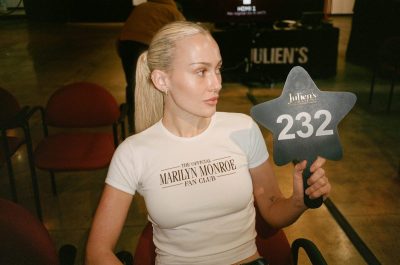
Image Credit: Courtesy Art Hub Copenhagen Denmark has its youngest Venice Biennale representative ever in Maja Malou Lyse, whose photography, installations, sculptures, and more consider how media consumptions shapes one’s desires. Her Danish Pavilion, though not detailed in the exhibition’s initial announcement, seems likely to follow on from past works: “I’m ready to give the biennale some sex appeal,” the artist, who was born in 1993, said in a statement. A curator has not yet been revealed for her pavilion.
-
El Salvador
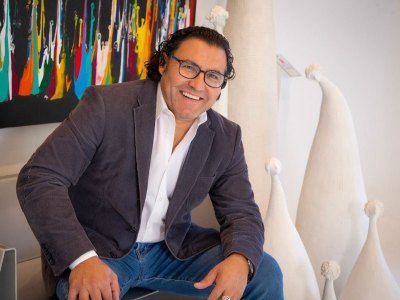
Image Credit: ©2022 Studio Marsin Mogielski Making its debut at the Venice Biennale, El Salvador will be represented by J. Oscar Molina, a Salvadoran American artist who was born in the country. His pavilion, titled “Cartographies of the Displaced,” will feature at least 15 works from his “Children of the World,” which explores the concept of migration via rising splashes of color. In Venice, each work will be exhibited alongside a QR code that links out to a message from a member of a displaced community. Alejandra Cabezas, a Salvadoran poet and art historian, will curate his pavilion.
-
Estonia
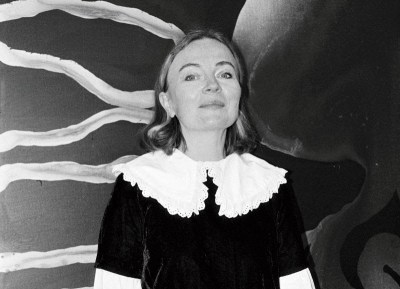
Image Credit: Marta Vaarik Within Estonia, Merike Estna is well-known for her attempts to expand painting beyond the tried and true oil-on-canvas format. While she has regularly created abstractions that hang on walls, she has applied craft techniques in certain works, extended motifs shown on her canvases by repeating them throughout galleries, and added sculptural elements. Her pavilion will take the title “The House of Leaking Sky” and be organized by Natalia Sielewicz, the chief curator of the Museum of Modern Art in Warsaw. According to a release by the pavilion’s commissioner, the Estonian Centre for Contemporary Art, Estna will transform the Patronato Salesiano Leone XIII into her studio for the entirety of the Biennale’s run, during which time she create a monumental painting on-site by “gradually saturat[ing it] with colour and form.”
-
Finland
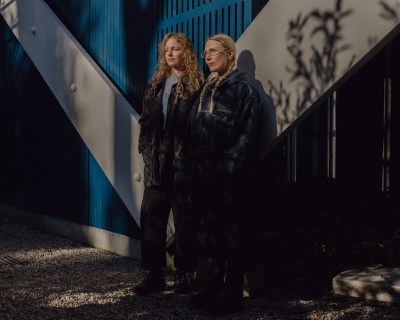
Image Credit: Photo Matteo de Mayda Jenna Sutela, an artist known for boundary-pushing sculptures that utilize biological matter, AI, and digital technologies, has been picked to do Finland’s pavilion for the 2026 Biennale. While her pavilion hasn’t been detailed yet, it’s likely that it will be one of the few in Venice that is technically host to living beings: bacteria and mold have recurred in her work, which questions what it means to be human today. Stefanie Hessler, the director of New York’s Swiss Institute, will curate Sutela’s pavilion.
-
France
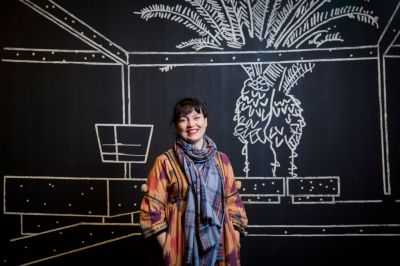
Image Credit: Tristan Fewings/Getty Images Yto Barrada, one of France’s most famous living artists, will represent her home country in 2026. Barrada, who is of Moroccan descent, makes sculptures, installations, and conceptual artworks touching on a variety of interests, from the ways that ideas traverse the world to the means by which political movements are historicized. Her art is typically spare in its aesthetic: a recent sculpture made for MoMA PS1’s open-air atrium features stacked cubes in shades of red and blue, a reference, she has said, to how Brutalism was reinterpreted in Morocco. Barrada’s work has appeared in the main exhibitions of two Venice Biennales, though this is the first time she is doing a national pavilion. Myriam Ben Salah, director and chief curator of Chicago’s Renaissance Society, will organizer her pavilion.
-
Germany
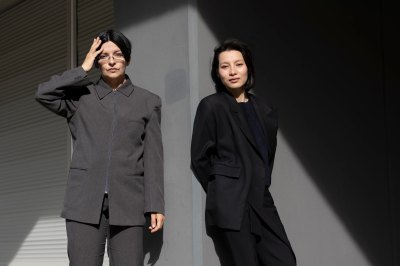
Image Credit: Victoria Tomaschko In April 2025, the commissioner of the German Pavilion, ifa – Institut für Auslandsbeziehungen, announced that its pavilion would be curated by Kathleen Reinhardt, director of the Georg Kolbe Museum in Berlin, where she has organized acclaimed shows for Lin May Saeed and Noa Eshkol. A month later, Reinhardt selected Henrike Naumann and Sung Tieu as its representative artists for the 2026 Biennale, who will develop site-specific works for the pavilion. Both artists are known for creating large-scale installations that look at various political systems.
“With their conceptual and sculptural work, Sung Tieu and Henrike Naumann pose questions about historical responsibility,” Reinhardt said in a statement. “They examine the role of individual and collective agency from the perspective of a young generation that situates the major themes of the German Pavilion in a completely different coordinate system.”
-
Great Britain
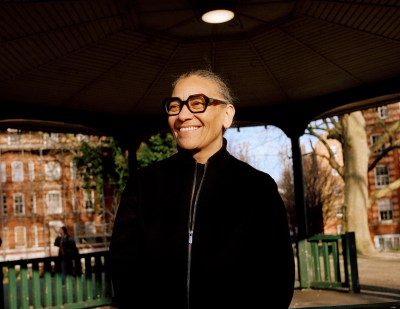
Image Credit: Photo Adama Jalloh Lubaina Himid, the 2017 winner of the Turner Prize, will represent the Great Britain this time around, making her the second Black woman ever to receive the honor. A key figure of the British Black Arts Movement of the 1980s, she is known for paintings and installations about Black liberation, often with a special focus on women. In addition to her art practice, she has also organized a string of key art shows in the UK centered around Black artists, in particular Black women artists. No curator has been announced for her pavilion yet.
-
Greece
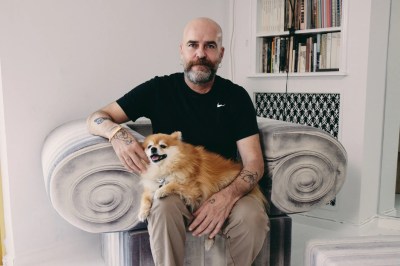
Image Credit: ©Vasilis Karydis As has become common at the Venice Biennale, Andreas Angelidakis’s Greek Pavilion will be a meditation on nationhood itself. Titled “Escape Rooms,” his pavilion will feature an installation rooted in Plato’s Cave and allude to the Nazis’ rise to power, focusing specifically on 1934, a pivotal year in the party’s ascent. (That year, as Angelidakis pointed out in a description for his exhibitions, was also when Greece and Austria opened their dedicated Biennale pavilions.) But more than merely gazing backward, Angelidakis will also chart how a fascination with illusions continues into the present. “Replace Cave with Screen,” he said in a statement, “and it is every MAGA Variant staging Fascism in 2025.”
-
Hong Kong
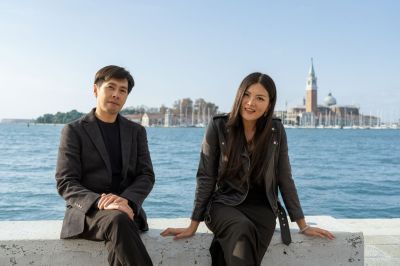
Image Credit: Hong Kong Arts Development Council Hong Kong does not have an official pavilion at the Biennale because it is not recognized as a state in Italy, but it has staged a national presentation as a collateral event since 2001. During the making of its 2026 outing, Hong Kong changed things up, dropping M+ as its longtime organizer and bringing on two artists instead of one. Those artists are Angel Hui and Kingsley Ng, whose presentation, organized by the Hong Kong Museum of Art and the Hong Kong Arts Development Council, will focus on “the poetic rhythms of daily life,” according to its description. A curator has not yet been named.
-
Hungary
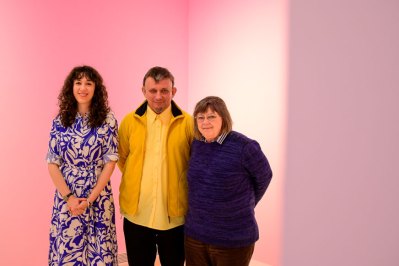
Image Credit: Photo Zsófia Szabó Budapest-based artist Endre Koronczi will represent Hungary with a project titled Pneuma Cosmic, which will continue his long-term studies into “the movement of air” via “fictional research revealing the forms of the cosmic breath that fills the entire world and manifests as air movement,” according to a release. Koronczi was selected through an open-call process administered by the pavilion’s commissioner, Julia Fabényi, the director of the Ludwig Museum in Budapest; Luca Cserhalmi will serve as the pavilion’s curator.
-
Iceland
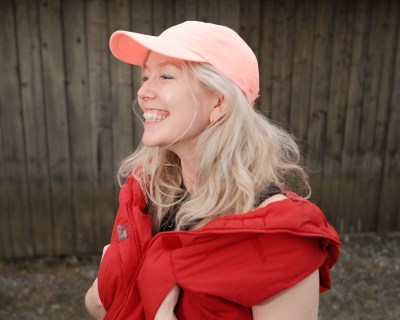
Image Credit: Hallvar Bugge Johnson Many artists work in multiple mediums, but even by those standards, Ásta Fanney Sigurðardóttir’s oeuvre is pretty diverse. In addition to writing poems and making music, she has also produced what are commonly described as experimental operas. Guiding much of her work is a fascination with words, which she often tries to communicate in ways that exceed traditional forms of writing and speaking. Organized by independent curator Margrét Áskelsdóttir and artist Unnar Örn, Iceland’s 2026 pavilion see the exhibition move to a new location, the Docks Cantieri Cucchini, which will inform the experience of the exhibition. For the pavilion, according to a release, Sigurðardóttir will consider “where faith is placed, and on the friction between imagination and reality—moments where the two overlap, blur, and create new possibilities for belief.”
-
Ireland
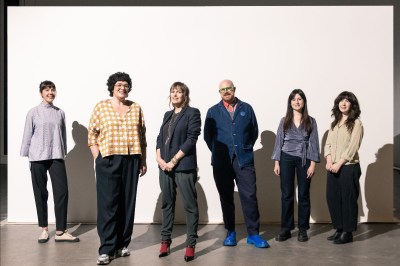
Image Credit: Ste Murray Dublin-based artist Isabel Nolan will represent Ireland, with Georgia Jackson, director of the Douglas Hyde Gallery of Contemporary Art at Trinity College, serving as curator. Nolan works in a variety of mediums, from painting and sculpture to textiles and photographs, and her practice often explores themes of cosmology, mythology, history, and mortality. She previously participated in the Glasgow International and EVA International biennials and showed at the 2025 Liverpool Biennial. “Art has a strange and special capacity to make and test powerful kinds of community with shared knowledge and beauty, however temporary. The Venice Biennale is a stage like no other,” Nolan said in a statement.
-
Italy
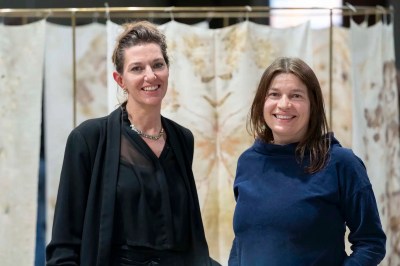
Image Credit: Lorenzo Palmieri Italy has one of the biggest Venice Biennale pavilions, and the nation has historically filled its walls with extravagant, grand, and showy installations. Italy’s 2026 representative, Chiara Camoni, seems likely to buck that trend because she works in a more understated manner. Her sculptures are often composed of terracotta, ceramic, and fabric elements that are combined to create forms similar to ones seen in nature. Sometimes, Camoni also sculpts mysterious images of women that seem one step removed from the days of antiquity. Her Venice pavilion, titled “Con te con tutto” (With you, with everything), will be curated by Cecilia Canziani.
-
Japan
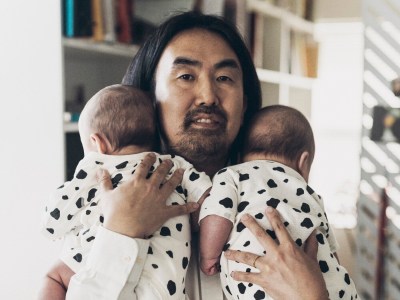
Image Credit: Ricardo Nagaoka/Courtesy of the Japan Foundation Even though Ei Arakawa-Nash gave up his Japanese nationality several years ago, he has gained a wide audience in the country where he was born, with a sprawling survey for him staged by the Museum of Contemporary Art Tokyo in 2024. Known for imaginative works in which he stretches the possibilities of painting, turning activities typically done behind closed doors in a studio into public-facing performances, the Los Angeles–based artist will now take on a personal topic: his journey as the queer father of two baby twins. His pavilion will take as its jumping-off point the 1962 Japanese film Being Two Isn’t Easy, about the trials and tribulations of a family unit as observed by a little kid. Lisa Horikawa and Mizuki Takahashi will curate.
-
Korea

Image Credit: Courtesy Donghwan Kam, artist at SeMA Nanji Residency The Arts Council Korea selected Binna Choi as the curator for its upcoming pavilion, from a list of 18 candidates. Choi is a fixture on the biennale circuit, having curated the 2016 Gwagnju Biennale, served as co–artistic director of the 2022 Singapore Biennale, and co-curating the Hawaii Triennial 2025. Choi has selected Seoul-based artist Goen Choi and New York–based artist Hyeree Ro as the country’s representatives for a pavilion entitled “Liberation Space,” a nod to the three-year period following Japan’s defeat in World War II and Korea’s subsequent liberation from colonial rule.
In a statement, Choi recalled this moment recently when the country “experienced an abrupt declaration of martial law by our sitting president, followed by over four months of nationwide impeachment rallies despite a deeply divided polity.” The “Liberation Space,” for which the artists will create a “living monument,” will offer a site to consider that postwar moment’s “evolution, continuity, and transnational potential amidst today’s geopolitics.”
-
Kosovo
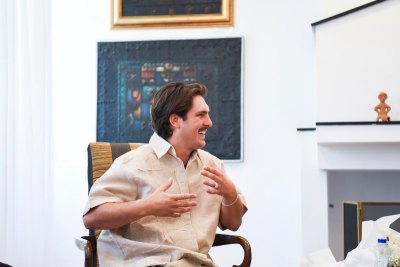
Image Credit: Photo Mrine Godanca For the first time, Kosovo will be represented by a painter: Brilant Milazimi, whose figurative canvases often feature people with elongated bodies. According to the pavilion’s jury, the new works produced by Milazimi will ask: “what happens to a person, a body, a nation, when it is endlessly in motion? What habits are formed in stillness? What tensions accumulate during pause?” José Esparza Chong Cuy, director and chief curator of New York’s Storefront for Art and Architecture, will curate the pavilion.
-
Latvia

Image Credit: Ralfs Cimmermanis Whereas most pavilions tend to highlight artists still working, Lativa’s 2026 representative will be a collective that disbanded more than two decades ago. Untamed Fashion Assemblies, which was active between 1990 and 1999, will be the subject of the Latvian Pavilion, which approaches the collective as an “unfinished project, one that speaks to urgent conversations around artistic experimentation, gender self-performance, anti-consumerist production, and collective imagination,” per a release. Founded by artist Bruno Birmanis, the collective’s output bridged the gap between art, fashion, and other fields, and sought to divine connections between disparate countries in the Baltic region, Central Europe, Western Europe, and elsewhere. Inga Lāce and Adomas Narkevičius, the pavilion’s curators, described the group not as “an attempt to mirror the West, but something stranger, and radically its own.” The duo MAREUNROL’S will also contribute to the pavilion.
-
Lebanon
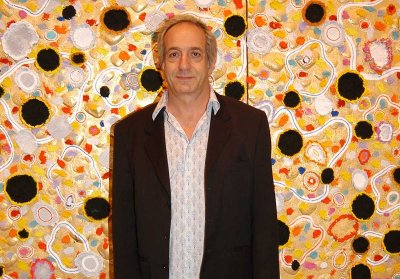
Image Credit: Patrick McMullan via Getty Images Nabil Nahas, a painter known for abstractions inspired by natural phenomena and architecture, will represent Lebanon at the Biennale. His pavilion will be curated by Nada Ghandour and is being organized by the Lebanese Visual Art Association, which praised Nahas for making art that “resonates with contemporary concerns while evoking both the spiritual and the material, the intimate and the cosmic.”
-
Lithuania
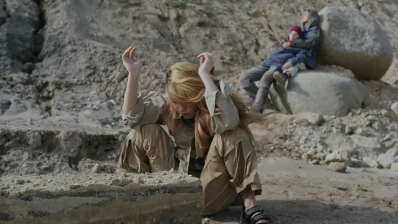
Image Credit: ©Eglė Budvytytė/Courtesy the artist Commissioned by the Lithuanian National Museum of Art and curated by independent curator Louise O’Kelly, Lithuania’s pavilion will be done by Eglė Budvytytė. The artist is no stranger to Venice, having shown in the main exhibition of the 2022 Biennale, organized by Cecilia Alemani. Based in Amsterdam and the Lithuanian capital of Vilnius, Budvytytė is known for performances and video art. For this Biennale, she will show Warmblooded and Wingless, an ongoing work begun in 2024 that encompasses a multichannel film as well as sound and spatial components. “Having worked with Egle for several years, I am particularly attracted to her authentic approach to embodiment, social relations and our symbiotic relationship with the environment,” O’Kelly told LRT. “Having grown up in Lithuania, she opens up a unique worldview in her works, showing the importance of lost belief and other systems of knowledge and ways of coexistence.”
-
Luxembourg
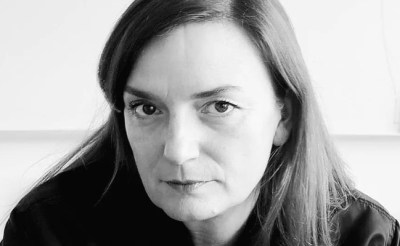
Image Credit: ©Aline Bouvy Born in Brussels, Aline Bouvy is now based between Luxembourg and Belgium. The multidisciplinary artist often looks at the relationship between bodies and the spaces that they inhabit. Her work has taken the form of sculptures, paintings, photography, and more. The pavilion is curated by Stilbé Schroeder, curator and head of department for exhibitions and programme at Casino Luxembourg – Forum d’art contemporain, which serves as its commissioner.
-
Macao

Image Credit: Courtesy Macao Cultural Affairs Bureau Fok Hoi Seng, O Chi Wai, and Lei Fung Ieng will work together for this pavilion, titled “Jacone’s Polyphony” in reference to the Portuguese name for Chinese painter Wu Li, who spent time in Macao. Their pavilion will take up the notion of cultural fusion and will be curated by Feng Yan and Ng Sio.
-
Macedonia
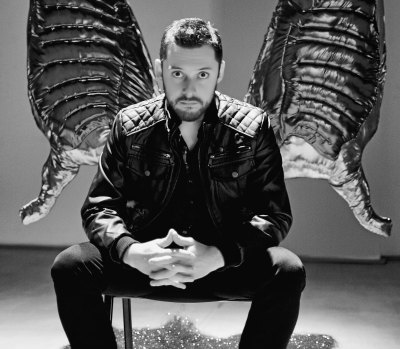
Image Credit: Photo Zarko Culic For this pavilion, Velimir Zernovski will remake Michelangelo’s Pietà at one-third of its actual size, adorning its surfaces with the golden emergency blankets frequently used to safeguard refugees. The title of his work will be Pieta in the Covers of Urgency.
-
Malta
Three artists—Adrian Abela, Charlie Cauchi, and Raphael Vella—will represent Malta under a project titled “No Need to Sparkle.” According to a press release the pavilion’s theme is “an invitation to surrender to uncertainty and to embrace ‘doubting well’ as a philosophy of our unstable times.” Abela is a Los Angeles–based artist who studied architecture and civil engineering in Malta and Milan before receiving an MFA in sculpture at the University of California, Los Angeles. Cauchi is an interdisciplinary artist and filmmaker based in Malta. Vella is a professor of art education and socially engaged art at the University of Malta. The pavilion will be organized by Margerita Pulè, an independent curator and the founder-director of Malta’s Unfinished Art Space.
-
Mexico
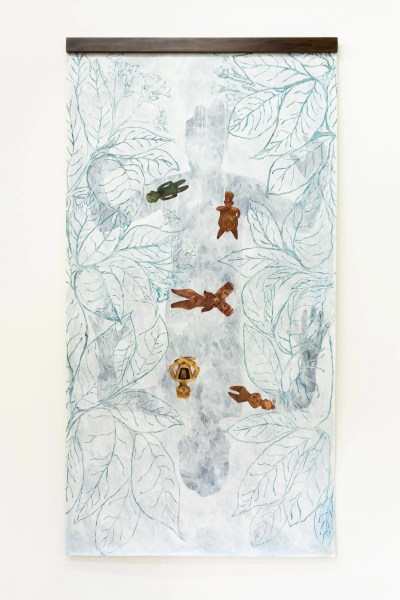
Image Credit: Courtesy the artist RojoNegro Collective, a Mexico City–based duo composed of María Sosa and Noé Martínez, will represent Mexico with a pavilion entitled “Actos invisibles para sostener el universo.” Per its description, the pavilion will contend with topics such as “ancestral memory, epistemic justice, decolonization, and relational ecology, drawing on indigenous, Afro-descendant, and peasant cosmogonies not as external references, but as living matrices of thought that shape their forms of creation, connection, and imagination.” Jessica Berlanga Taylor will curate.
-
Morocco
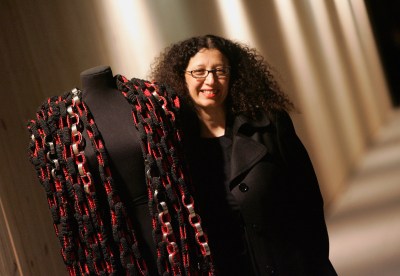
Image Credit: WireImage via Getty Images Morocco had plans to make its premiere at the Venice Biennale in 2024, though the pavilion ended up being disbanded amid what one of the country’s representatives called a “nightmare” situation behind the scenes. Now, Morocco is trying once more, this time with Amina Agueznay, an artist known for elegant weavings made with the assistance of local artisans. Meriem Berrada, artistic director of Marrakesh’s MACAAL museum, will curate her pavilion.
-
New Zealand
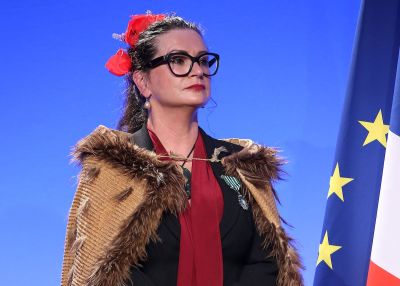
Image Credit: Fiona Goodall/AFP via Getty Images The 2024 Biennale was a notable one for New Zealand in two ways. Ahead of the show, the country said it couldn’t host its pavilion that year after a report revealed that there were “inadequate” resources to do so. Then, at the exhibition itself, the Māori artists’ group Mataaho Collective took the top honors. With all that in the background, New Zealand has now officially plotted its return to the Biennale, and has even promised pavilions through the 2030 edition. In 2026, Fiona Pardington (Kāi Tahu, Kāti Mamoe, Ngāti Kahungunu, Clan Cameron of Erracht) will do the New Zealand Pavilion, which has not yet been detailed.
-
The Netherlands
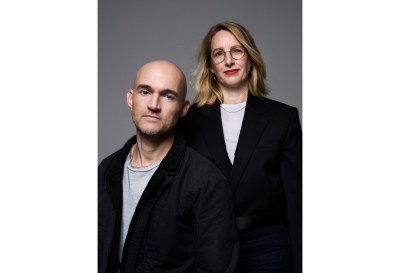
Image Credit: Photo Robin de Puy For the first time ever, performance art will fill the Dutch Pavilion, courtesy of artist Dries Verhoeven, who will work on the presentation in collaboration with curator Rieke Vos. On Verhoeven’s mind are some pretty bleak topics. “Geopolitical tensions are grave, and that’s putting it mildly,” he said in a statement. “It has been many years since our future felt this uncertain. I want to attempt to make this unease tangible, within the ‘safe space’ of the Biennale.”
-
Nordic Countries
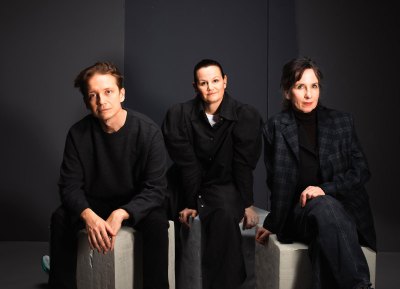
Image Credit: Pirje Mykkänen/Finnish National Gallery The Nordic Countries Pavilion, a collaboration between Finland, Norway, and Sweden, has selected three artists for its 2026 Biennale presentation, which will be curated by Anna Mustonen, chief curator of the Museum of Contemporary Art Kiasma in Helsinki. They are Klara Kristalova, Benjamin Orlow, and Tori Wrånes. While a theme or title has not yet been revealed for the pavilion, Mustonen said in a statement, “The exhibition invites visitors to journey through a dynamic interplay of imagination and reality that bridges Nordic cultural heritage with broader global contexts.” In addition to the Kiasma, the pavilion is commissioned in collaboration with Moderna Museet in Sweden and the OCA – Office for Contemporary Art Norway.
-
Panama
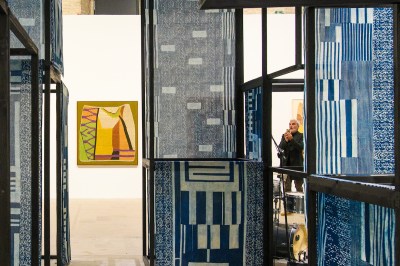
Image Credit: Simone Padovani/Getty Images Two years after showing in the main exhibition of the Venice Biennale, Antonio José Guzmán and Iva Jankovic are returning to the lagoon city, this time as the national representatives for Guzmán’s home country. (Jankovic was born in the former Yugoslavia.) Together, they will use textiles, sound, and more to explore communities that were displaced—and largely scrubbed from the annals of history—during the construction of the Panama Canal. The artists’ project focuses on “crossings of the Black Atlantic and the contemporary resonances of migration, dispossession, and cultural resistance,” according to the committee that chose their proposal. Mónica Kúpfer and Ana Elizabeth González will curate the pavilion.
-
Peru
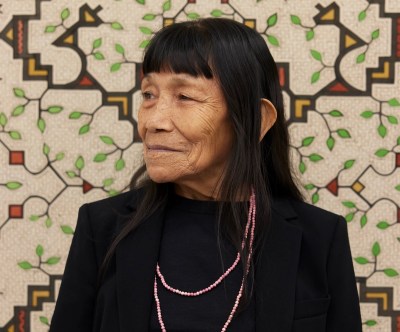
Image Credit: Theo Christelis/©White Cube Sara Flores, a Shipibo artist whose abstractions have captured global attention and made her one of the few Indigenous artists with blue-chip gallery representation, will represent Peru. Her pavilion will feature more of her works on fabric, which she produces using dyes and feature patterns known kené. These patterns map Shipibo knowledge and immortalize it. Titled “De otros mundos” (From Other Worlds), her pavilion will be curated by Issela Ccoyllo and Matteo Norzi.
-
The Philippines
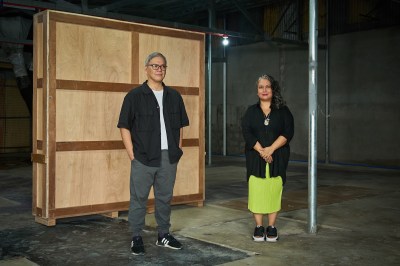
Image Credit: Kieran Punay Jon Cuyson, an artist and filmmaker known for work that explores Filipino history via waterways and the labor involved in maintaining them as market byways, will represent the Philippines this time around. His pavilion will be curated by Mara Gladstone, who will work with Cuyson as he collaborates with mussel farmers, experts in aquaculture, and others based in the Philippines.
-
Portugal
Alexandre Estrela, who recently showed a mind-bending installation at the Museum of Modern Art that featured video of printing plates with a trippy accompanying soundtrack, will stage Portugal’s 2026 pavilion. Details of Estrela’s pavilion have not yet been announced, though Ana Baliza and Ricardo Nicolau will serve as its organizers. Baliza previously designed Estrela’s MoMA installation.
-
Poland
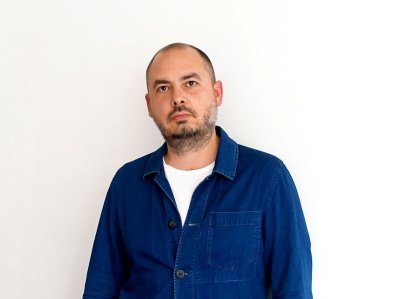
Image Credit: Filip Preis/Courtesy Zachęta – National Gallery of Art Poland’s 2024 pavilion, a video installation about the war in Ukraine, was a searing statement about all that could and could not be communicated. The nation’s 2026 pavilion, by Bogna Burska and Daniel Kotowski, will take up a similar theme with a much different focus: the songs of humpback whales. The artists will work with Chór w Ruchu (Choir in Motion), composed of both hearing and Deaf participants, for a video installation that translates those songs into English and sign language. Ewa Chomicka and Jolanta Woszczenko will curate the pavilion, titled “Liquid Tongues.”
-
San Marino
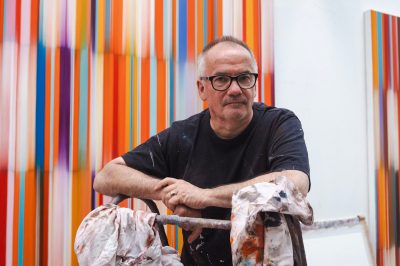
Image Credit: Erin Francis In a former timber and coal warehouse, Mark Francis will stage San Marino’s pavilion, which he’s titled “Sea of Sound.” The Northern Irish artist is best known for his abstract paintings about phenomenological concepts and natural matter, though in a statement about his pavilion, he teased a recent interest in film and video. His Venice pavilion, curated by Luca Tommasi, will feature a projection called Listening Field and a series of new paintings.
-
Saudi Arabia

Image Credit: Anastasia Tikhonova/Courtesy Ministry of Culture of Saudi Arabia Dana Awartani, a Saudi artist who is of Palestinian descent, was a star of the 2024 Venice Biennale, where she showed an installation featuring darned silk textiles that she intended as a homage to violence and healing in Gaza. Now, Awartani is back at Venice, this time as Saudi Arabia’s representative. She has not yet detailed her pavilion, which will be organized by Art Jameel head Antonia Carver and curator Hafsa Alkhudairi.
-
Scotland

Image Credit: Charlotte Cullen/Courtesy Scotland + Venice After sitting out the 2024 due to funding concerns, Scotland will return to Venice with a pavilion by Burgarin + Castle, a duo composed of artists Davide Bugarin and Angel Cohn Castle. “Drawing on queer histories, Scottish archives and Filipino cultural heritage, Bugarin + Castle’s project will examine how sound and costume shape social control,” an announcement for the pavilion reads. The pavilion, staged as a collateral event, will be organized by the curatorial team of the Mount Stuart Trust, which includes curator Morven Gregor.
-
Serbia
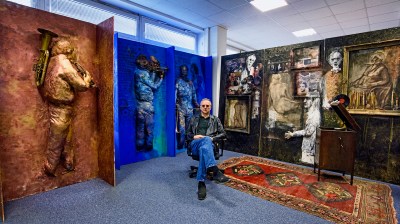
Image Credit: Zvonimir Segi When Predrag Đaković was named as Serbia’s representative in 2025, his selection was treated by many members of the local art community as both a surprise and an offense. (Tomaš Koudela was named curator of his pavilion at the time.) The Prague-based artist has made work about the former Yugoslavia, the Holocaust, and other topics, but none of his art was well-known in Serbia, where artists have claimed that someone more famous than Đaković actually deserved the honor. More than 600 people subsequently called for the artist’s ejection, calling the process for his appointment “unprofessional and non-transparent” in a petition that is still circulating.
-
Singapore
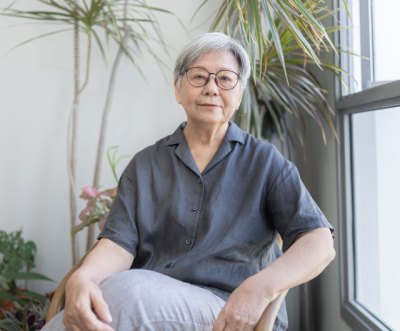
Image Credit: Courtesy Singapore Art Museum Amanda Heng will represent Singapore at the 2026 Venice Biennale. At 73, she is the oldest artist and only the second woman to take over the city-state’s pavilion. After a career as an income tax officer, Heng dedicated herself to art making in 1986. She cofounded the Artist’s Village, an art colony, and Women in the Arts, an artist-run women collective, in 1988 and 1999, respectively. She is best known for durational performances, like Walking The Stool (1999), a work that doubled as a performance and a protest against Singapore’s ban on art in that medium. The pavilion will be curated by Selene Yap, a curator at the Singapore Art Museum, which collaborates with the county’s National Arts Council, the pavilion’s commissioner.
-
Spain
Image Credit: Ingrid Sala Oriol Vilanova will represent Spain with a project called “Los Restos” that draws from the artist’s collection of postcards amassed over the past 20 years from flea markets and second-hand shops and now numbering in the tens of thousands. Carles Guerra, an artist, critic, and curator, organize Vilanova’s pavilion. Per a release, “The Spanish Pavilion will present this collection as an evolving ‘anti-museum’, where modest yet sustained gestures of gathering become a powerful response to our present concerns about preservation, accumulation, and the economies associated to cultural value.”
-
Switzerland
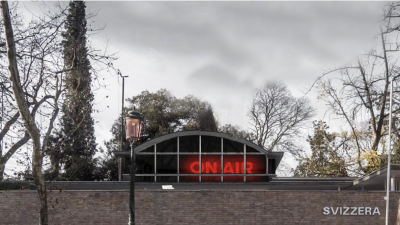
Image Credit: Courtesy the artists This time around, Switzerland will have not by one but six representatives: Gianmaria Andreetta, Luca Beeler, Nina Wakeford, Miriam Laura Leonardi, Lithic Alliance, and Yul Tomatala, all of whom will work collectively on a project called “The Unfinished Building of Living Together.” Per its description, that project will focus on a 1978 episode of the Swiss television program Telearena that featured queer people bitterly debating their sexual orientation with conservative audience members. The pavilion “seeks to examine the conditions and possibilities of tolerance and belonging as well as forms of social division,” per its description. Andreetta and Beeler, who are curators, and Wakeford, an artist, initiated the project together, and then brought in the remaining three members. It’s the first time Switzerland’s pavilion was chosen through an open call.
-
Taiwan
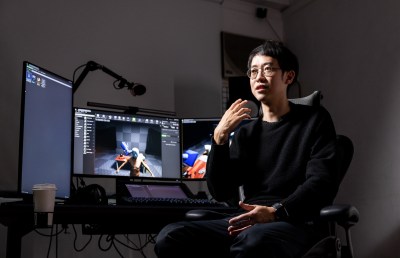
Image Credit: Courtesy the artist and Taipei Fine Arts Museum Officially a collateral event, Taiwan’s national presentation will be given over to Li Yi-Fan, an emerging artist who has gained acclaim in his home country over the past several years. He won the 8th Tung Chung Prize, given by the Taipei-based Hong Foundation, in 2024, which comes with 1 million NTD (around $31,000) and the opportunity to create a new work and support for a residency at the Rijksakademie van Beeldende Kunsten in Amsterdam. His 30-minute film What Is Your Favorite Primitive (2023), made for that year’s Taipei Biennial, takes the form of a parody of tech keynote speech in which the protagonist grapples with the ethical issues of the field, particularly when it comes to image-based software. Raphael Fonseca, curator of modern and contemporary Latin American art at the Denver Art Museum, will organize the pavilion.
-
Timor-Leste
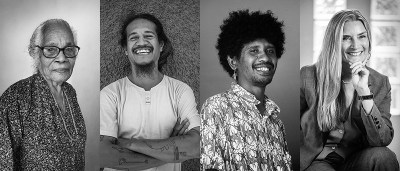
Image Credit: Courtesy Simão Cardoso Pereira Following its debut at the 2024 Biennale, Timor-Leste is returning to Venice with an intergenerational trio of artists: Veronica Pereira Maia, Etson Caminha, and Juventino Madeira. Curator Loredana Pazzini-Paracciani is on tap to organize their pavilion.
-
Ukraine
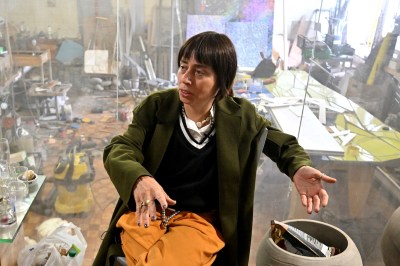
Image Credit: Sergie Supinsky/AFP via Getty Images Seven years after appearing in the main exhibition of the Venice Biennale, Zhanna Kadyrova will now represent her home country with a project called “Security Guarantees.” Featured in the pavilion will be a sculpture called Deer, which she originally installed in 2019 in Yuvileynyy Park in Pokrovsk and crafted from a dismantled Soviet military plane. When Pokrovsk was evacuated in 2024, Kadyrova had to deinstall the work. Leonid Marushchak, a cocurator of the pavilion alongside Kseniya Malykh, called the work “a symbol of the modern tribulations of symbols of the past against the backdrop of contemporary challenges.” Alongside the work itself, Kadyrova will show IDP, a film made with Natalka Dyachenko, who served as cinematographer, that documents the work’s removal.
-
Uruguay
Now in her 80s, Margaret Whyte is capping a long career in Uruguay by representing her home country with an installation called Antifragile. That title alludes to a 2012 book by Nassim Nicholas Taleb, a mathematical statistician who studied systems that only become stronger amid attempts to weaken them. Whyte will build on that concept by exhibiting textiles, using the act of weaving as a metaphor for collaboration. Patricia Bentancur will curate the pavilion.
-
United States
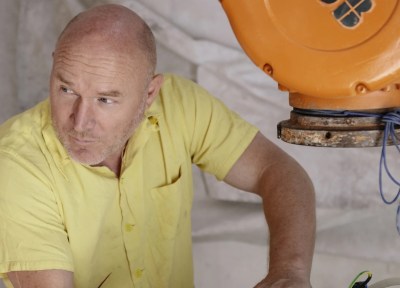
Image Credit: Diego Flores Well before Alma Allen was announced as the United States’s Venice Biennale representative, the pavilion was mired in controversy. Vanity Fair reported during the selection process that the application no longer included language about diversity that was there under the last Presidential administration, instead calling for a show that is “non-political” and “representative of the diplomacy of American political, social, and cultural life.” Following a government shutdown, Allen was ultimately named last-minute as the American pick. (His acceptance of the offer appears to have been controversial: the New York Times reported that two of his galleries dropped him, fearing blowback because Allen may become associated with the Trump administration.)
Born in the US and based in Mexico, Allen is known for abstract sculptures that have been compared to Constantin Brancusi’s modernist art. While he did appear in the 2014 Whitney Biennial, he has not exhibited at many other recurring art exhibitions, making him unlike many other past picks for the United States’s pavilion. He also has a shorter CV than most of the other artists who’ve received the commission in the past. Jeffrey Uslip, a curator best known for resigning from his post at the Contemporary Art Museum St. Louis amid controversy over a Kelley Walker show, will organize Allen’s pavilion.
-
Wales
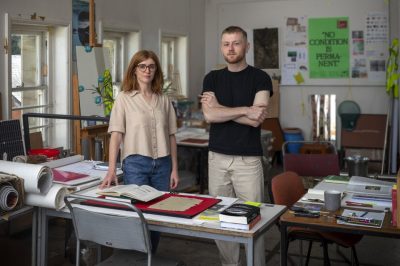
Image Credit: Courtesy Arts Council of Wales Having last shown at the Biennale in 2019, Wales is plotting its return to Venice in 2026 with a pavilion by artists Manon Awst and Dylan Huw. Oriel Myrddin gallery in Carmarthen will organize the show.
-
Turkey
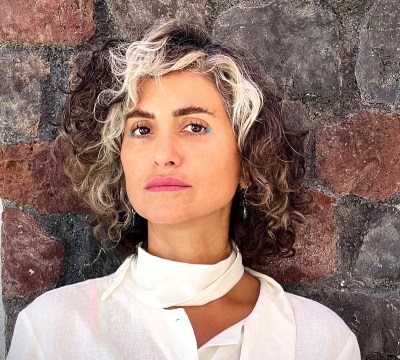
Image Credit: Luca Gioacchino Di Bernardo Nilbar Güreş has gained a following in Turkey for painted textiles that are sometimes made with local artisans and often broach issues related to gender and sexuality in the country. Having recently held a show at Arter, one of the most highly esteemed contemporary art museums in Istanbul, Güreş will now represent the nation in Venice in a pavilion organized by Başak Doğa Temür.
-
Zimbabwe
A quintet of artists—Gideon Gomo, Eva Raath, Franklyn Dzingai, Felix Shumba, and Pardon Mapondera—will represent Zimbabwe, whose pavilion will take the title “Second Nature | Manyonga.” The exhibition, curated by Fadzai Veronica Muchemwa, will explore how we survive during uncertain times.

