



For Animoca Brands co‑founder Yat Siu, 2025 will be remembered as “the Trump year,” not because US President Donald Trump saved crypto, but because the industry bet too heavily on him and mispriced everything from tariffs to rate cuts.
Trump was supposed to be crypto’s cheat code in 2025. Instead, Bitcoin (BTC) is limping into the year’s end, facing its fourth annual decline in history. Memecoin liquidity has been sucked into political side quests, and one of the sector’s longest‑running builders thinks the market over‑trusted the new president.
“If I had to give it a grade, I would say B-/C+,” Siu said. Traders treated Trump as if crypto were his “first child,” he says, when in reality, “we’re probably his third, fourth or fifth child, maybe even an eighth child.”
Trump’s priorities (tariffs, trade wars, fights over the Federal Reserve) hit risk assets hard, and Siu pointed out that when the president starts a tariff war, he’s “not thinking about what’s going to happen to the price of Bitcoin.”
He said crypto’s “Trump trade” didn’t play out in 2025 and that 2026 will force the industry to focus on compliance and real use cases. Animoca’s planned reverse-merger listing is his bet that public investors want an “altcoin proxy” once US rules are clearer.
Related: March 2025 in charts: Trump trade war hits Bitcoin, $22M in DeFi hacks
Animoca’s IPO as an altcoin proxy
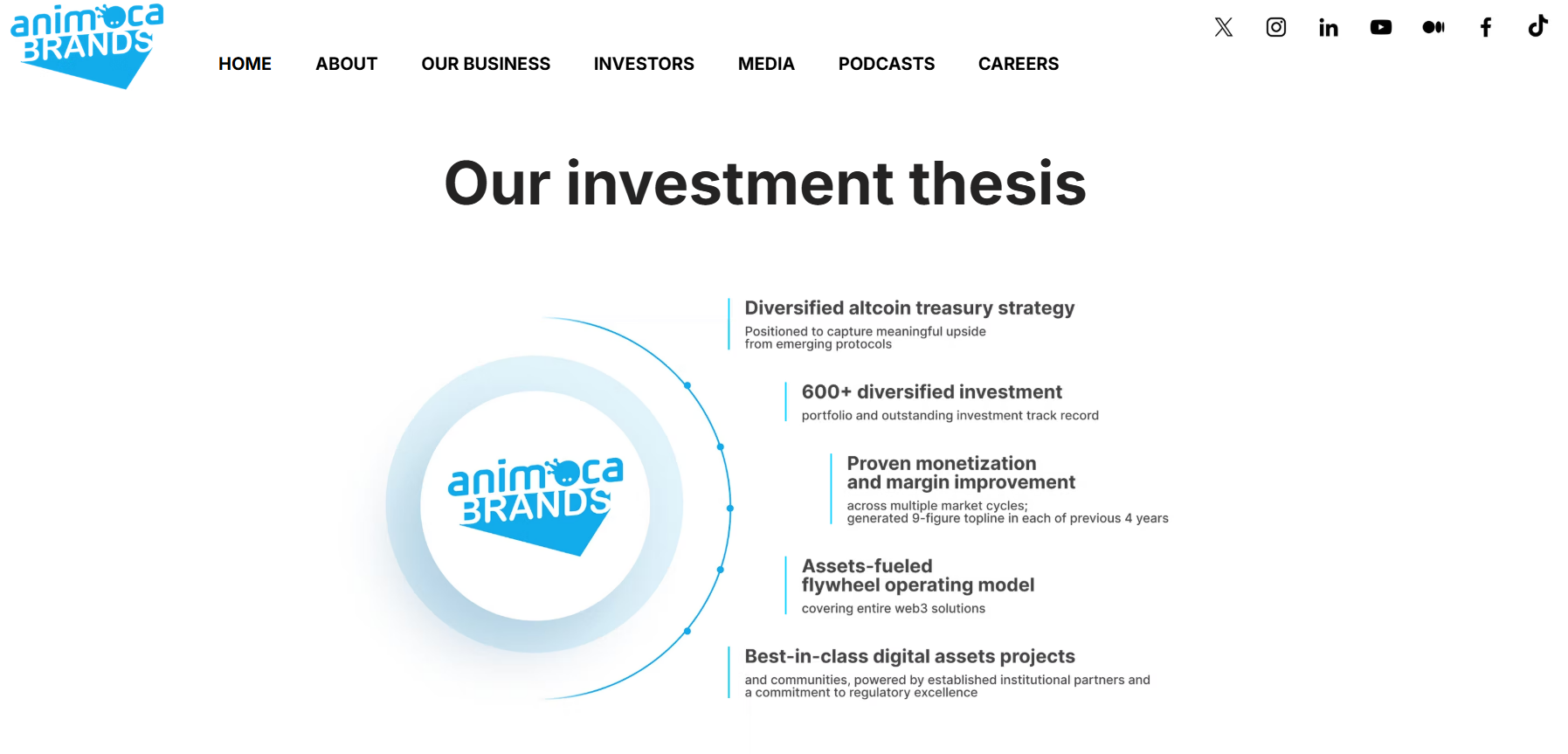
If 2025 was Trump’s year, Animoca wants 2026 to be the year public markets finally get a liquid altcoin proxy. The company plans to go public via a reverse merger with Currenc Group, a Nasdaq‑listed fintech, on terms that would leave Animoca owning 95% of the combined entity. “Technically, on paper they buy us,” he said, “although we control that.”
The pitch is straightforward: MicroStrategy has become a leveraged public vehicle for Bitcoin exposure, but there is no equivalent for the long tail of tokens. “If you’re an investor and you want to have exposure to crypto, you definitely will need to have your Bitcoin … and then you have the swath of altcoins, and how do you get exposure to that?”
Buying a base‑layer token like Ether (ETH) or Solana (SOL) gives only limited access, he argues. Animoca’s answer is to position itself as a listed, SoftBank-style aggregator of altcoin upside, providing public market investors with a way to own a diversified slice of the altcoin and Web3 stack.
The firm has more than 620 portfolio companies and invested in roughly 100 new projects last year alone, Siu said, all of which are off its own balance sheet. In the 2024 financial year, Animoca reported unaudited bookings of $314 million, and the company has been EBITDA‑positive (profitable on its core operations, before loans and taxes) for four consecutive years.
Over time, Siu expects Animoca itself to be fully tokenized, transforming the company into a bridge between traditional equity markets and onchain ownership.
Related: Animoca bets on altcoin upside to lure investors as it plans for IPO
Clarity, GENIUS and the “tokenize or die” moment
Siu’s bet on an altcoin‑proxy initial public offering (IPO) makes sense if the regulatory ground solidifies, and he sees key US legislation, including the Clarity Act and the GENIUS Act, as catalytic rather than existential.
“The phrase we like to use is ‘Tokenize or die,’” he said. Once companies have a clear framework for issuing, trading and supervising tokens, he expects a flood of incumbents to enter the market. “Crypto companies are happy to skate on the edge … but if you’re an established company, whether you’re public or private, why take the chance?”
He points to the way large brands responded when stablecoin rules firmed up in Washington, and suddenly, after years of hand‑wringing, “everyone is doing stablecoins.” And he expects the same pattern once the Clarity Act formalizes token classification and market‑structure rules next year.
Established issuers will launch tokens tied to their existing businesses because they finally have “legal certainty, which they didn’t have before.”
Here, real-world assets (RWAs) and tokenized securities serve as the bridge, as an industry expected to grow into the trillions by 2030. Animoca has already started cutting RWA partnerships, including a deal with Grow, a major Chinese asset manager, to work on tokenization and access to token markets for traditional clients.
Related: Animoca eyes stablecoins, AI, DePIN as it expands focus in 2026: Exec
2026: The year of the utility token
Siu believes the next thematic shift is already in place. “The theme of institutionalization of crypto will continue,” he said, but 2026 will be about “new retail” entering under clearer rules and with products built around use, not just speculation.
Until now, he said — a trend that reached a peak during the memecoin season — so much was focused on the existing crypto trader and launching tokens and memecoins with platforms like Pump.fun.
In that environment, builders could launch a token and not worry about where the customer would come from, focusing on narrative instead of product, but now market conditions are forcing a reset.
The “memecoin madness” was capped off by Trump and Melania Trump‑branded tokens early this year, as Official Trump (TRUMP) slid more than 75% from its peak and Melania Meme (MELANIA) dropped around 90% from its peak, with hundreds of thousands of small wallets sitting on losses.
That, according to Siu, was “one heck of a vampire attack on the meme community,” leaving a lot of retail scorched and sucking liquidity out of the rest of the market.
As capital rotates away from pure speculation, the next wave will depend on products that solve real problems for gamers, creators and brands, pulling in users who never thought of themselves as “crypto people” in the first place.
With the Clarity and GENIUS acts laying down a path for compliant issuance, he argues that “2026 will be the year of the utility token because everyone will launch a token that has a use case, and we can talk about it.”
So, basically, crypto companies are growing up?
“They have to, they have to … We’re not the only company going IPO.”