



Bitcoin’s (BTC) Hash Ribbons metric, tracked by onchain analytics platform Capriole Investments, sent a “buy signal” for the fifth time in 2025.
Key takeaways:
-
A historically accurate Bitcoin price metric sends a “buy” signal for the fifth time this year.
-
Miners’ BTC sales have accelerated since the beginning of October compared to earlier in the year.
-
Bitcoin is stuck between the yearly open at $93,000 and the demand zone below $90,000, reflecting traders’ indecision on the direction of BTC’s price trend.
Bitcoin Hash Ribbons: “Miners are under pressure”
One historically-accurate Bitcoin miner performance metric is telling market participants to buy despite the price declining to as low as $80,500 on Nov. 21 from its $126,000 all-time high.
Hash Ribbons, which identify hashrate and price recovery out of miner capitulations, suggest that miners are under pressure.
Related: Bitcoin retail inflows to Binance ‘collapse’ to 400 BTC record low in 2025
The chart below shows that the 30-day moving average (MA) of the hashrate has dropped below the 60-day MA, signalling miner capitulation, which often syncs with major price discounts and long-term opportunities.
Hash Ribbons has an impressive track record of catching long-term price bottoms and has delivered “buy” signals relatively rarely.
“This doesn’t mean you have to rush in” and buy, CryptoQuant contributor Darkfost commented in an X post analysis on the topic.
This “highlights phases where miners are under pressure,” Darkfost said, adding:
“In the short term, these periods tend to be bearish because miners may need to increase their selling to cover production costs.”
Long-term, these forced sell-offs “have historically created very strong accumulation opportunities,” the analyst concluded.
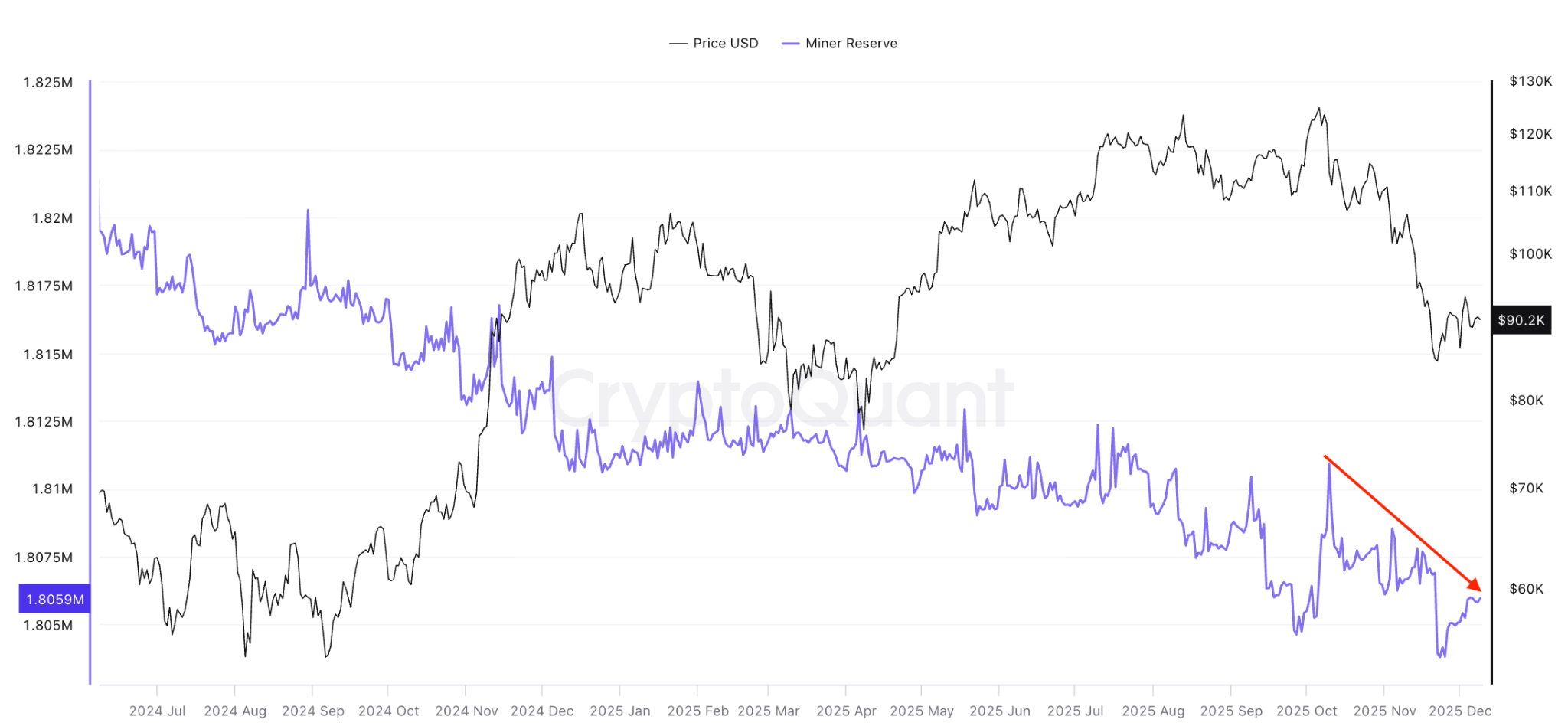
Although miners’ BTC reserves have stayed more or less flat through 2025, there has been sustained selling since early October. Known miner wallets totaled around 1.8 million BTC on Tuesday, down by 5,000 BTC since Oct. 10.
BTC price stuck between two trendlines
Bitcoin’s recent recovery was rejected by resistance from the yearly open at $93,300, which coincides with the 200-period simple moving average (SMA), as shown on the four-hour chart below.
This move, however, saw BTC/USD find support at the $89,000-$90,500 demand zone, where the 50 and 100 SMAs currently are.
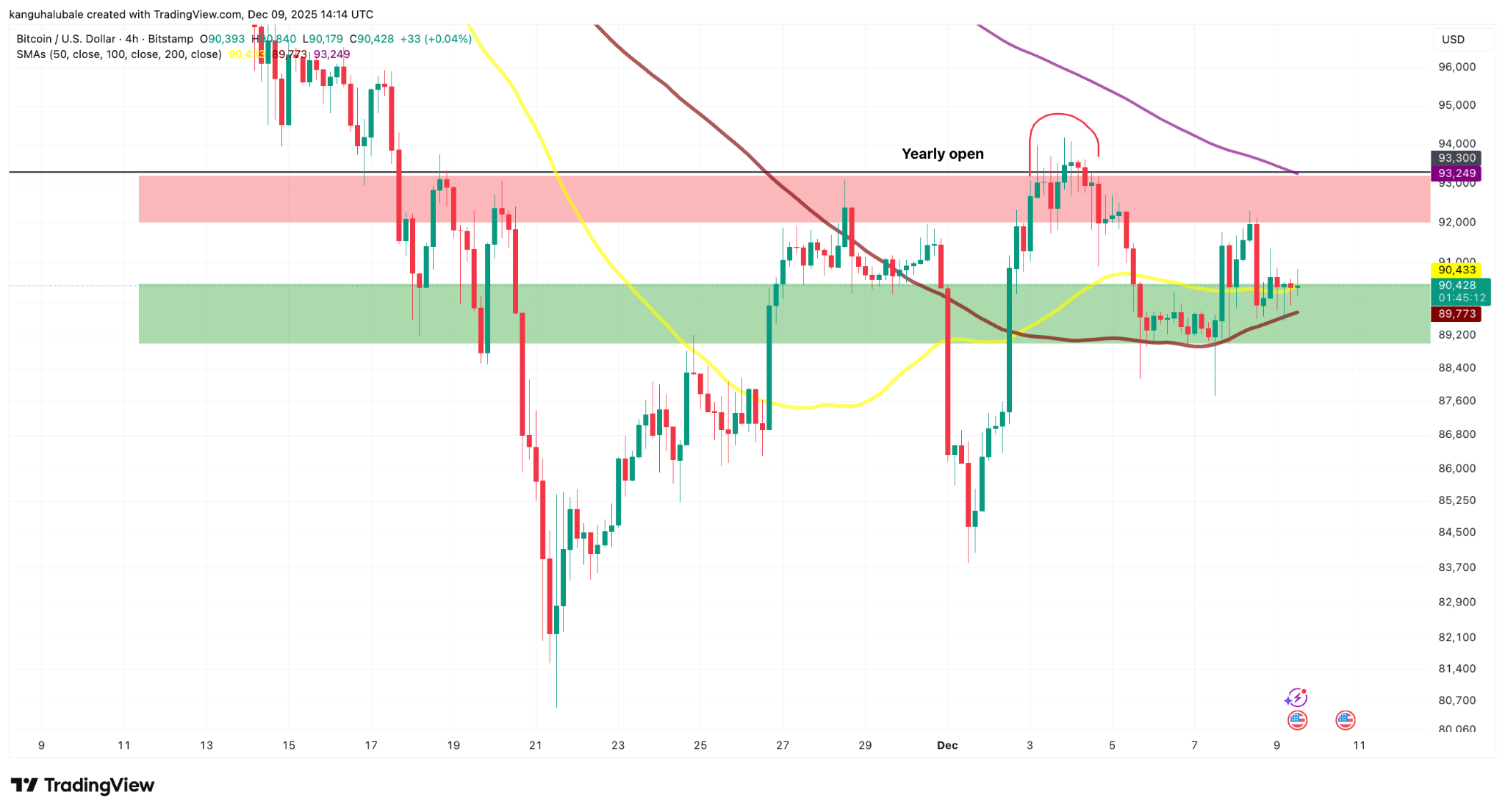
Bitcoin price is required to rise above the resistance at $92,000 and higher than the 200 SMA to break out of the downtrend and stage a sustained recovery toward $100,000.
As Cointelegraph reported, the bears will attempt to pull the price down below $90,000 support for a prolonged decline that can go as low as $40,000.
This article does not contain investment advice or recommendations. Every investment and trading move involves risk, and readers should conduct their own research when making a decision.
This article does not contain investment advice or recommendations. Every investment and trading move involves risk, and readers should conduct their own research when making a decision. While we strive to provide accurate and timely information, Cointelegraph does not guarantee the accuracy, completeness, or reliability of any information in this article. This article may contain forward-looking statements that are subject to risks and uncertainties. Cointelegraph will not be liable for any loss or damage arising from your reliance on this information.