


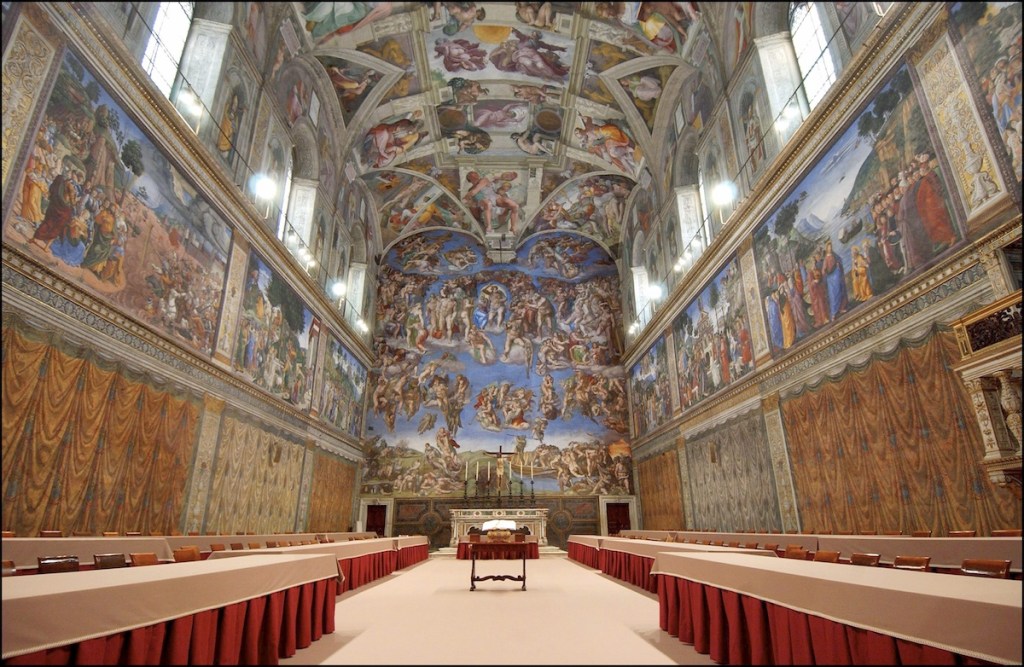
While most flock to museums to experience world-famous artworks, some of the most influential pieces reside outside institutions—especially in Italy, where, during the Renaissance, a number of wealthy patrons commissioned works of art in smaller chapels.
Those chapels were intended as places where their family legacies could live on after their deaths. Many of them still contain some of the most incredible examples of art and architecture; most are open to the public.
There are many chapels, both within and beyond Italy. Which ones are most essential? Below is a list of the ones that cannot be missed.
-
Scrovegni Chapel in Padua
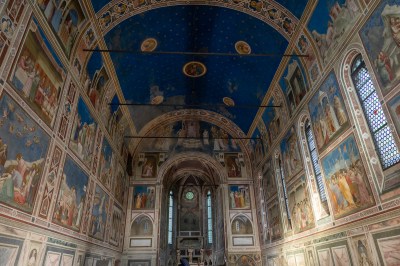
Image Credit: Steve Christo/Corbis via Getty Images Constructed by Enrico Scrovegni to atone for the sin of usury—lending money at unreasonably high interest rates to the benefit of the lender—the Scrovegni Chapel boasts the most important frescos painted by Giotto, who painted religious scenes during the 14th century with naturalism, illusionism, and earthly settings that were unusual for their time. The fresco cycle narrates the history of salvation, including the life of the Virgin Mary and her son, the vices and virtues, and the last judgement. The chapel took Giotto and his team of roughly 40 collaborators two years to complete. Giotto’s fresco techniques, style, and content influenced the medium for the next century. Still today, these frescoes are considered so significant that they were added to the UNESCO World Heritage List in 2021.
-
Sansevero Chapel in Naples
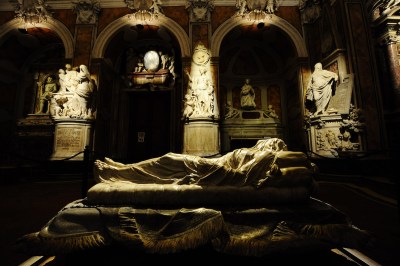
Image Credit: Salvatore Laporta/Kontrolab/LightRocket via Getty Images In the city’s historic center, the Sansevero Chapel is home to more than 20 sculptures representing Neapolitan strain of the Baroque movement at its peak. The most famous of those sculptures is Giuseppe Sanmartino’s Veiled Christ (1753). Though made entirely of heavy marble, the sculpture looks unusually light: a thin sheet of cloth appears to ripple like water over Jesus’ dead body. Another on view are highly detailed anatomical studies of male and female arteriovenous systems by Palermo doctor Giuseppe Salerno. The chapel itself contains intricate paintings and a rich history. It was constructed in 1590 by John Francesco di Sangro, the Duke of Torremaggiore, in what were then the gardens of the nearby Sansevero family residence.
-
Sistine Chapel in Vatican City
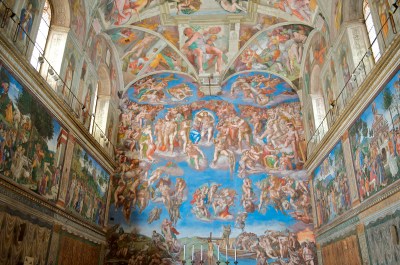
Image Credit: VCG Wilson/Corbis via Getty Images Perhaps the most famous chapel on its list, the Sistine Chapel is renowned for its frescos, particularly its ceiling, which contains Michaelangelo’s Creation of Adam (1508–12). Of equal note is Michelangelo’s Last Judgement (1536–41), visible on the altar wall. Those paintings are considered not only some of the great works of the Renaissance but also some of the most important artistic contributions to human civilization. There are also notable works by Botticelli, Ghirlandaio, and Pietro Perugino on view as well. Built under Pope Sixtus between 1473 and 1481, the Sistine Chapel is part of the papal residence and serves as the official location of the papal conclave, the process by which the successive pope is selected following the previous pope’s death or renunciation of the role. Today, it is still in use as both a religious site and a tourist attraction.
-
Sassetti Chapel in Florence
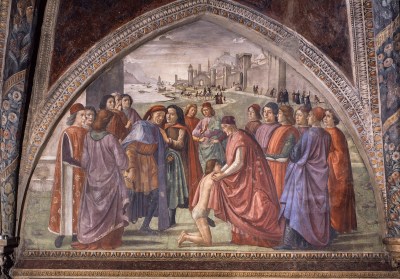
Image Credit: Antonio Quattrone/Mondadori Portfolio via Getty Images The fresco technique of painting on wet plaster with egg tempera was perfected by Domenico Ghirlandaio, who in turn taught the trade to Michelangelo. The Sassetti Chapel in the Santa Trinita Basilica is considered Ghirlandaio’s masterpiece. Ghirlandaio depicted scenes from the life of Saint Francis, but he set these tableaux not in 12th- and 13th-century Assisi but in contemporary Florence, with figures from Ghirlandaio’s time visible. Francis receiving the rules of the order, for instance, takes place in Florence’s Piazza della Signoria, with a view of the Loggia dei Lanzi. Witnessing the event are Lorenzo the Magnificent, the donor Francesco Sassetti, and the writer Angelo Poliziano. (Sassetti earned his wealth as a partner in the French branches of the Medici bank in Avignon and Lyon; he was general manager of the international Medici banking enterprise.) The chapel’s unusual combination of secular, religious, and classical imagery was unique to the era in which the structure was built. Those looking for more works by Ghirlandaio can also visit the nearby Tornabuoni Chapel.
-
Palatine Chapel in Palermo
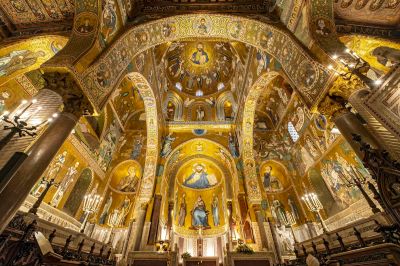
Image Credit: UCG/Universal Images Group via Getty Images The Palatine Chapel, or the royal chapel of the Norman Palace, is most known for its blend of Byzantine, Islamic, and Romanesque architectural styles, a mix that was reflective of the diversity of the local population in 12th century Norman Sicily. Part of a larger royal residence constructed for King Roger II, the chapel was not only a place for religious devotion but also served for performances and notable ceremonies. Though the chapel is small, it is packed with gold mosaics detailing Christ’s life, patterned opus sectile floors, marble wall revetments, and painted wood muqarnas. Some scholars believe the mosaics, the ceiling, and other elements of this chapel may have been both within Sicily and nearby countries.
-
Chapel of the Holy Shroud in Turin
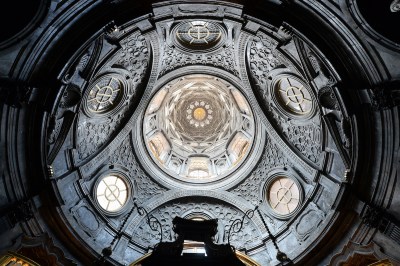
Image Credit: Roberto Serra – Iguana Press/Getty Images The Chapel of the Holy Shroud is considered a masterpiece of Baroque architecture, but its true highlight is the relic it was constructed to house: the Shroud of Turin, which wrapped Jesus upon his burial. Widely debated and frequently studied across the centuries, the linen cloth bears an image of a crucified man. Some researchers believe the shroud is physical evidence of the crucifixion while others claim it’s merely a Medieval forgery. Despite that disagreement, the piece continues to be venerated today. The chapel that holds the shroud was designed by architect-priest and mathematician Guarino Guarini. Built at the end of the 17th century, the chapel is connected to the Royal Palace of Turin, which formerly housed the city’s bishop. Heavily damaged in a 1997 fire, the chapel underwent a 21-year restoration and reopened in 2018. Its intricate, self-supporting wooden and marble dome keeps visitors looking up.
-
Ovetari Chapel in Padua

Image Credit: Mondadori via Getty Images When it was decimated during an allied bombing in 1955, the Ovetari Chapel was said by some to be Italy’s biggest cultural loss during World War II. The chapel then underwent a significant partial restoration that was completed in 2006. Approximately 80,000 fragments were carefully pieced back together to recreate the chapel’s magnificent frescoes by Andrea Mantegna and others, all originally painted between 1448 through 1457. At the time Mantegna made his frescoes, the Italian Renaissance painter was just 17 years old; the project marked his first major commission. The frescoes depict scenes from the lives of Saints James and Christopher. In these paintings, one can see Mantegna’s mastery of perspective and his acute ability to render architectural details.
-
Baglioni Chapel in Spello
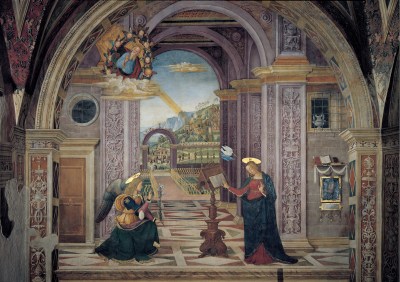
Image Credit: Mondadori Portfolio Housed inside the Collegiate Church of Santa Maria Maggiore, the Baglioni Chapel is known for its Renaissance frescoes by Pinturicchio made between 1500 and 1501, marking the last commission by the artist in the Umbrian region before he departed for Rome and Siena. Packed with vibrant colors and intricate details, and demonstrating a mastery of sotto in su perspective, the frescoes feature stories from the childhoods of Mary and of Jesus. The Baglionis were a powerful Umbrian noble family that ruled over the city of Perugia between 1438 and 1540. In recent years, they have become perhaps better known for the Chateau de la Motte-Husson in France, upon which the television series Escape to the Chateau was based.
-
Brancacci Chapel in Florence
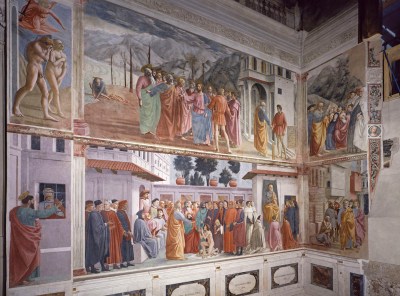
Image Credit: Antonio Quattrone/Getty Images Renowned for having some of the most famous and influential frescoes of the early Renaissance, the Brancacci Chapel was commissioned by silk merchant Felice Brancacci in 1422, with the paintings executed between 1425 and 1427. Brancacci initially hired Masolino da Panicale, who began painting the chapel with the assistance of a young Masaccio. When Masolino was called away to paint for the king of Hungary, the commission was given to Masaccio, who was later called to Rome, where he died at age 27. Portions of the chapel were subsequently completed by Filippino Lippi in the 1480s.
The cycle from the life of Saint Peter was commissioned as patron saint by Pietro Brancacci, who originally owned the chapel, and also reflected Felice’s choice for the Roman papacy during the church’s Great Schism. Masolino’s somber depiction of The Temptation of Adam and Eve shows the naked pair just before they bite the apple, with a snake with a human head watching them. By contrast, Masaccio’s Expulsion from the Garden of Eden, which is also housed here, is famous for its intensity and its emotional realism. The Tribute Money, also painted by Masaccio, is considered one of the artist’s best works for its use of single-point perspective and chiaroscuro. It depicts a Biblical scene in which Jesus instructs Peter to find a coin in a fish’s mouth to pay the temple tax.
-
Vatican Chapels in Venice
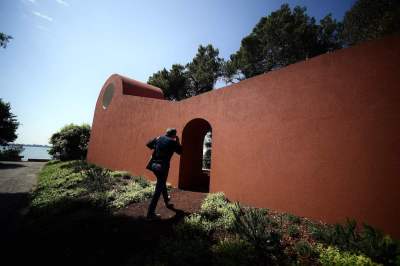
Image Credit: Filippo Monteforte/AFP via Getty Images In a modern-day twist, as part of the 16th edition of the Venice Architecture Biennale in 2018, internationally renowned architects designed 10 chapels in the Fondazione Cini’s forested park on San Giorgio Maggiore Island. Those who contributed include Andrew Berman, Francesco Cellini, Javier Corvalán, Eva Prats and Ricardo Flores, Norman Foster, Teronobu Fujimori, Sean Godsell, Carla Juacaba, Smiljan Radic, and Eduardo Souto de Moura, with Francesco Magnani and Traudy Pelzel designing a pavilion for Erik Gunnar Asplund’s drawings and models. The project drew inspiration from Asplund’s 1920 Woodland Chapel project in Stockholm’s cemetery. The ten chapels symbolize the Ten Commandments given to Moses by God. Each takes its own aesthetic approach to conveying the spiritual and natural worlds.

